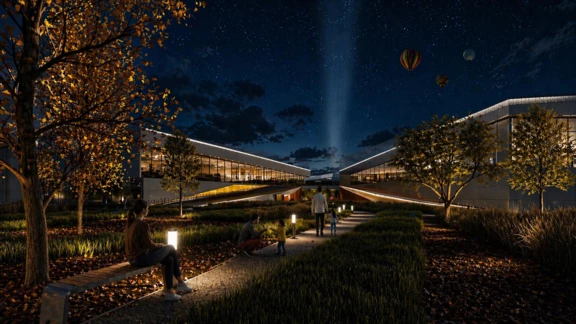
An Icon Born from Ore – The History of Szarlej Restored to the City
The idea of the project grows directly from the identity of the place - the “Szarlej” area, where galman ore was once mined. The concept envisions a “return” of the extracted material to the surface in the form of a modern, geometric structure that becomes an architectural manifestation of the history of Piekary Śląskie.
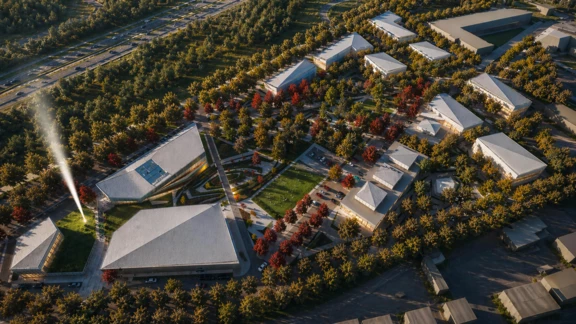
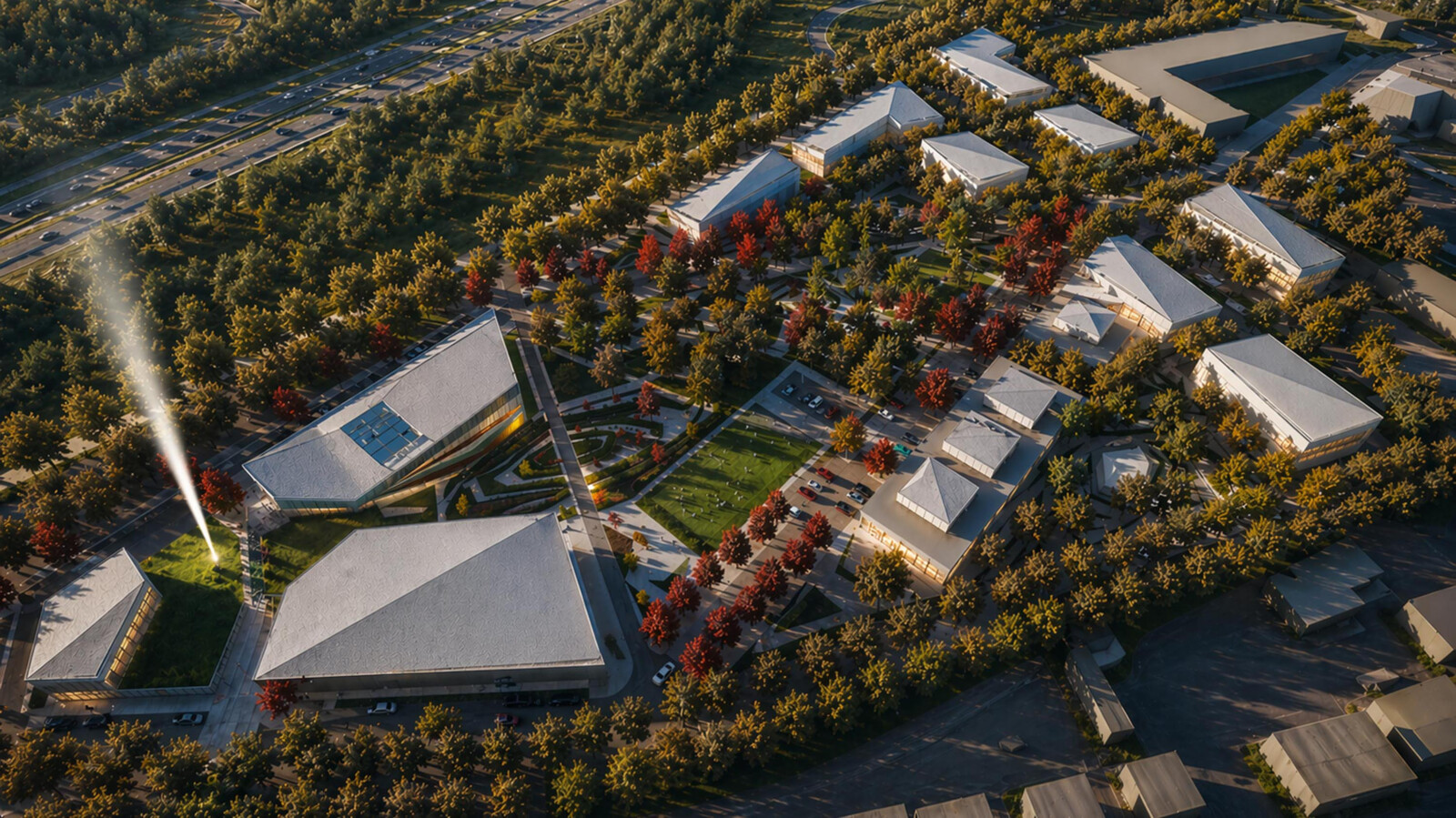
The project is located in Piekary Śląskie, on the historic “Szarlej” site, which once functioned as an open-pit galman mine. After the end of exploitation, the excavation was filled in, yet the unique identity of the place has endured in memory and in the structure of the ground. A key locational factor is the immediate proximity of the A1 motorway - the project takes advantage of this closeness, becoming a new iconic showcase of the city, clearly visible from the elevated roadside embankment. The architectural form is inspired by the extraction process: irregular, compact masses of crumbling galman ore and the metallic, golden-brown color of brass, for whose production the local material was once used. The project is an attempt to bring history back to the surface through architecture, giving new, prestigious function to post-industrial wastelands.
The main design objective is to create a multifunctional center that integrates sports, recreation, and services in a structured and phased manner. The spatial layout is based on a ring motif, derived from historic mining routes leading into the open pit.
Sports Complex: Composed of three distinct “rock fragments” (segments) connected by a shared central hall. The facility includes:
- Swimming pool area: Featuring a sports pool and an extensive recreational zone.
- SPA zone: Connected to the pool area, offering a saunarium and relaxation gardens.
- Sports hall: With direct access to outdoor recreational areas.
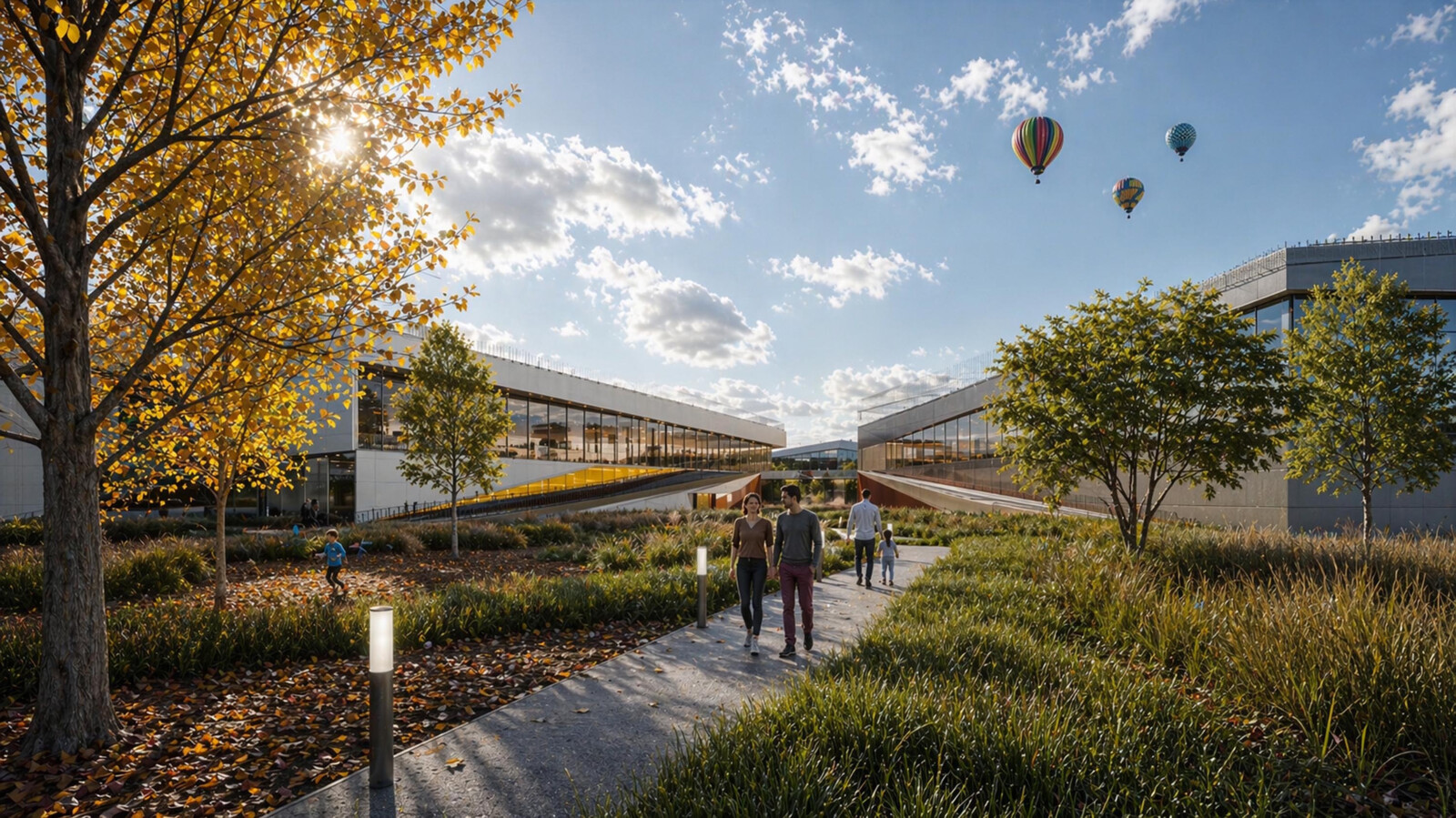
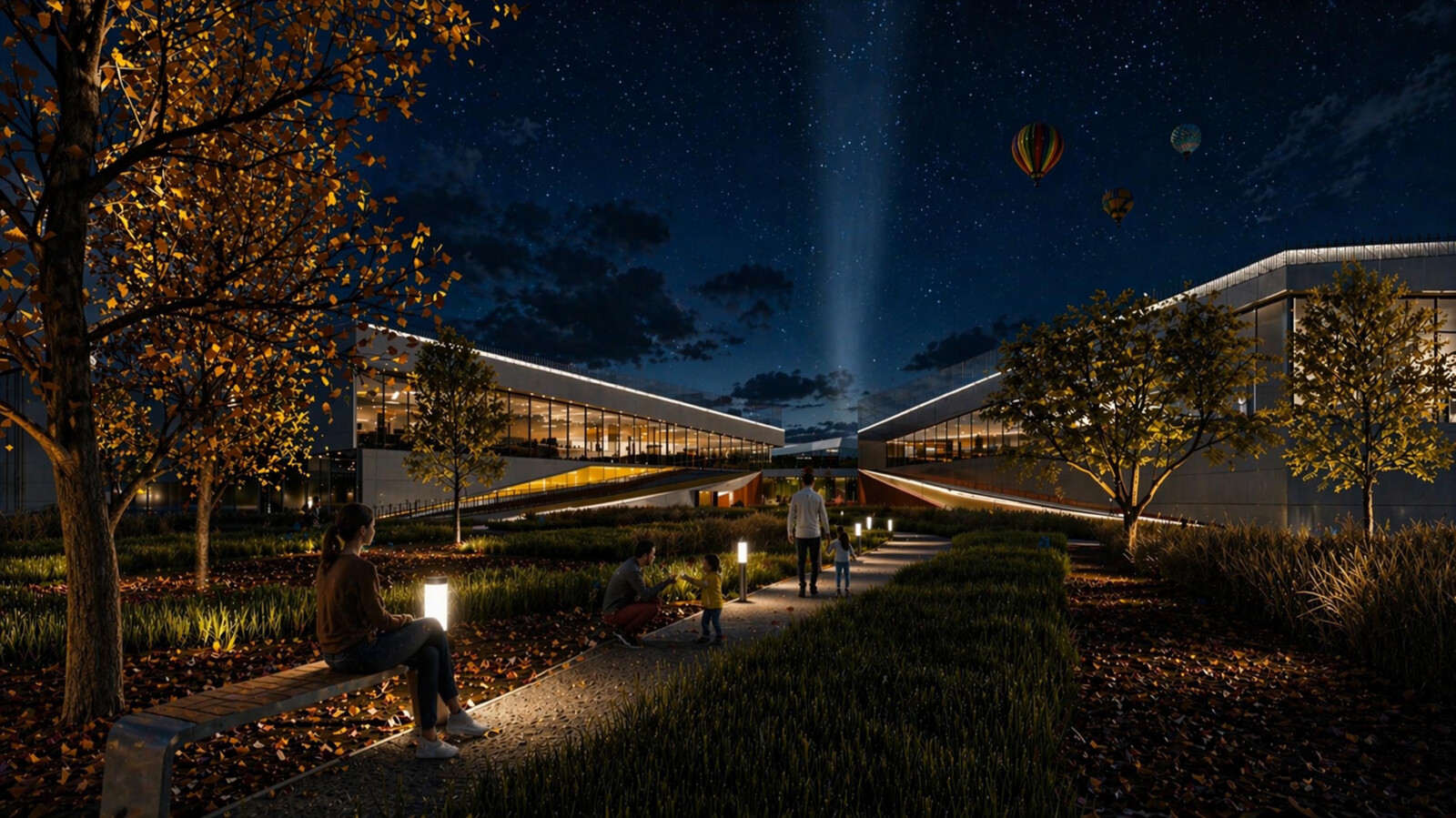
Spatial organization: The central part of the development functions as a publicly accessible park, toward which the complex opens. Surrounding it are planned office frontages (serving as acoustic buffers) as well as modern mixed-use residential and service buildings.
Users: Thanks to intuitive circulation and barrier-free design, the space is accessible to all groups - from athletes and spectators, to employees of nearby offices, as well as residents of the new residential quarters.
The project goes beyond the standard framework of a sports facility through unique spatial and technological solutions.
Sub-pool Educatorium: An unconventional attraction enabling “learning through observation.” Glazed zones provide insight into water treatment technology, enhancing both the educational and market value of the facility.
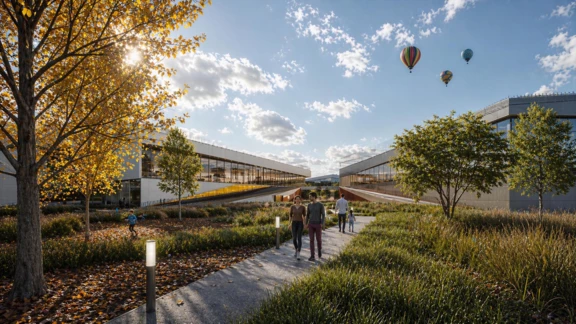
Barrier-free architecture: An innovative use of roofs as green terraces, accessible via a system of external ramps directly from the forecourt.
Energy efficiency: The building is designed for passive heating (maximum glazing on the south side, solid walls on the north). Folded roofs are optimized for photovoltaic installations, and an advanced heat recovery system reuses thermal energy from pool water (recovering 25% of warm water from balancing tanks).
Facade symbolism: The use of metallic brass panels and openwork parapets reflects the original, “raw” rock mass before the crushing process.