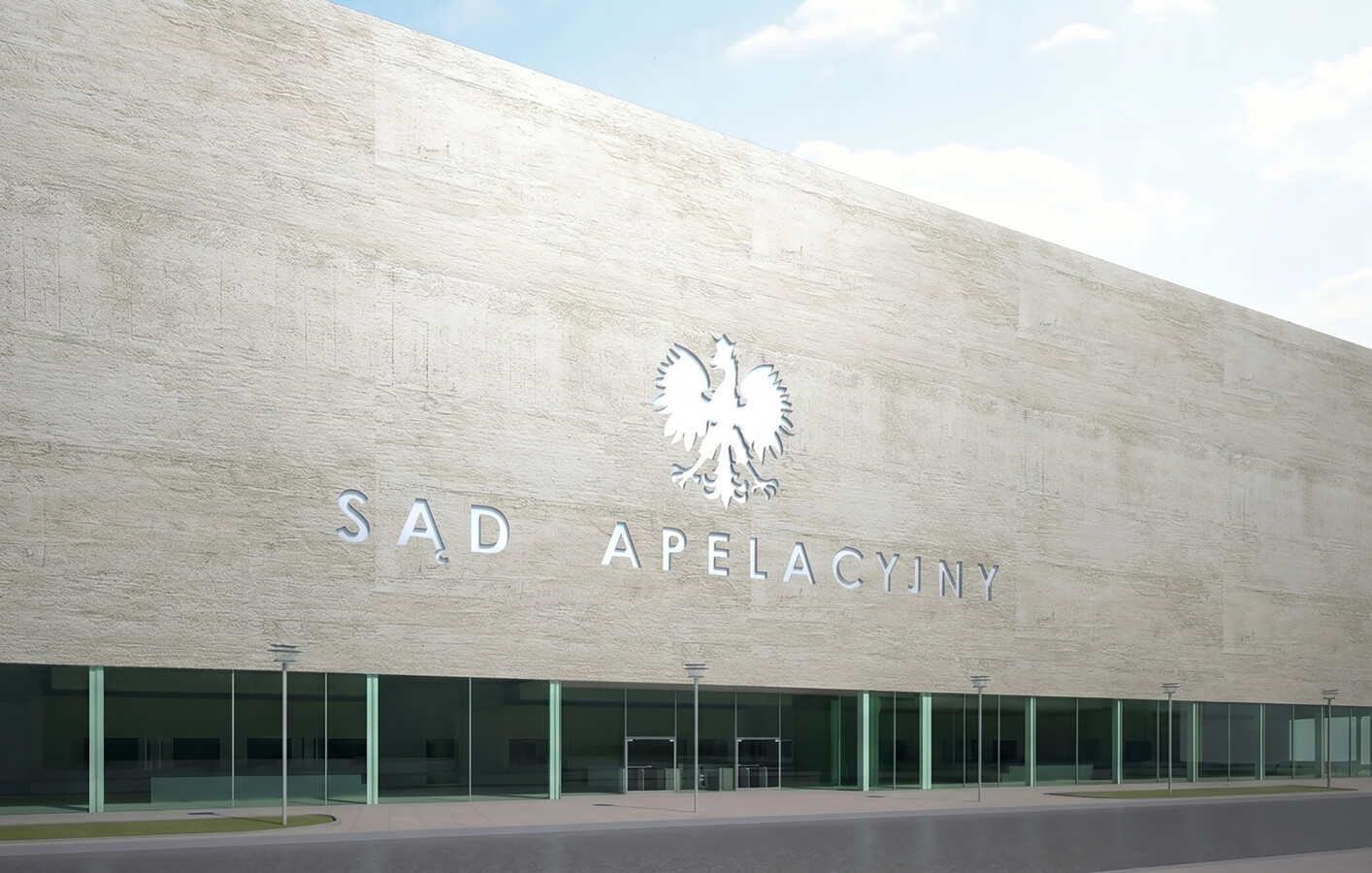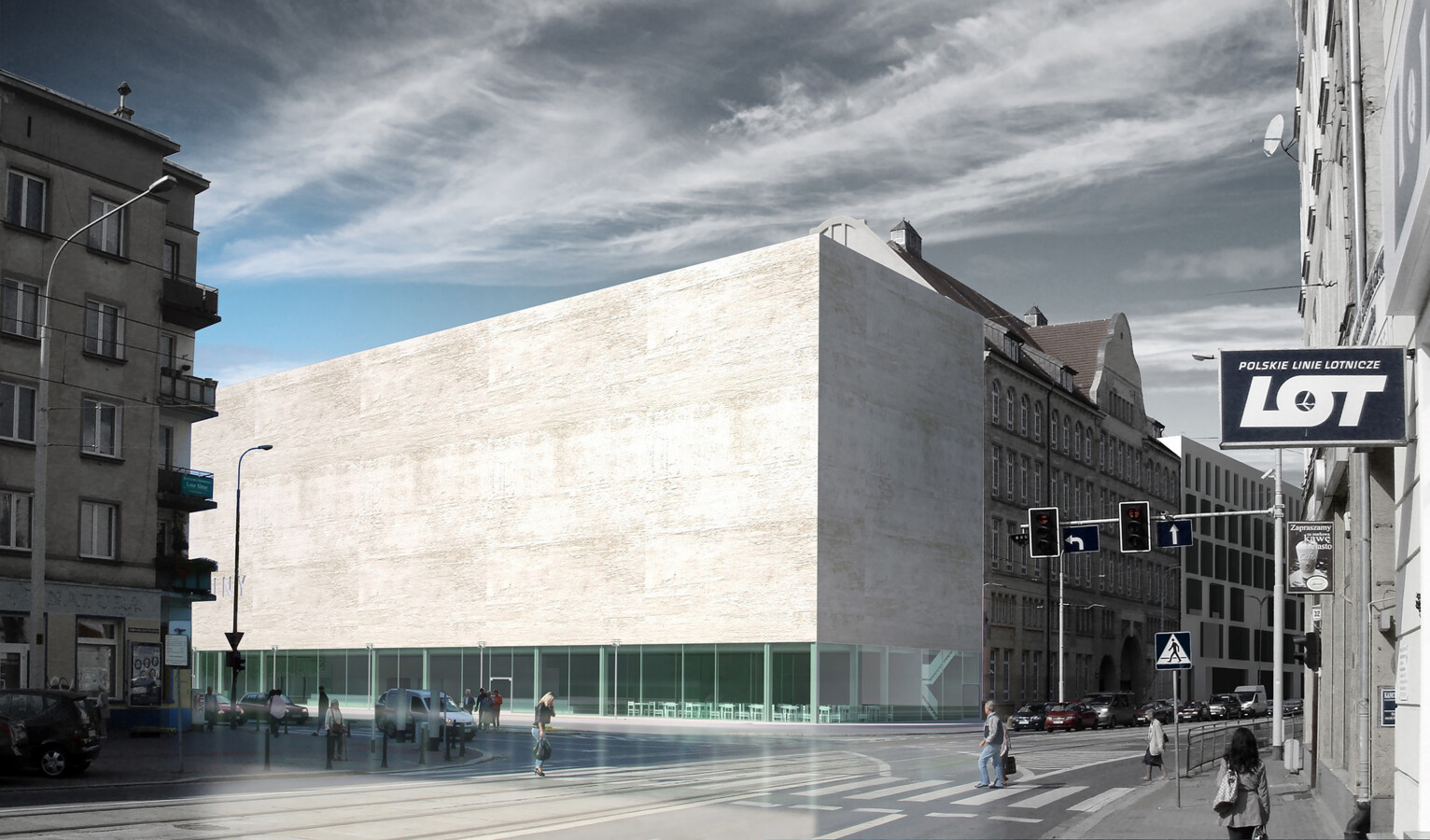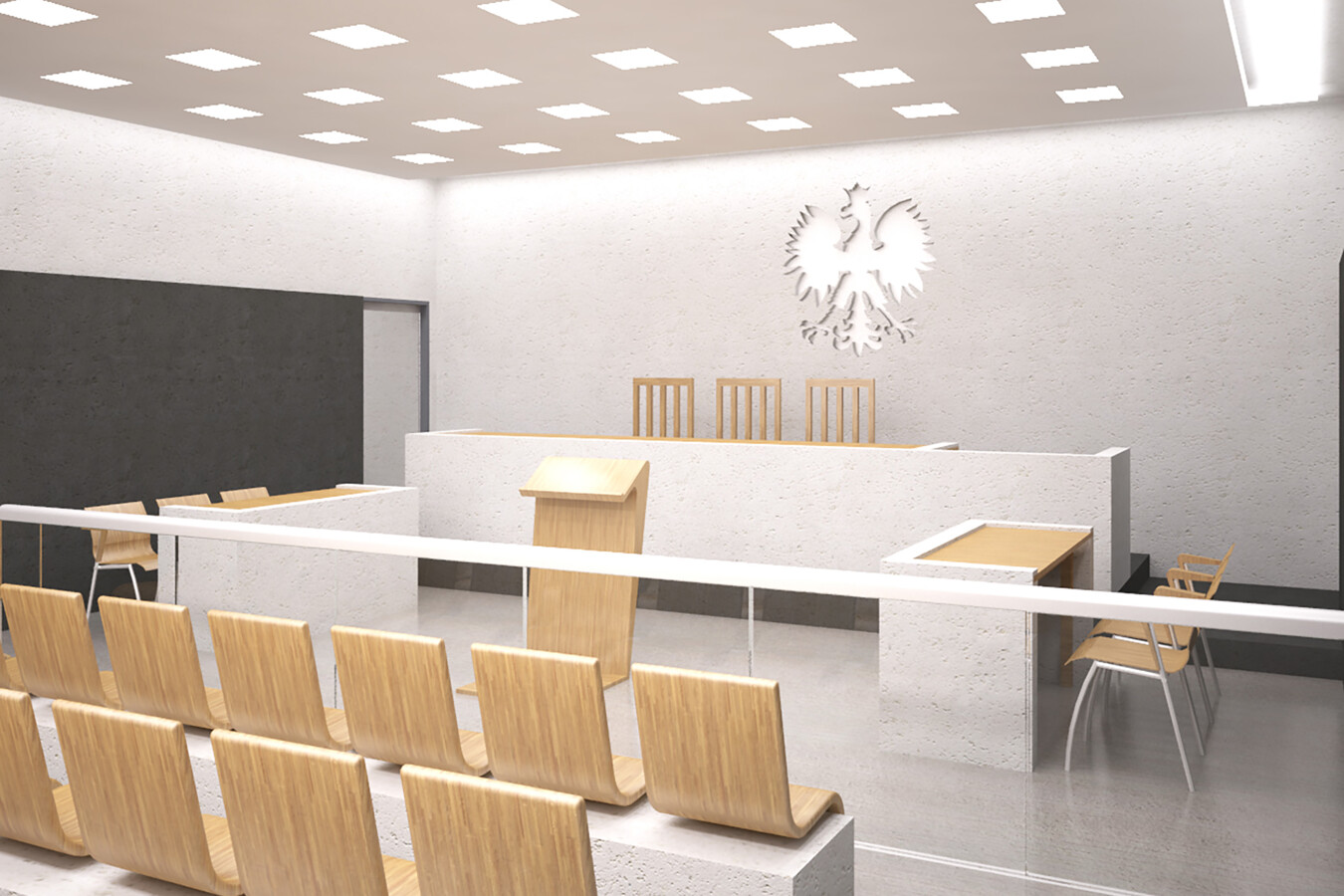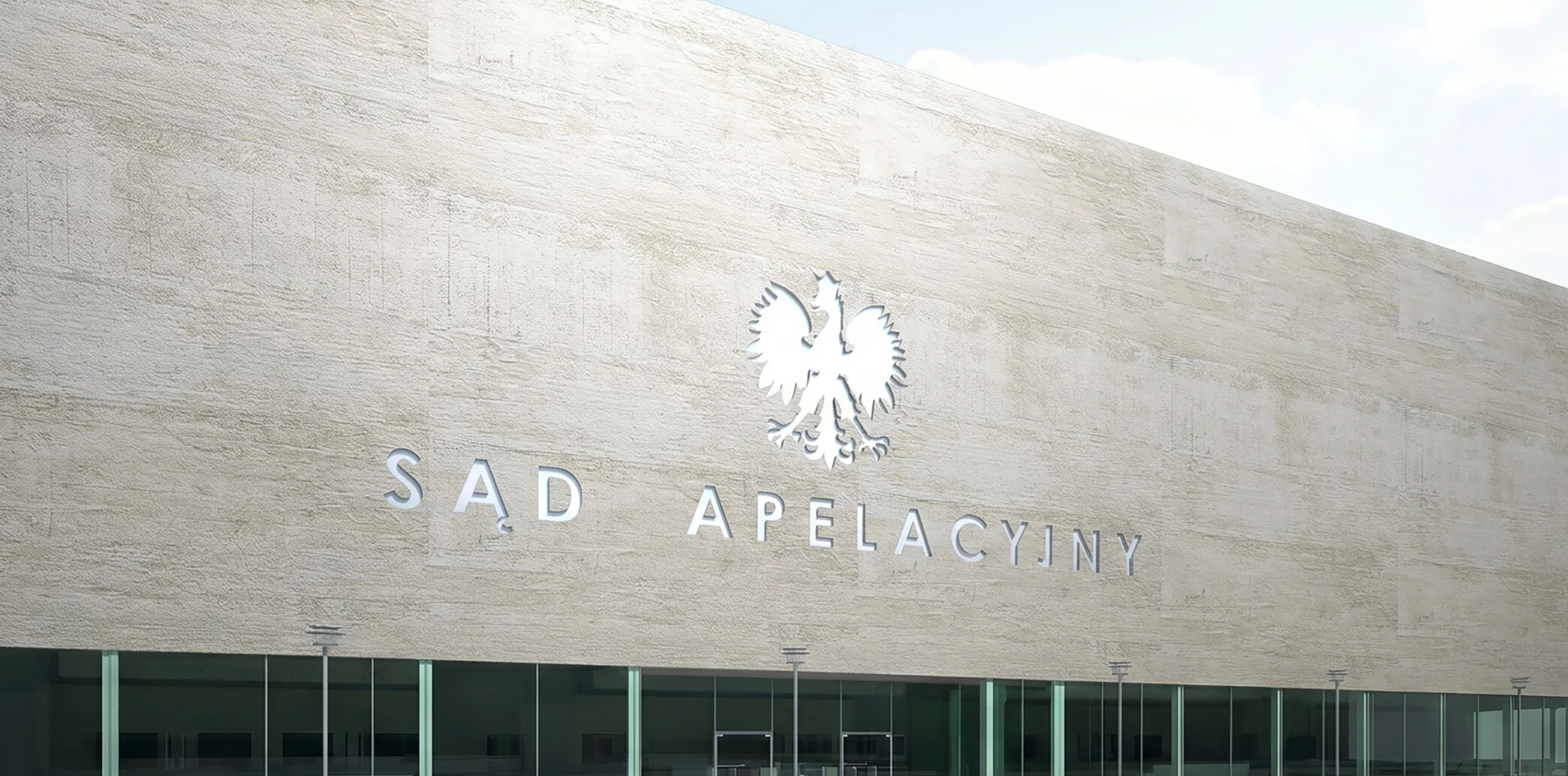
The Court of Appeal project is a monolithic, levitating concrete architectural form. Its raw form is intended to emphasize the majesty of the court. Without unnecessary ornamentation, it is meant to express the institution’s justice, strength, character, steadfastness, and purity. Its ascetic, synthetic massing and clear functional layout highlight the impartiality and autonomy of the space. The distinguishing feature of the design is its strong symbolism combined with a rigorously simple form.
Architecture beyond context
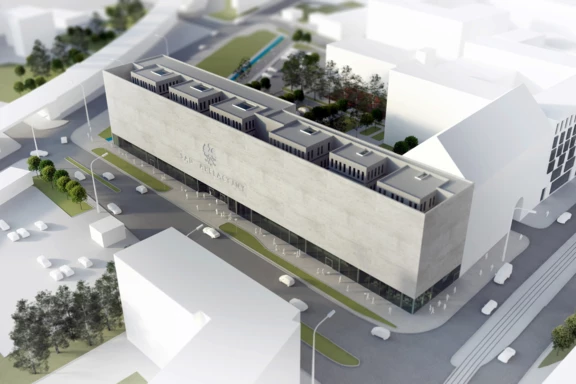
When outlining the design concept, it is essential to reflect on what a court is and what associations it evokes in us — an independent and impartial body of a democratic state. It is an institution that shapes public opinion and influences our understanding of good and evil. These associations were translated into the language of architecture as a synthetic, cubic, monumental form of a place that stands guard over justice.
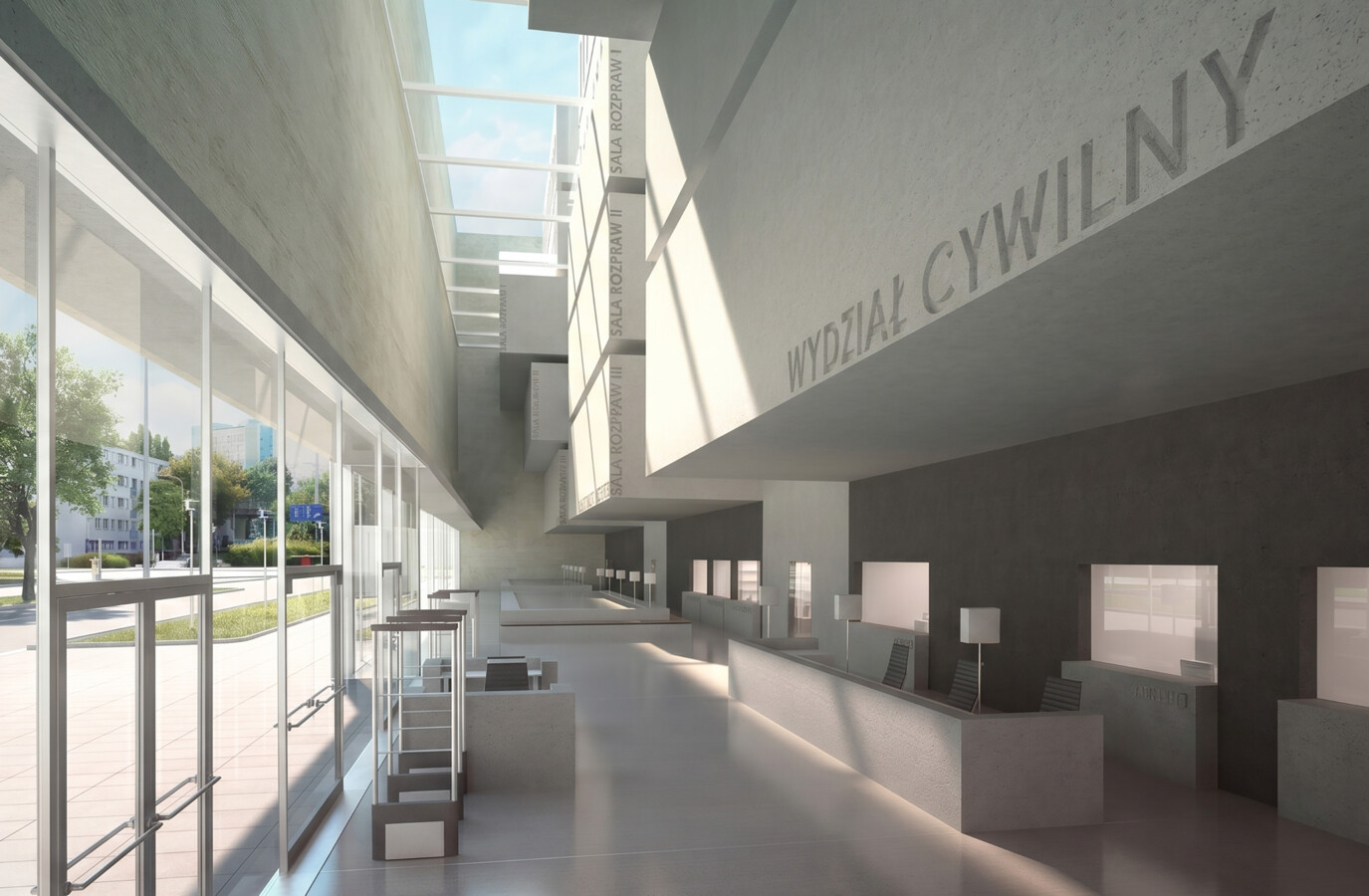
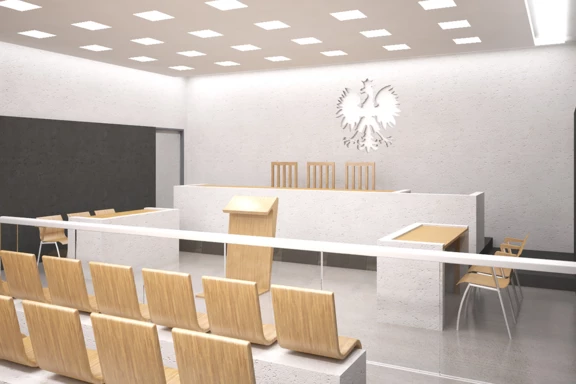
The aim was to emphasize the majesty of the institution of justice, which is linked to the three branches of the Polish state and ensures the safety of its citizens. This was achieved through a monolithic form suspended in space, with the only accent being a relief located above the entrance zone. In line with the same idea, the interior of the building is shaped so that the courtrooms, designed as monoliths separated from one another in space, symbolize the independence of the judicial proceedings taking place within them.
The overall form is intentionally highly minimalist, in order to detach it as much as possible from all associations and references to the surrounding world, just as the administration of justice should be impartial and free from external influence. The only symbol is the eagle, representing Poland — that is, all of us.
Architectural concept
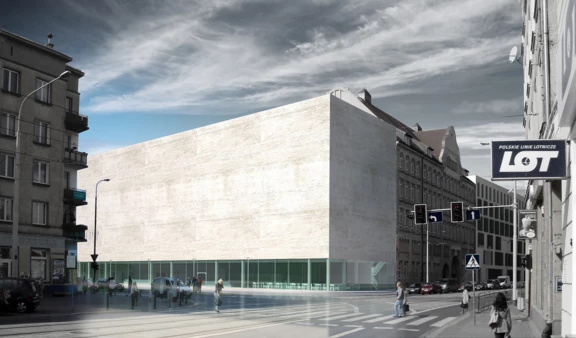
The building form was shaped as a monolithic volume suspended above a glazed ground floor, emphasizing its detachment from the ground. The only accent is the relief of the coat of arms of the Republic of Poland and the inscription “Court of Appeal” above the entrance, which is further highlighted by a recessed section of the façade forming a canopy.
Design solutions and building operation
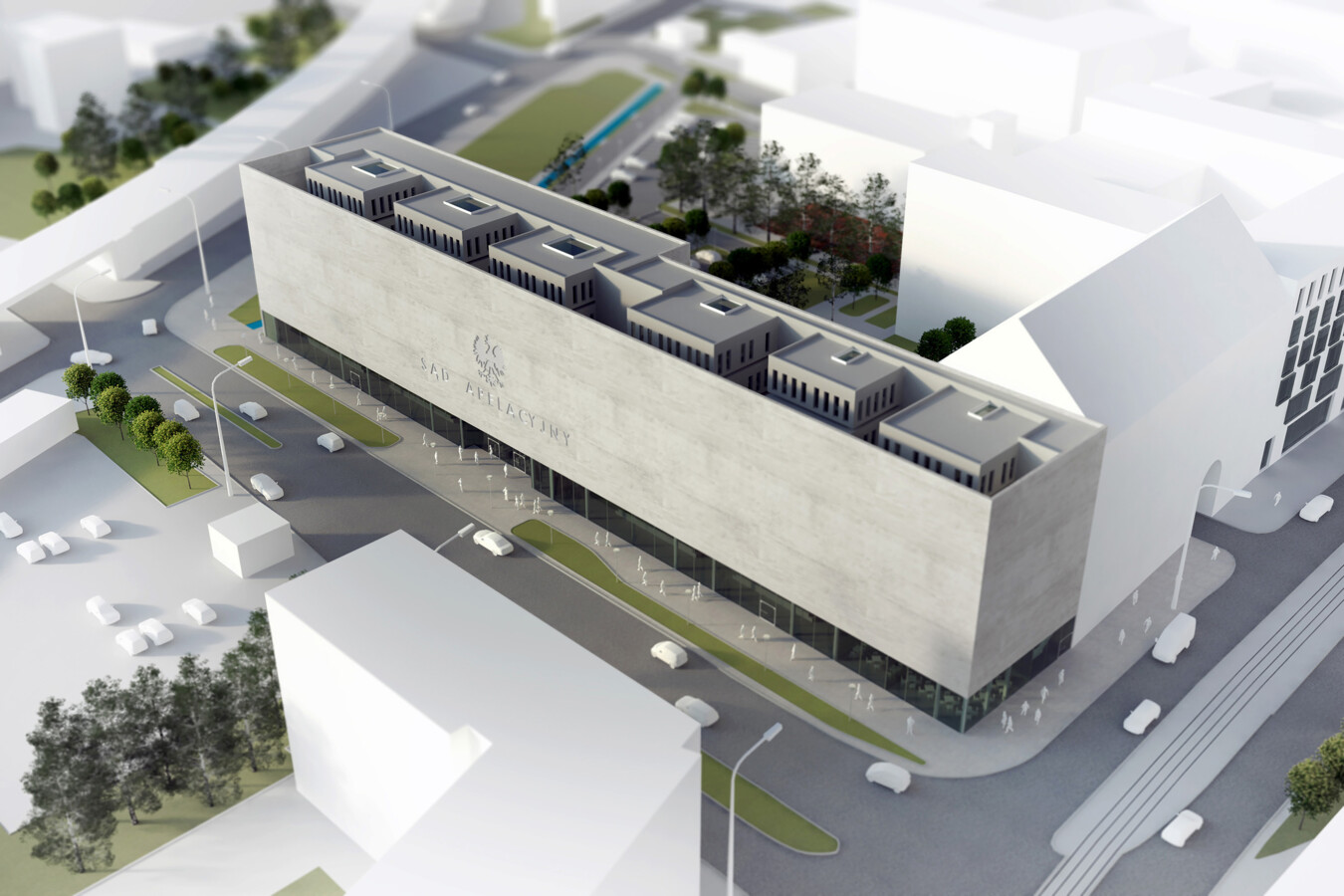
In line with the design concept, the building form along Zielińskiego Street was designed as a monolithic volume suspended at the level of the first floor, with its only accent being the relief of the coat of arms of the Republic of Poland and the inscription “Court of Appeal” above the entrance zone. The ground floor, symbolizing the cubic form’s detachment from the ground, was glazed. A recessed section was introduced within the glazing, creating a canopy and providing additional emphasis to the main entrance.
Rooms requiring daylight are provided with natural lighting by locating them on the upper floors of the building. The administrative spaces have windows facing the inner courtyard of the urban block. In order to ensure the deepest possible penetration of daylight into the building, a system of light wells or roof skylights was introduced.
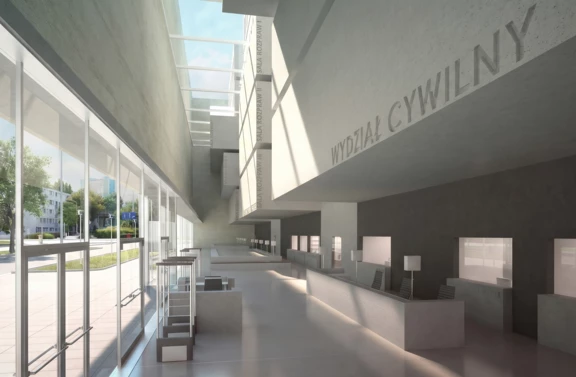
The entrance hall was designed as the most representative part of the building. Suspended directly above the users’ heads are majestic cubic forms of the courtrooms, emerging from the monolith. Distinct separations were introduced between them, both horizontally and vertically, symbolizing the independence of the proceedings taking place within. The cube-shaped courtrooms symbolize strength, formal synthesis, and at the same time the complexity of the judicial process as a whole. The hall is illuminated by a system of roof skylights, creating an interplay of light and shadow across the courtroom forms throughout the sun’s daily movement across the sky.
Distinguishing features of the project
Due to the limited amount of glazing on the northern, eastern, and southern façades, heat loss and building overheating are reduced.
Thanks to roof skylights, the entrance hall is not only naturally lit, but can also be ventilated as needed. Due to the limited size of the roof glazing, light penetrates the interior only indirectly, preventing excessive overheating.
In the entrance hall, the skylights were designed as a five-layer ETFE membrane (ethylene tetrafluoroethylene). This material is widely used, for example in the Afrykarium, and allows the amount of light entering the interior to be controlled by pneumatically changing the position of the foil layers in relation to one another. As a result, the desired thermal effect is achieved. An additional advantage of this solution is noise reduction, as it dampens sound and eliminates reverberation inside the entrance hall.
Locating the judges’ rooms on the western side protects them from overheating during working hours and allows heat to accumulate after hours, when the cooling system is no longer required.
Heat for domestic hot water is obtained during periods of high solar exposure through absorption mats placed on the roofs within the finishing layer. Unlike solar panels, this type of solution does not require the heating medium to be heated in winter, and it is also less visually intrusive, as it is invisible from the outside.
Gallery