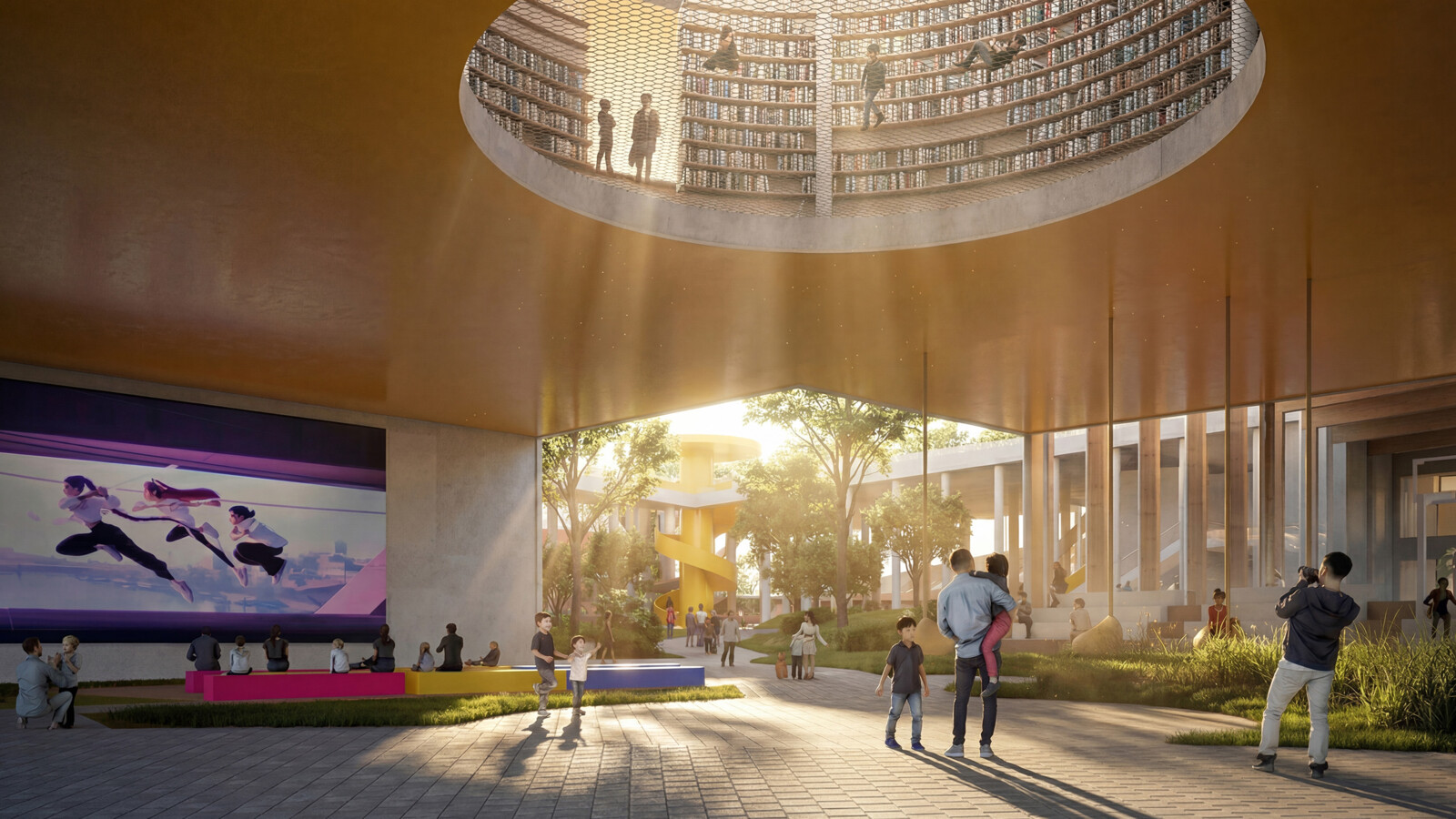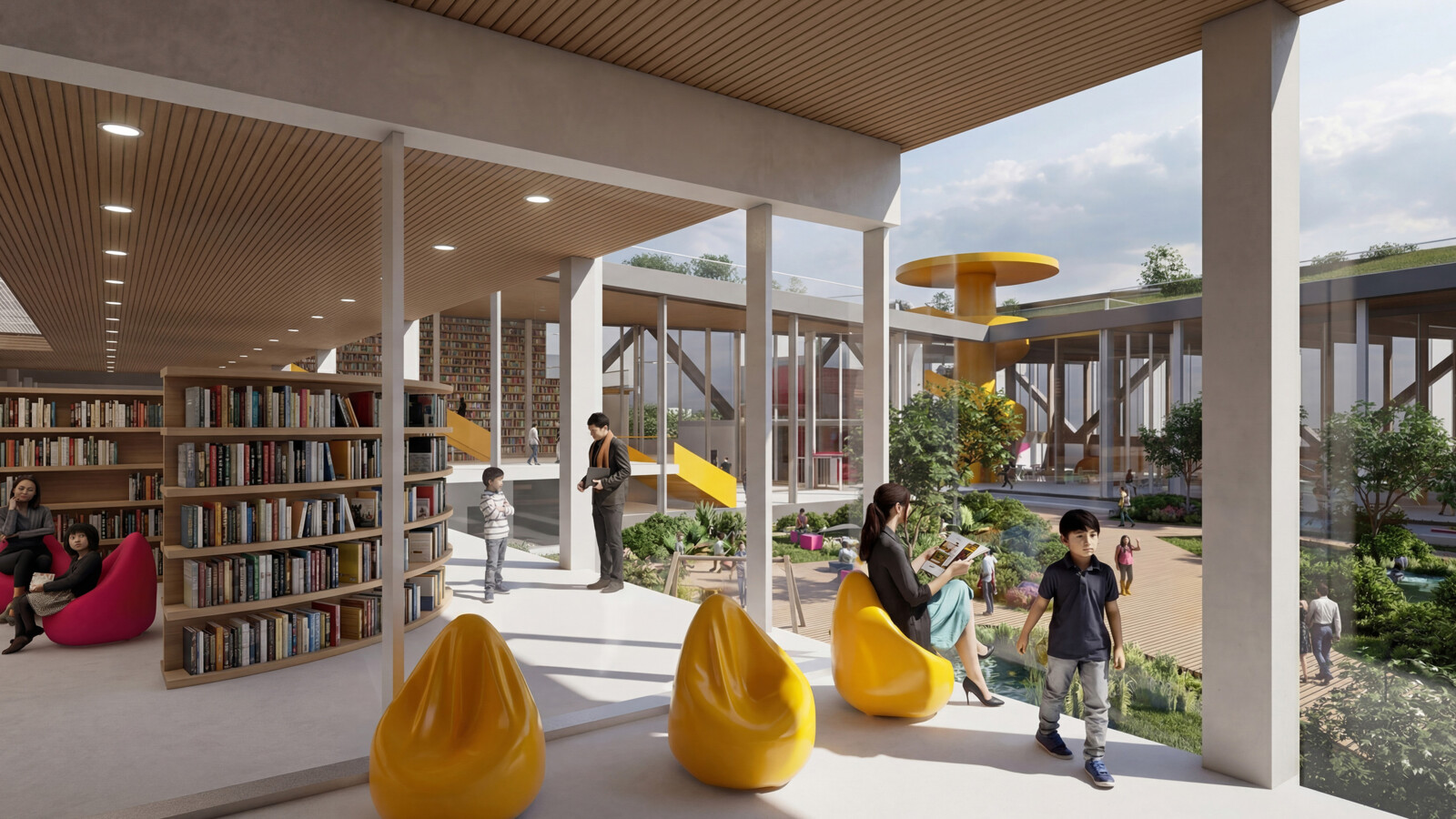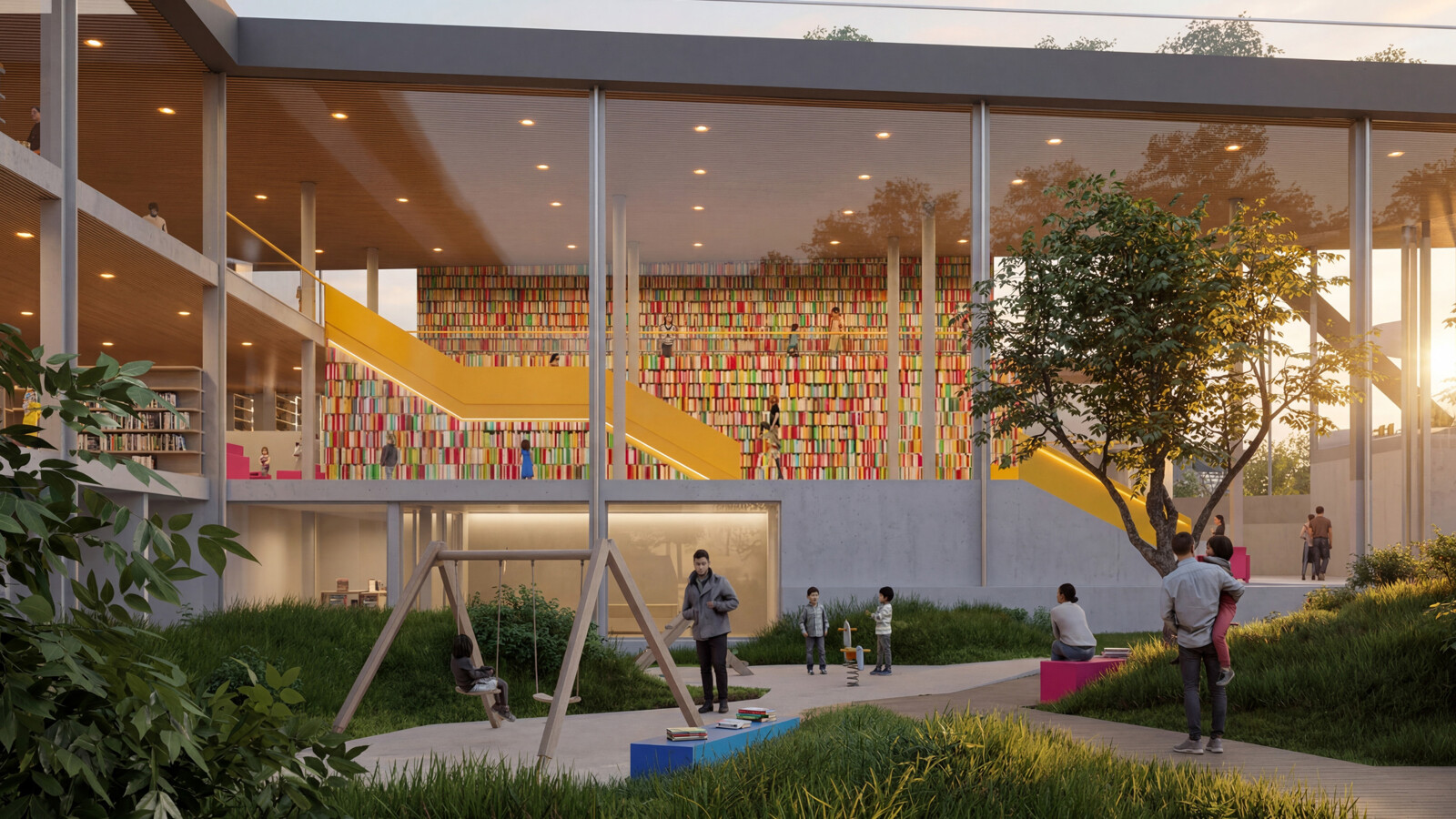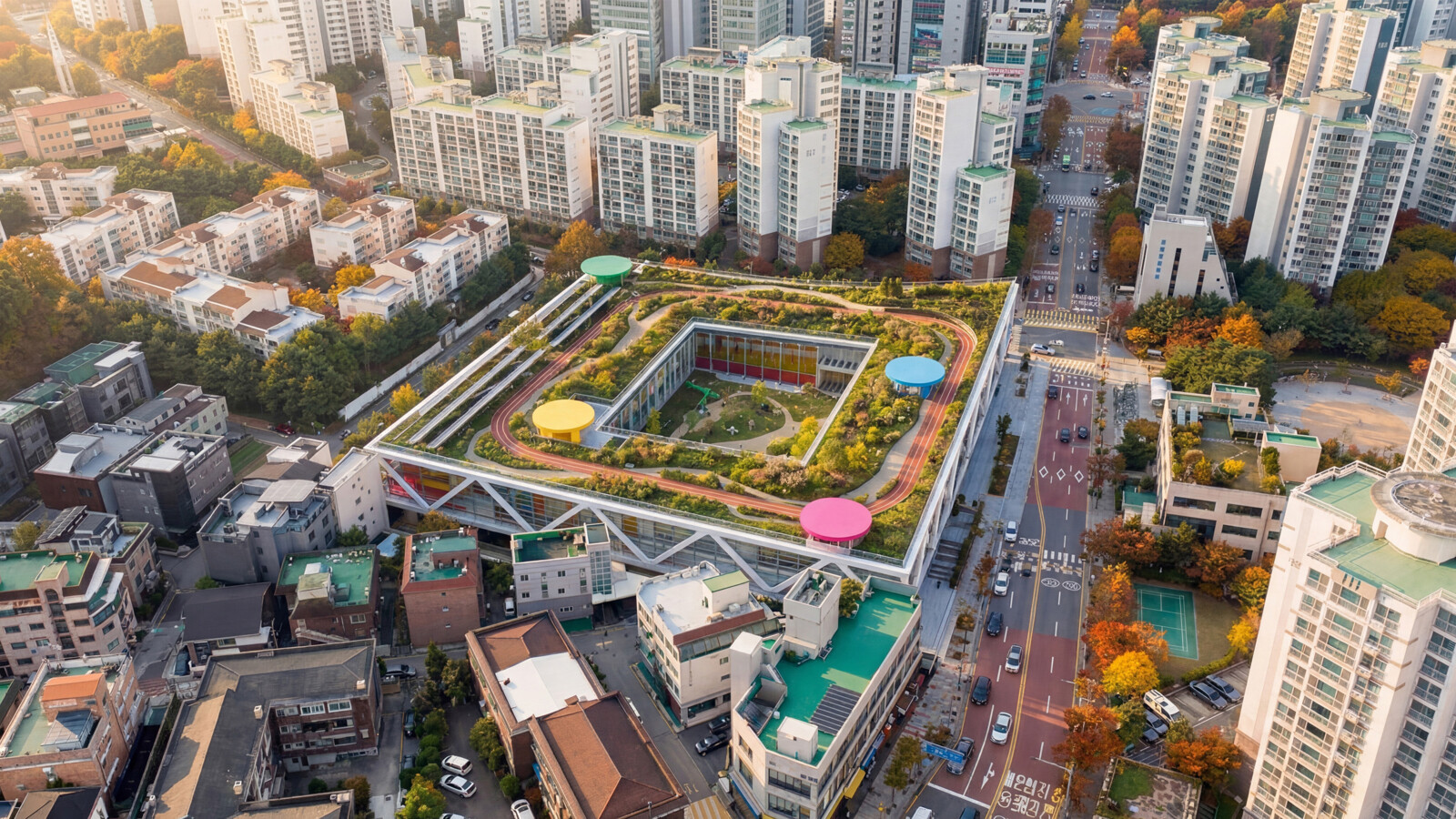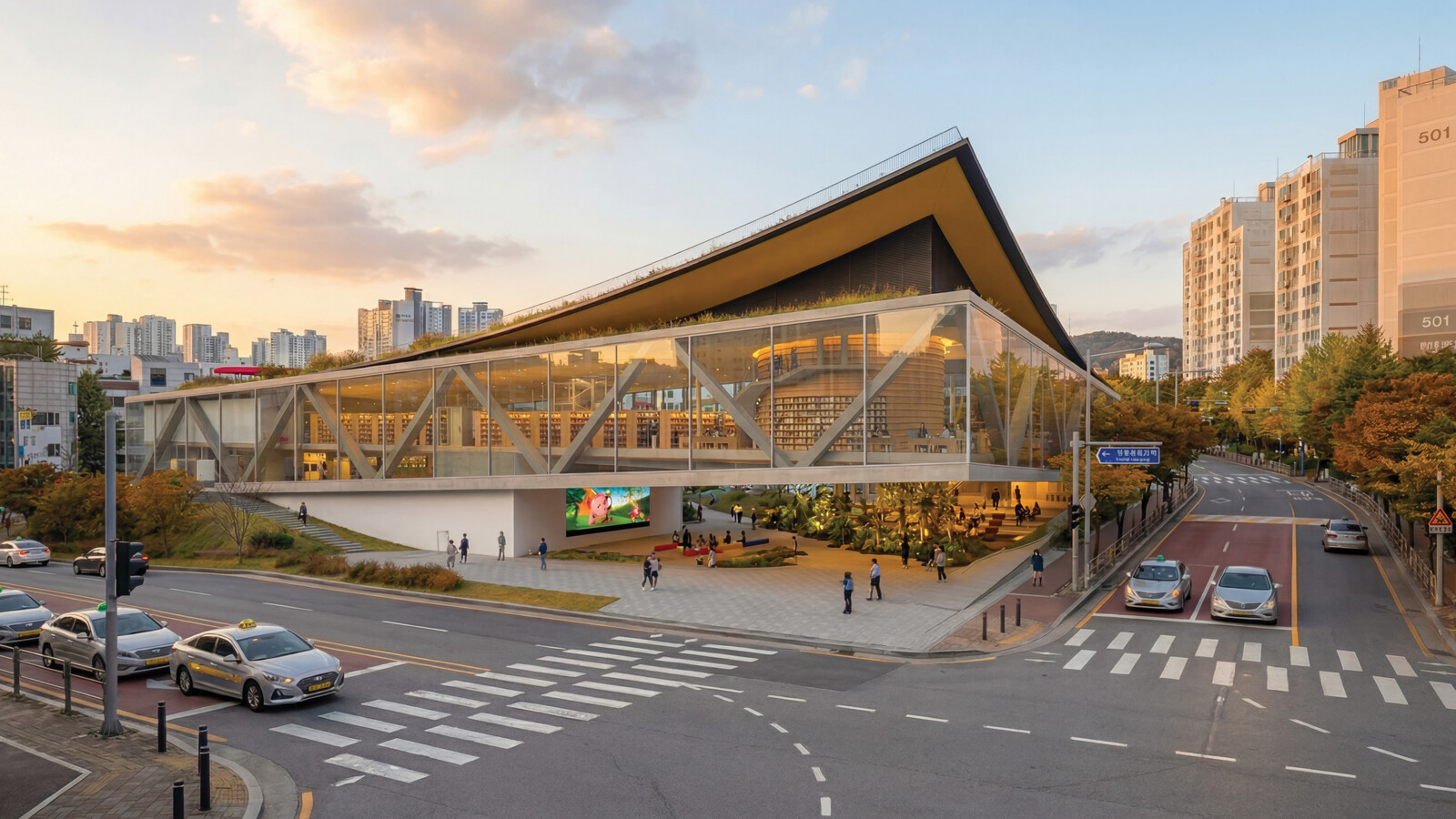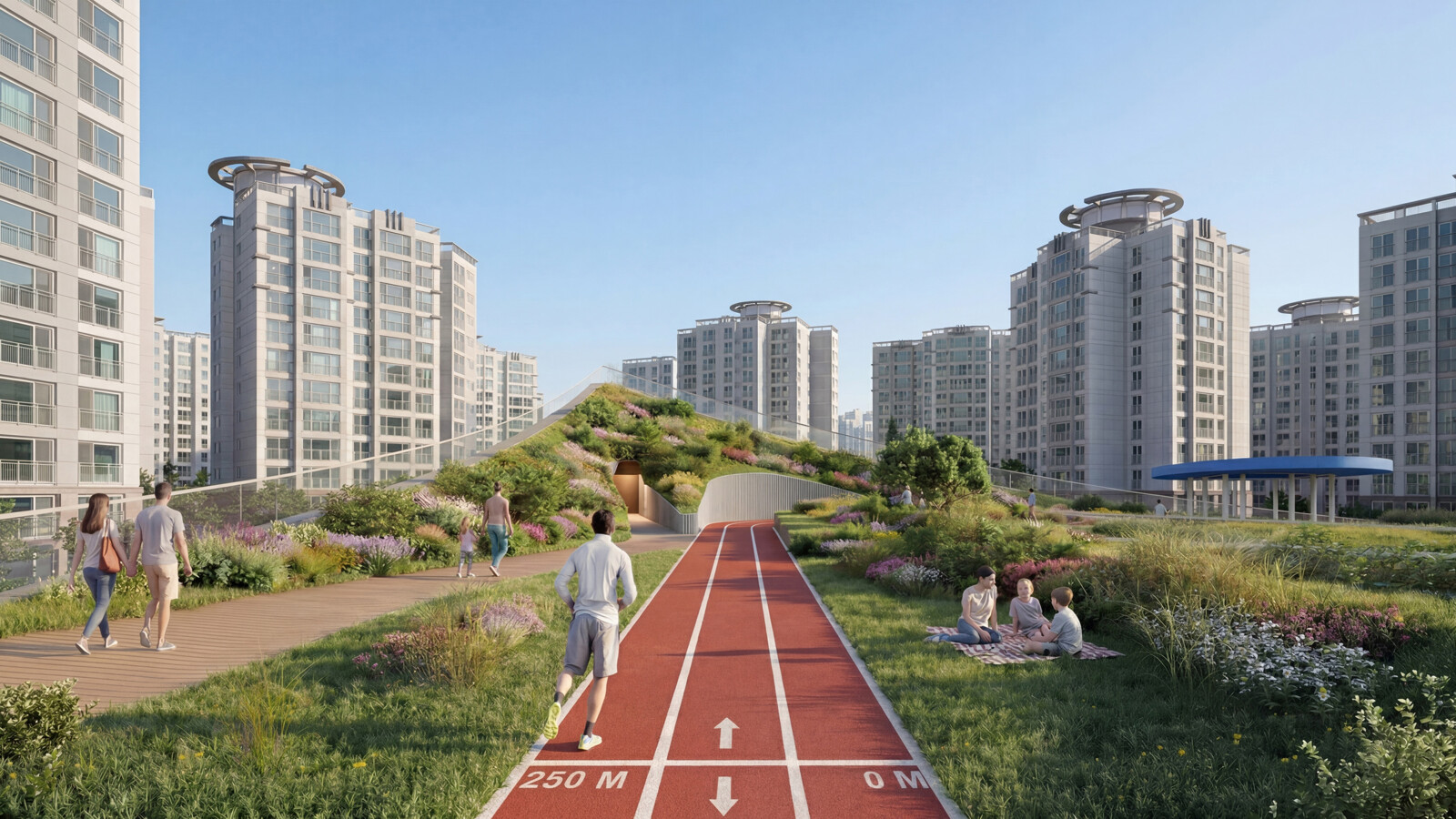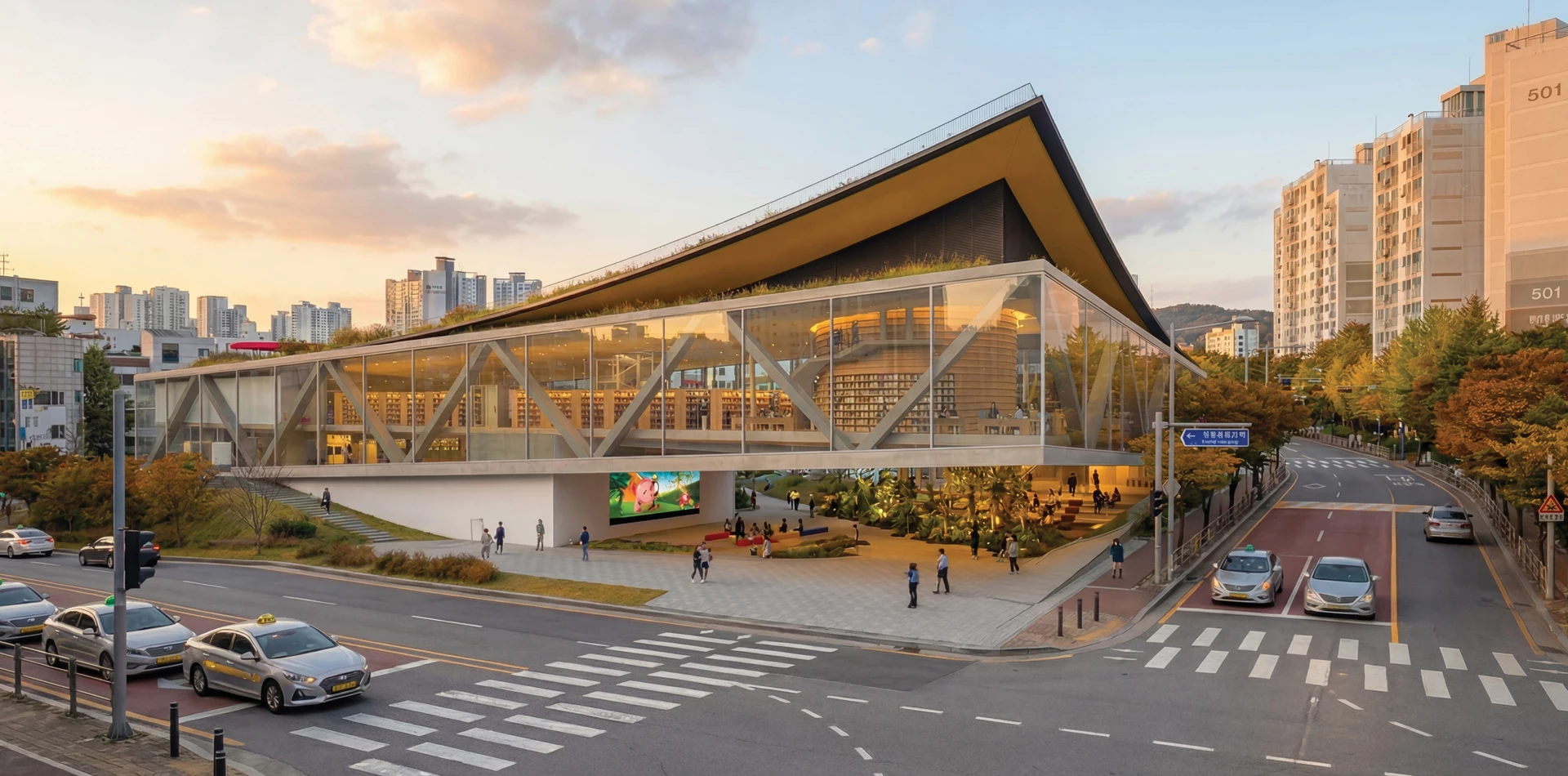
Living Loop is an innovative center that combines culture, sport, and recreation, redefining the relationship between a public building and urban space through its introverted form. The design is distinguished by a deliberately reversed access sequence, guiding users first through a vibrant central courtyard. Its defining feature is a lifted corner of the volume, resembling the turned page of a book just beginning to open. The entrance invites users inside, offering a momentary escape from everyday life. The roof serves as an additional publicly accessible recreational space, featuring a 250-meter running track. The project was created in collaboration with Sung et Associés Architecture from Seoul, South Korea.
Architecture revealed from within
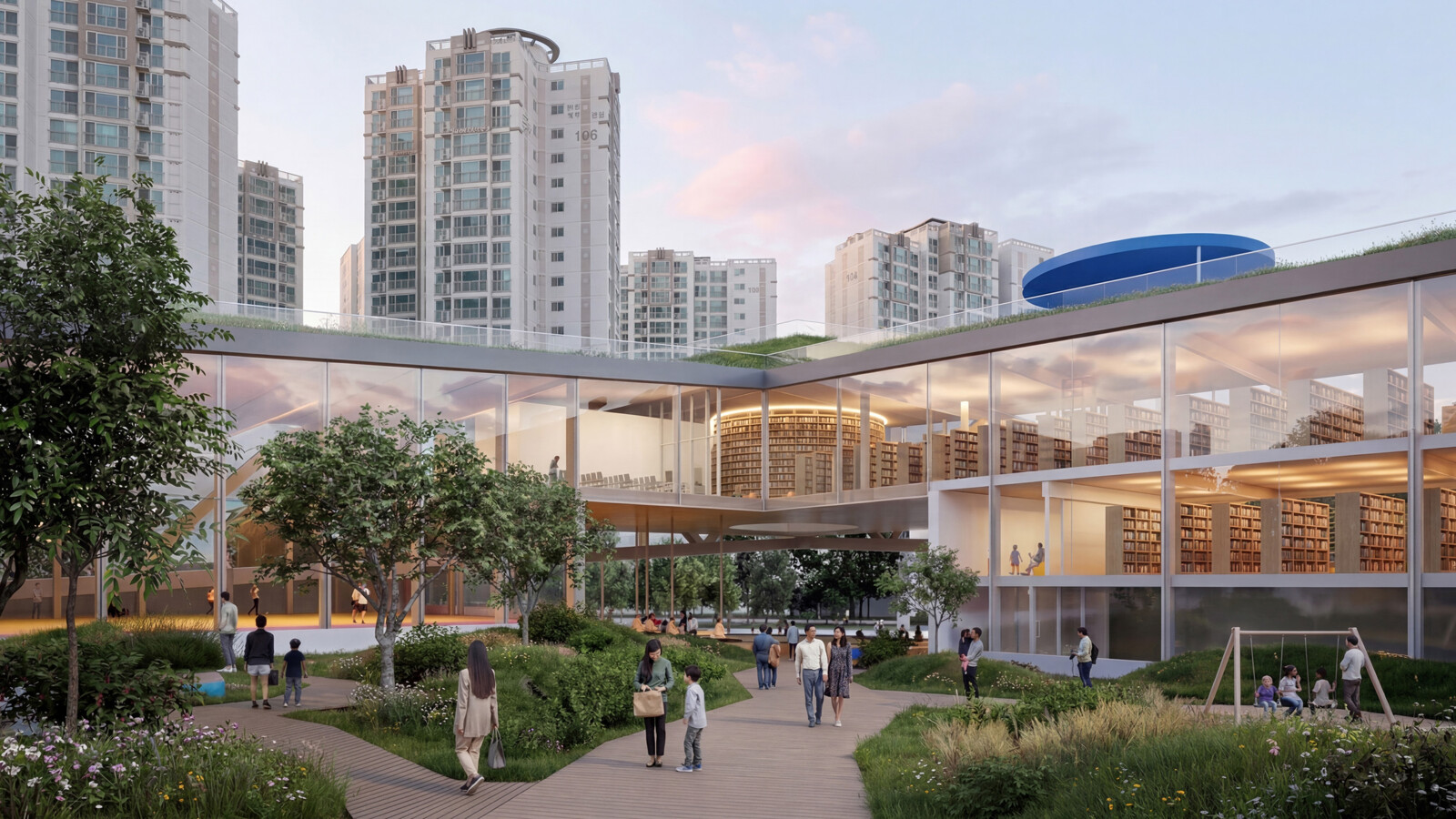
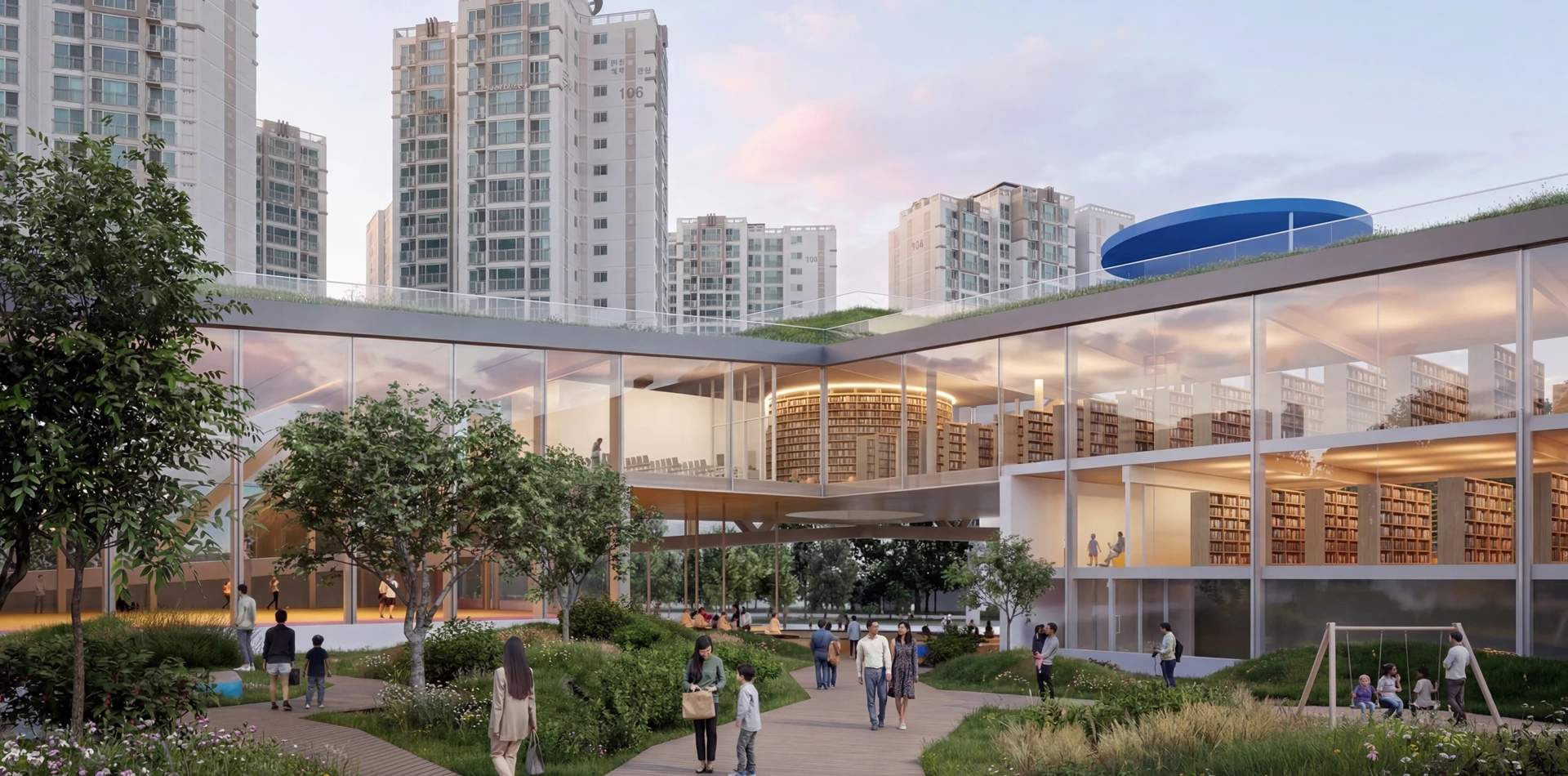
The Living Loop project redefines conventional thinking about public buildings. Instead of a monumental façade open to the street, it proposes an introverted form organized around an internal atrium.
The building operates as a “loop of life” (the titular Living Loop), interweaving the local community and offering a multi-layered spatial experience—from a vibrant entrance plaza, through calm and contemplative interiors, to an active, sport-oriented green roof.
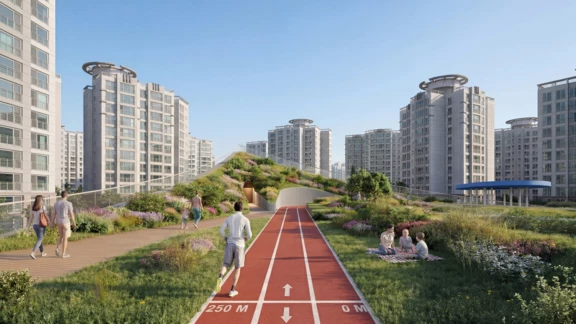
The design emerges directly from its unique location within a natural basin between surrounding hills. This topography became the matrix for the entire concept: the building’s roof and the adjacent urban layout are shaped as a system of mounds and elevations that blur the boundary between city and nature.
The volume responds dynamically to its context—stepping down toward the southern greenery and low-rise development, while rising toward the northern high-rises, integrating harmoniously into the skyline of the area.
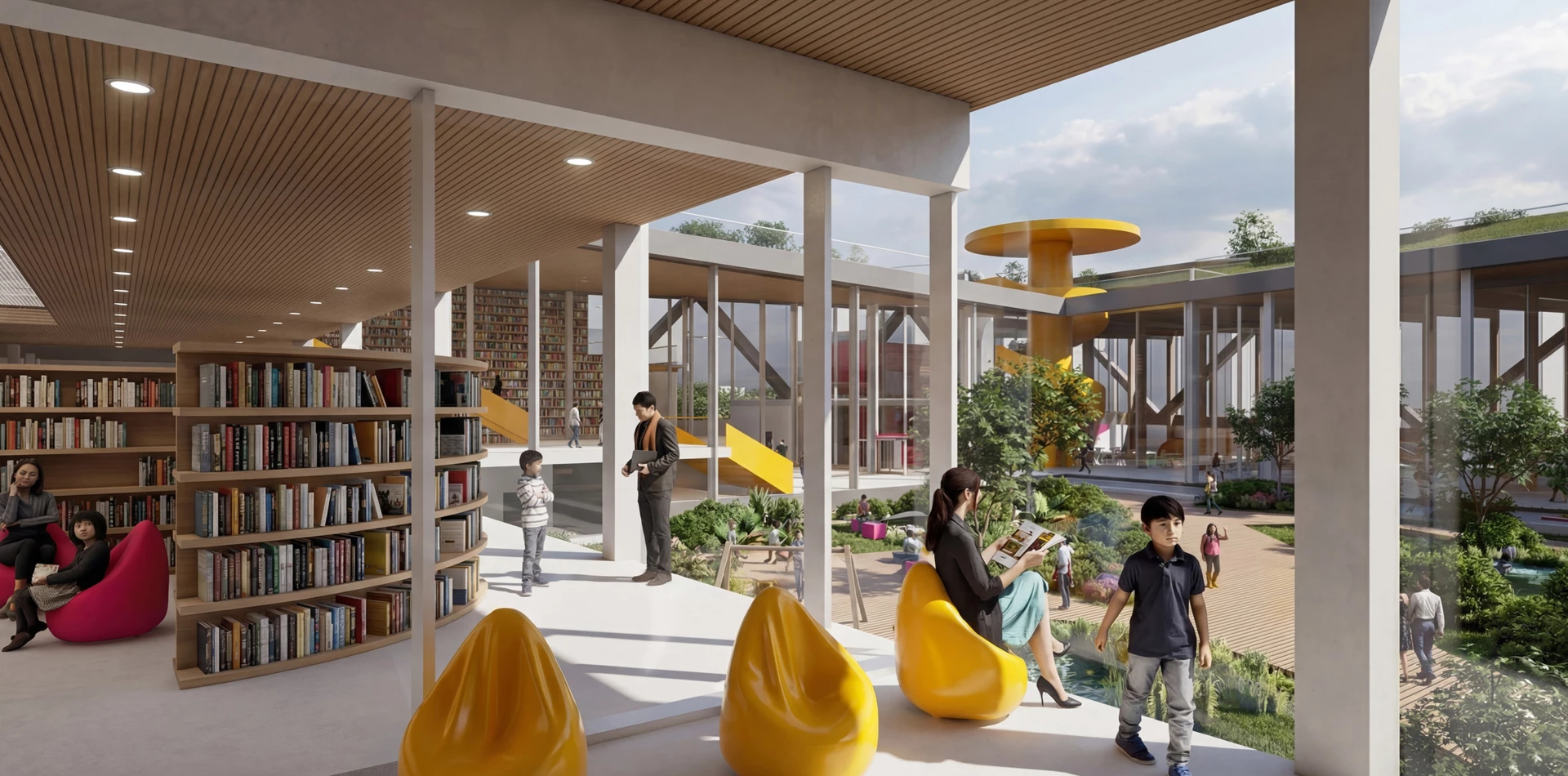
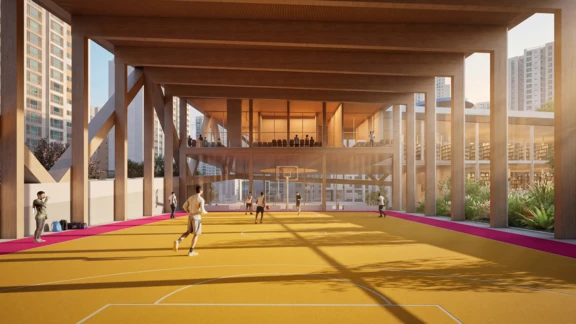
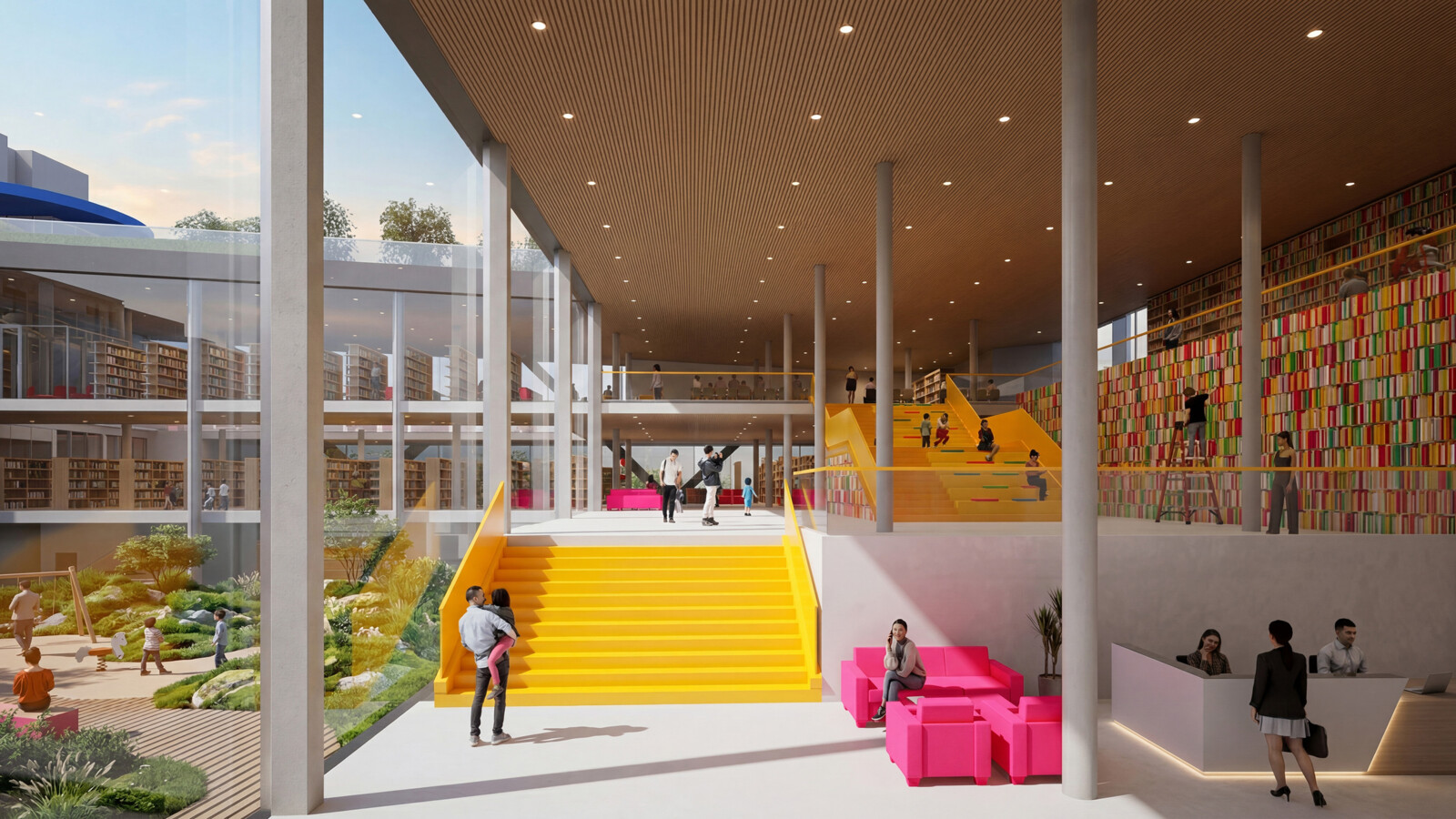
A key gesture of the design is the उठlifted north-western corner, which, like the open cover of a book, invites users inside. Functionally, the building is divided into two L-shaped wings—a library and a sports zone—connected by a central lobby and a Kids Café.
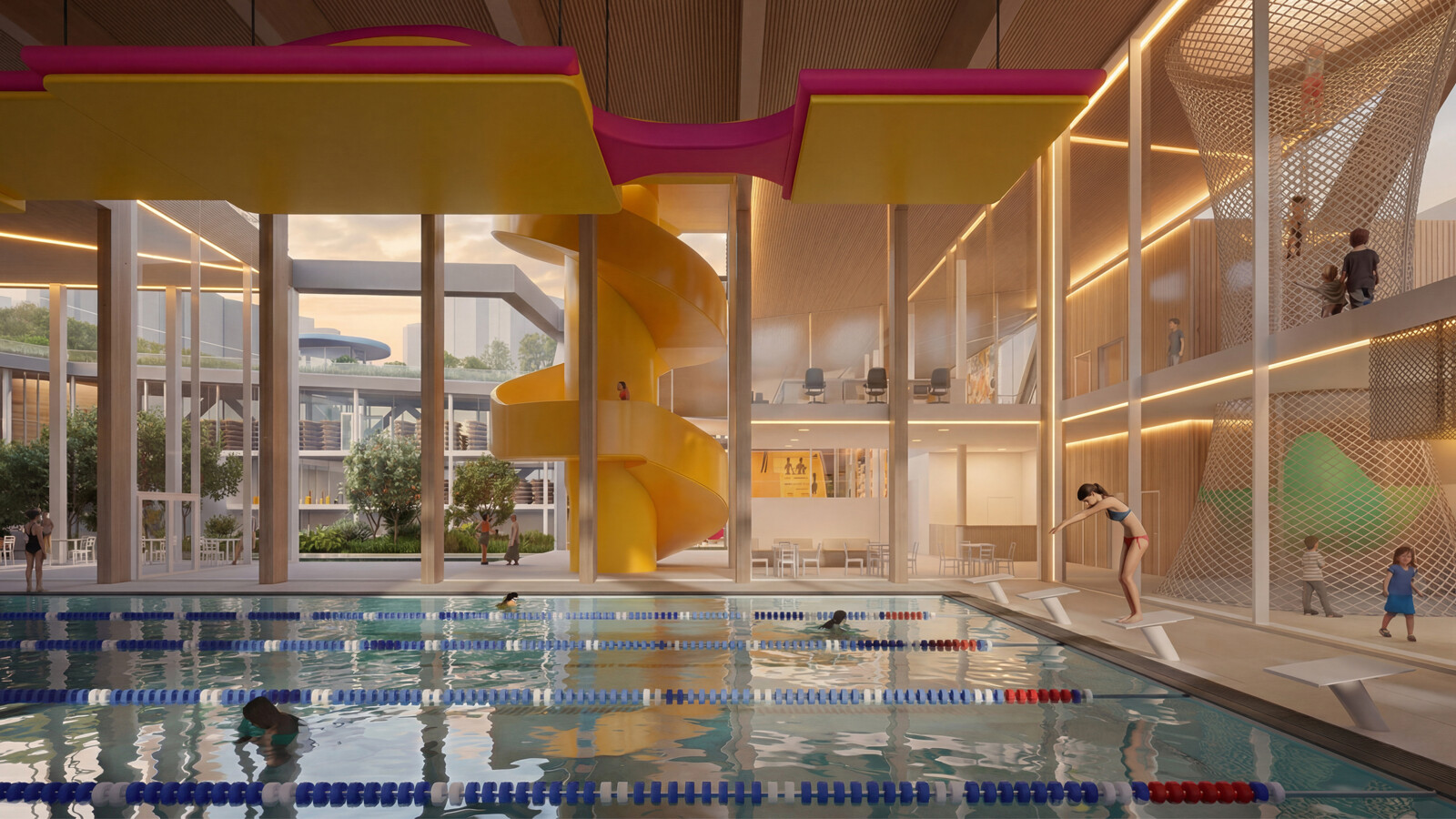
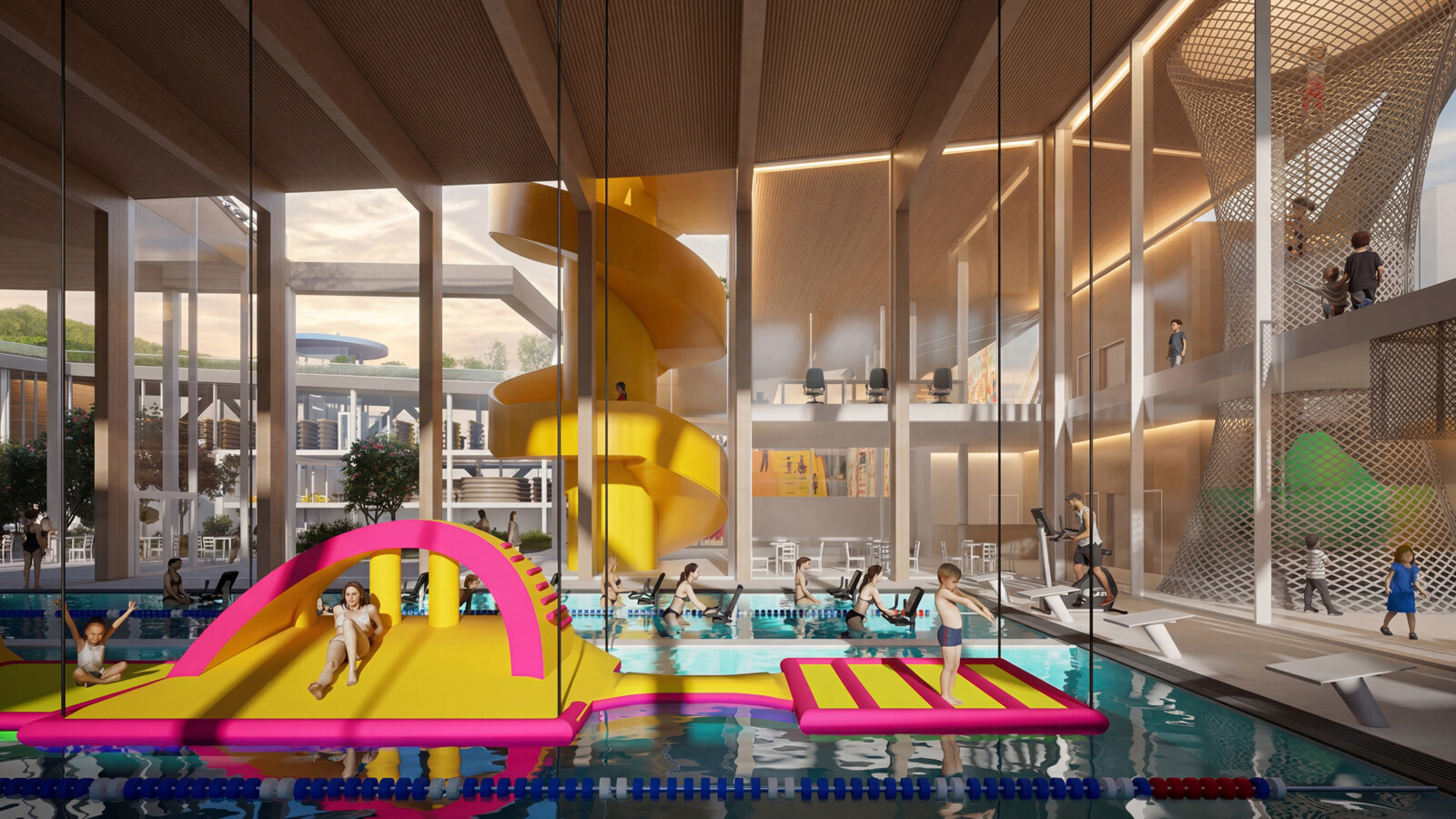
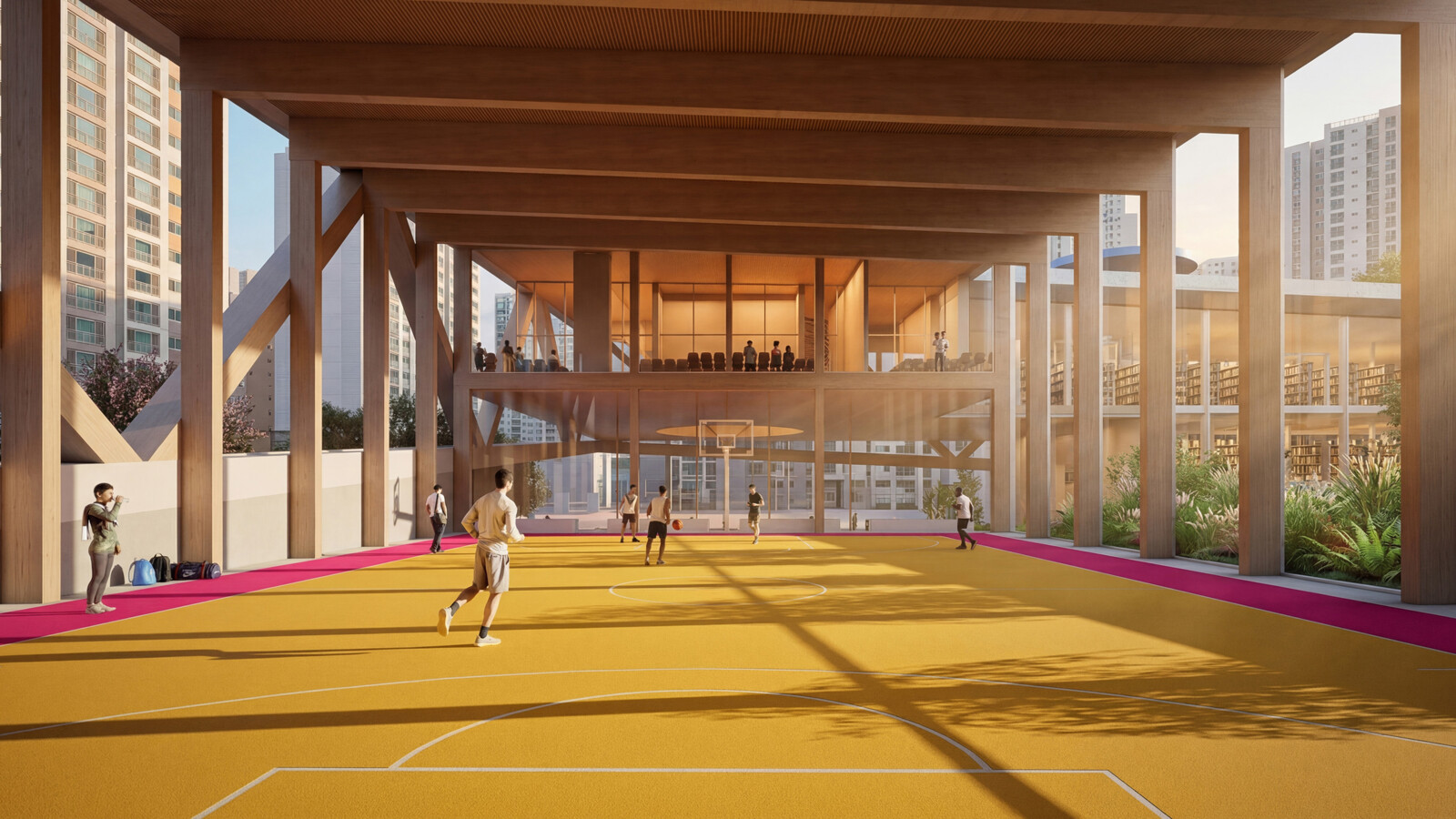
The sports zone includes a basketball hall and a swimming pool. The pool’s functionality has been expanded to accommodate a wide range of users: in addition to five swimming lanes, two are equipped with movable floors, and a rehabilitation lane with dedicated hydrotherapy stations is also provided. The adjustable-depth area can be used for fitness activities or swimming lessons in shallower water.
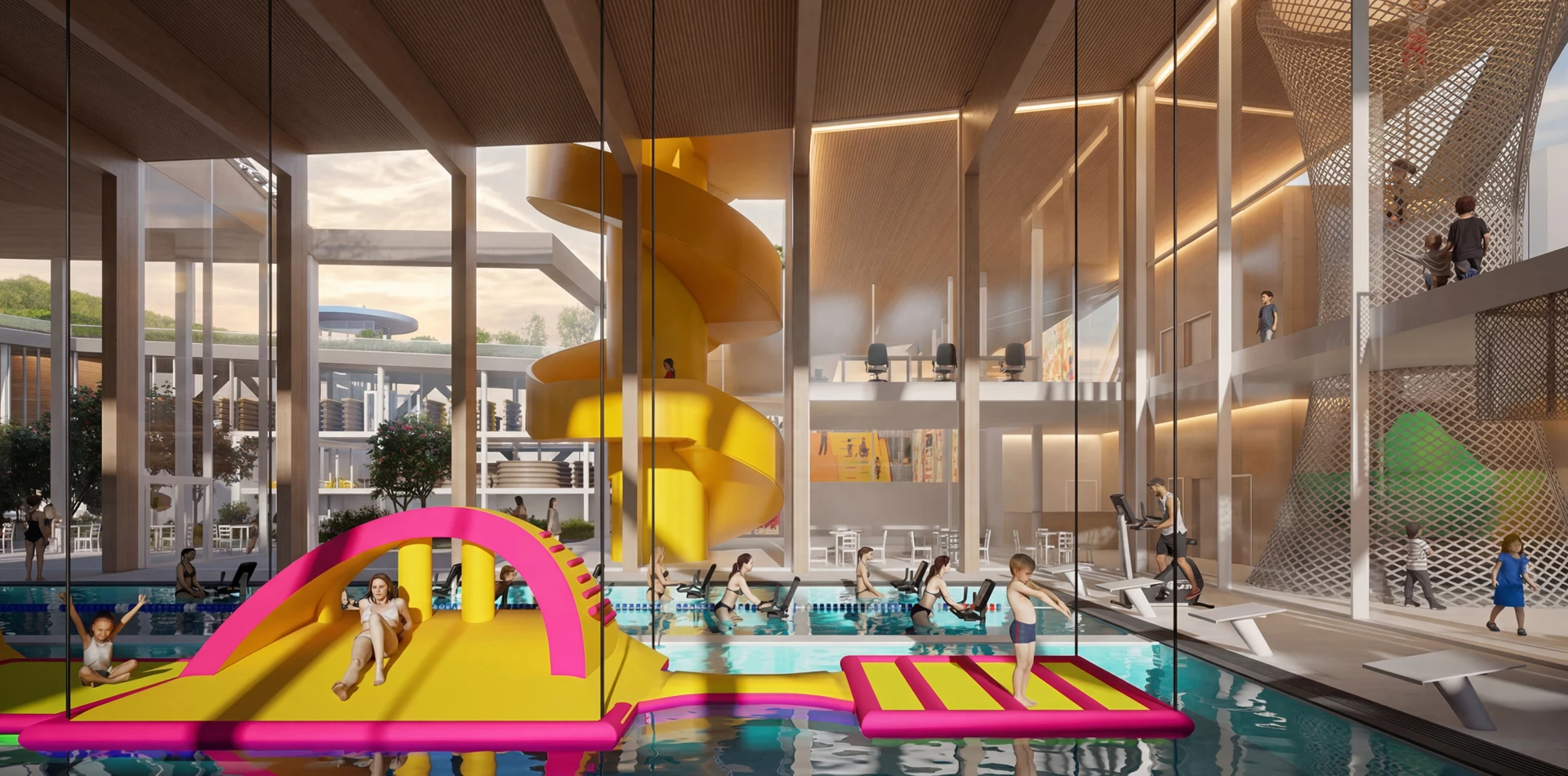
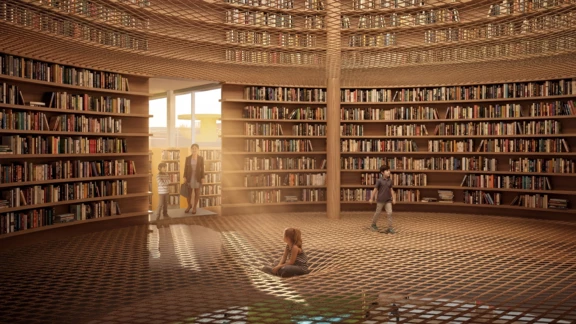
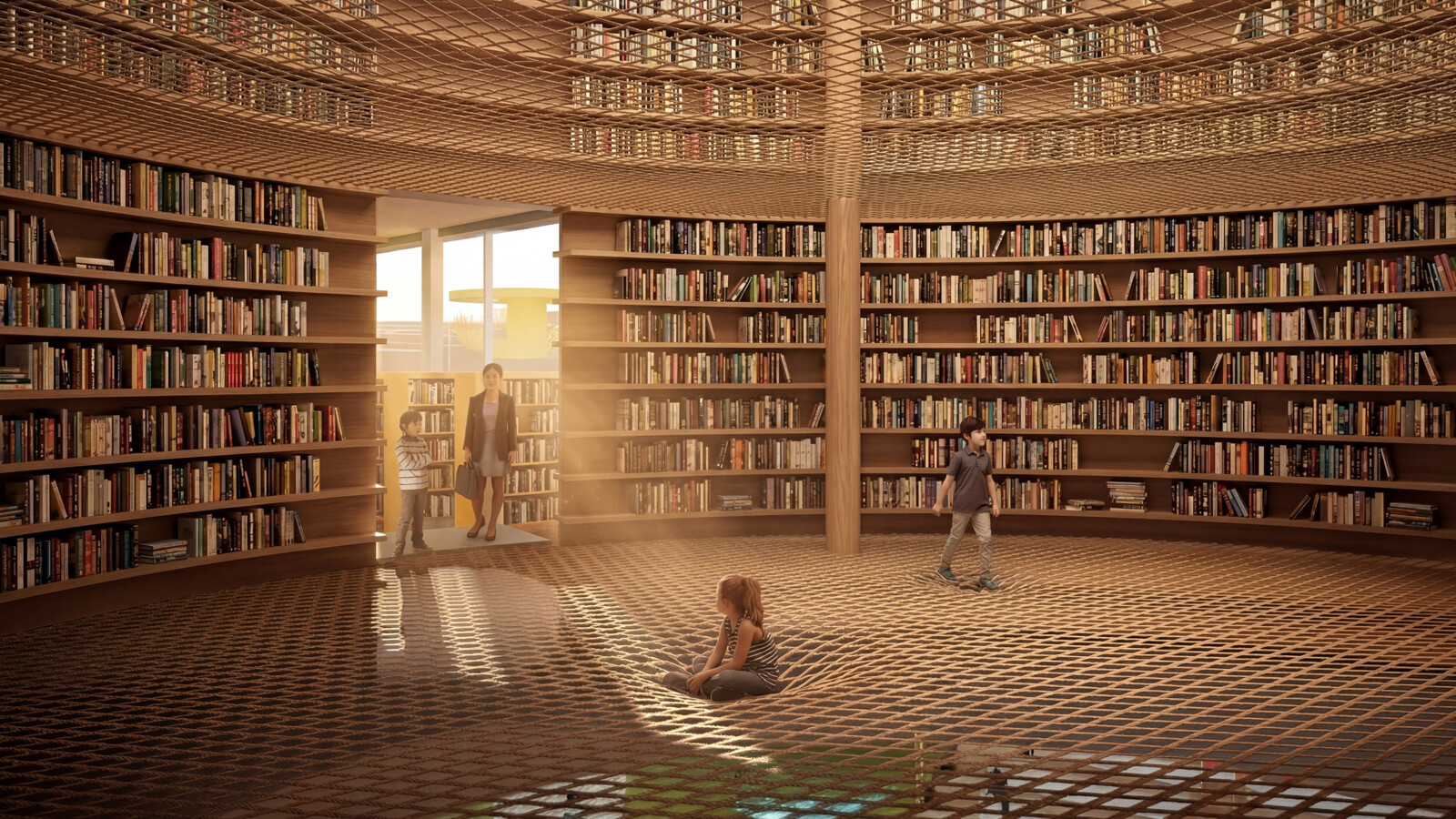
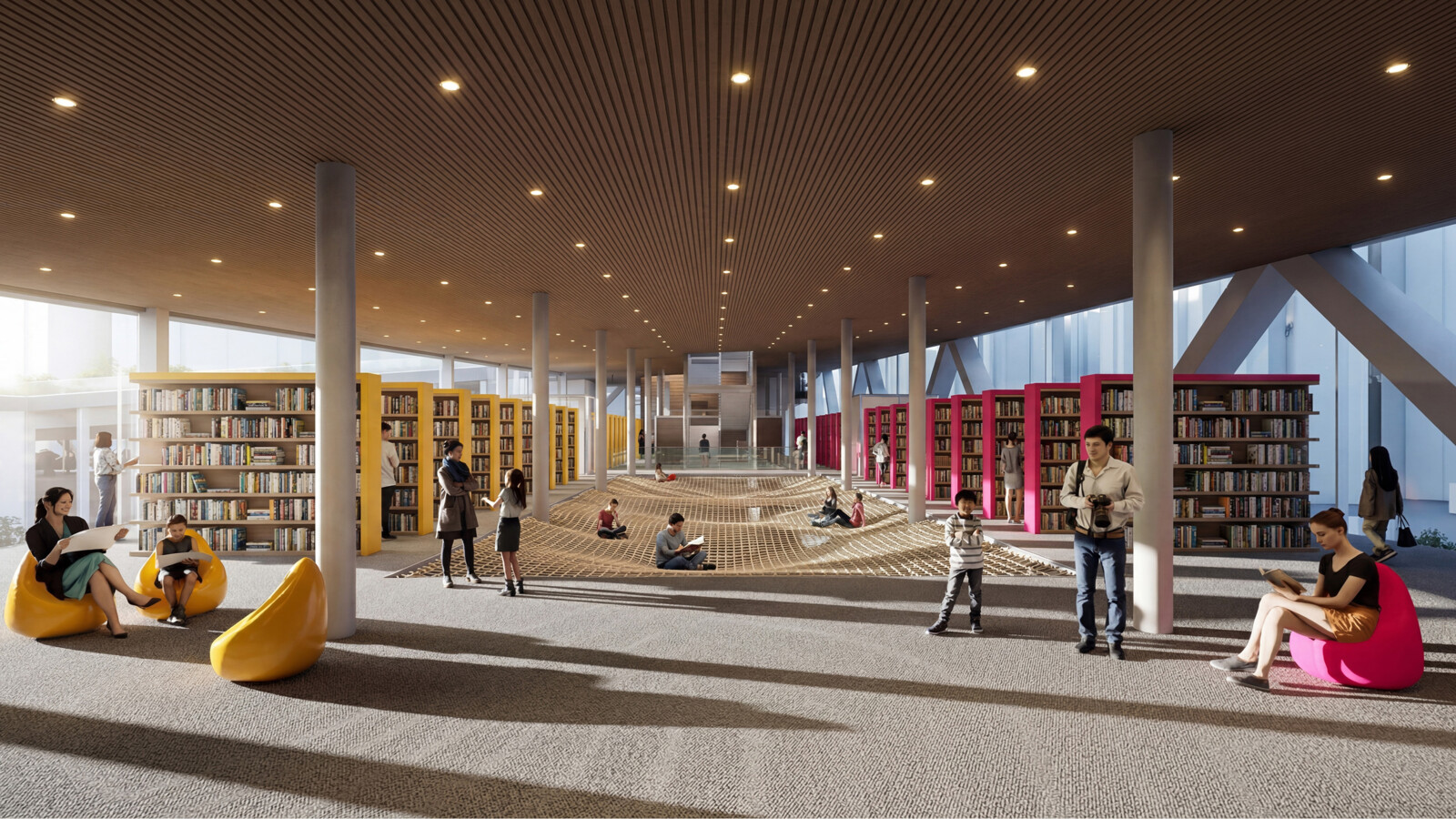
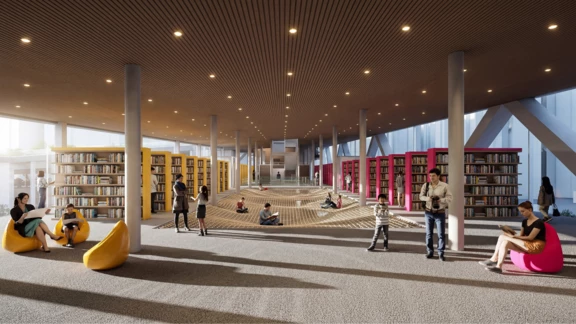
The library incorporates tectonic elements within its interior, such as staircases that transition into seating and suspended nets for lounging. This allows for diverse ways of using the space—from open, social and lively zones to quiet and intimate areas. An opening in the ceiling, covered with an acrylic panel and visible from the sidewalk in front of the building, is intended to become a distinctive photo point and a recognizable landmark at the regional scale. The program is complemented by a locally oriented café, forming a natural extension of the public realm, with access to an outdoor terrace—also welcoming visitors with pets. The roof, conceived as the “fifth façade,” accommodates a 250-meter running track and green terraces, creating a publicly accessible park above street level.