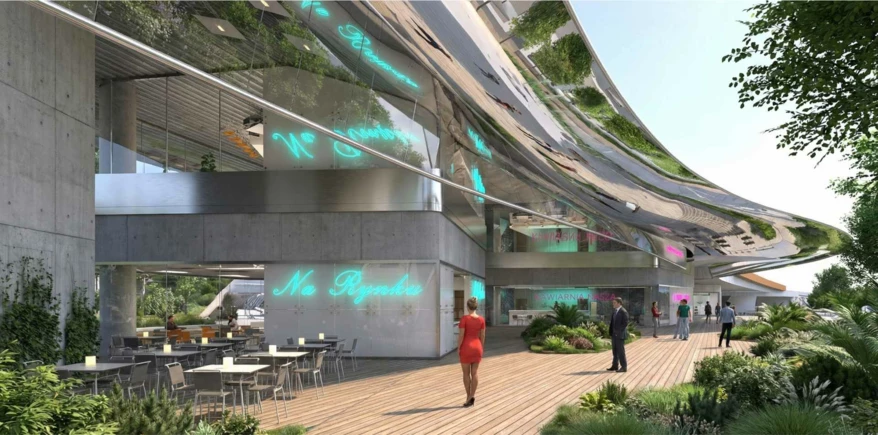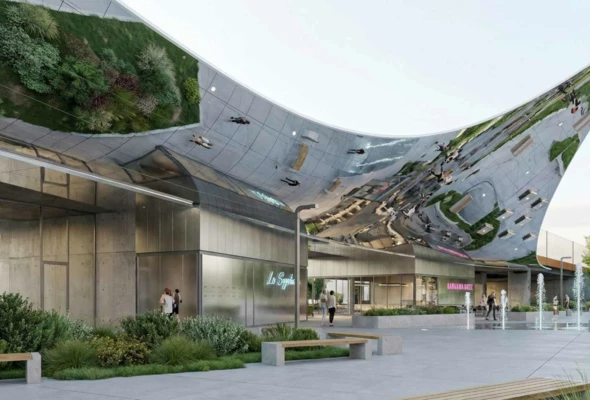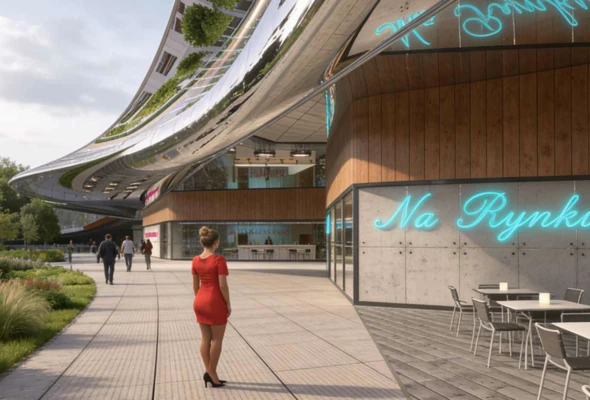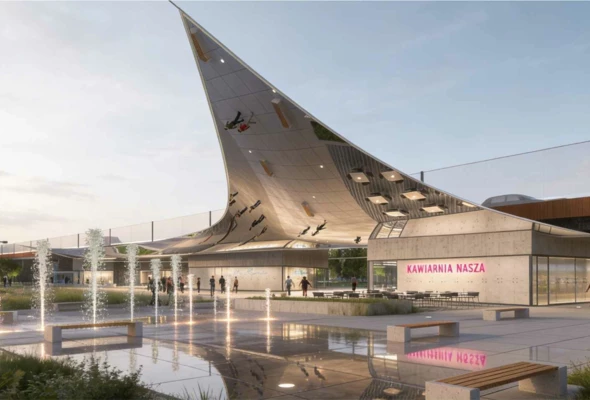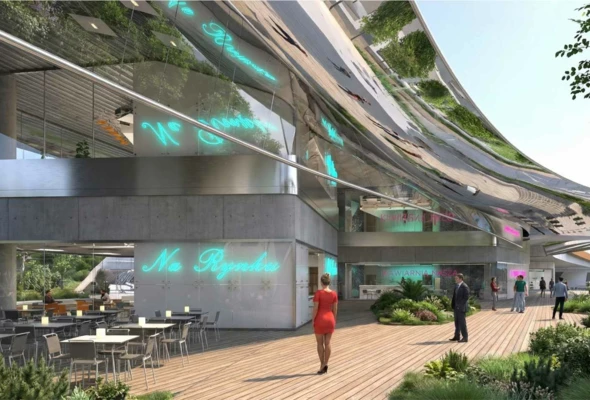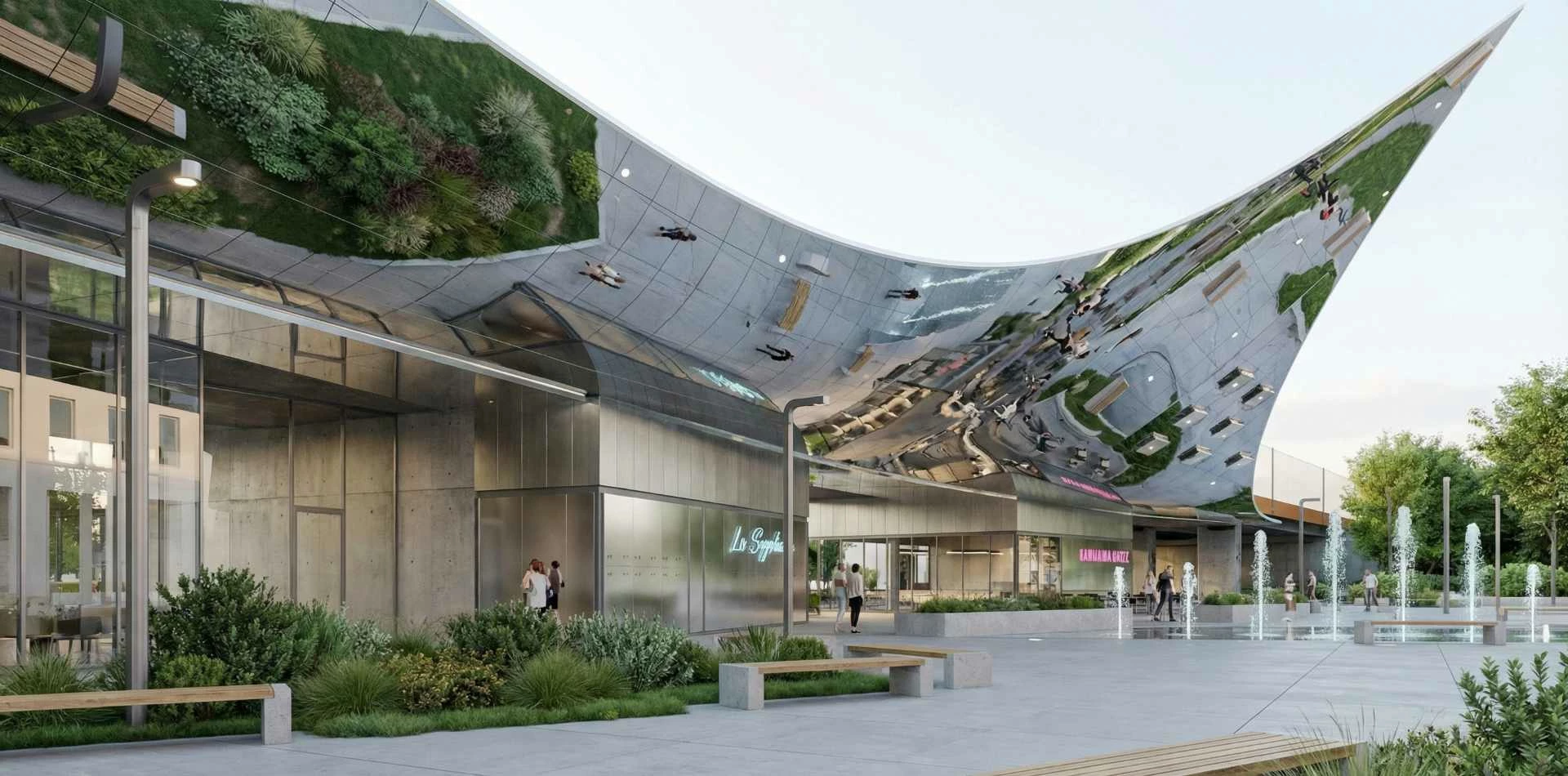
The project aims to reclaim a lost public space by creating an attractive, vibrant place that enhances safety and becomes a landmark of the city. Its key element is the transformation of the flyover into a light, contemporary symbol through the introduction of a membrane roof and striking visual effects, culminating in a surreal sculptural form in place of a traditional fountain.
Idea of the Proposed Design Solution
The main idea of the project is to restore a lost public space that will attract people like a magnet, pulse with life, delight, and entertain. It will illuminate dark areas and improve safety. It will become a showcase of the city, reflecting its dynamic lifestyle and aspirations for development. The Chorzów flyover is a distinctive structure, and therefore it should be modified in a way that transforms it into a positive symbol of the city. Enhancing this structure with a membrane roof will give this overwhelming construction a sense of lightness. The curvilinear forms of the tent-like covering, combined with a material that allows for mirror-like reflections, will create an impression of expanded space and brighten up dark corners. The curved surfaces will provide remarkable visual experiences, appealing not only to artists and photographers but also to residents and tourists—much like in the case of Cloud Gate in Chicago. The focal point will not be a fountain, as in most cities, but a surreal spatial form that complements the flyover.
Functional requirements
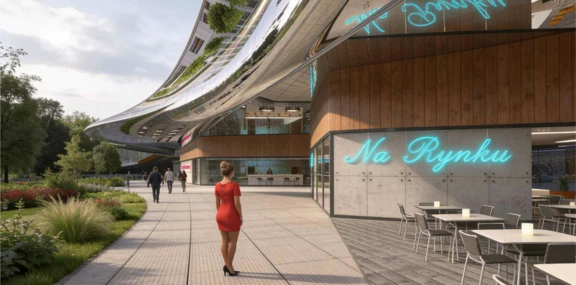
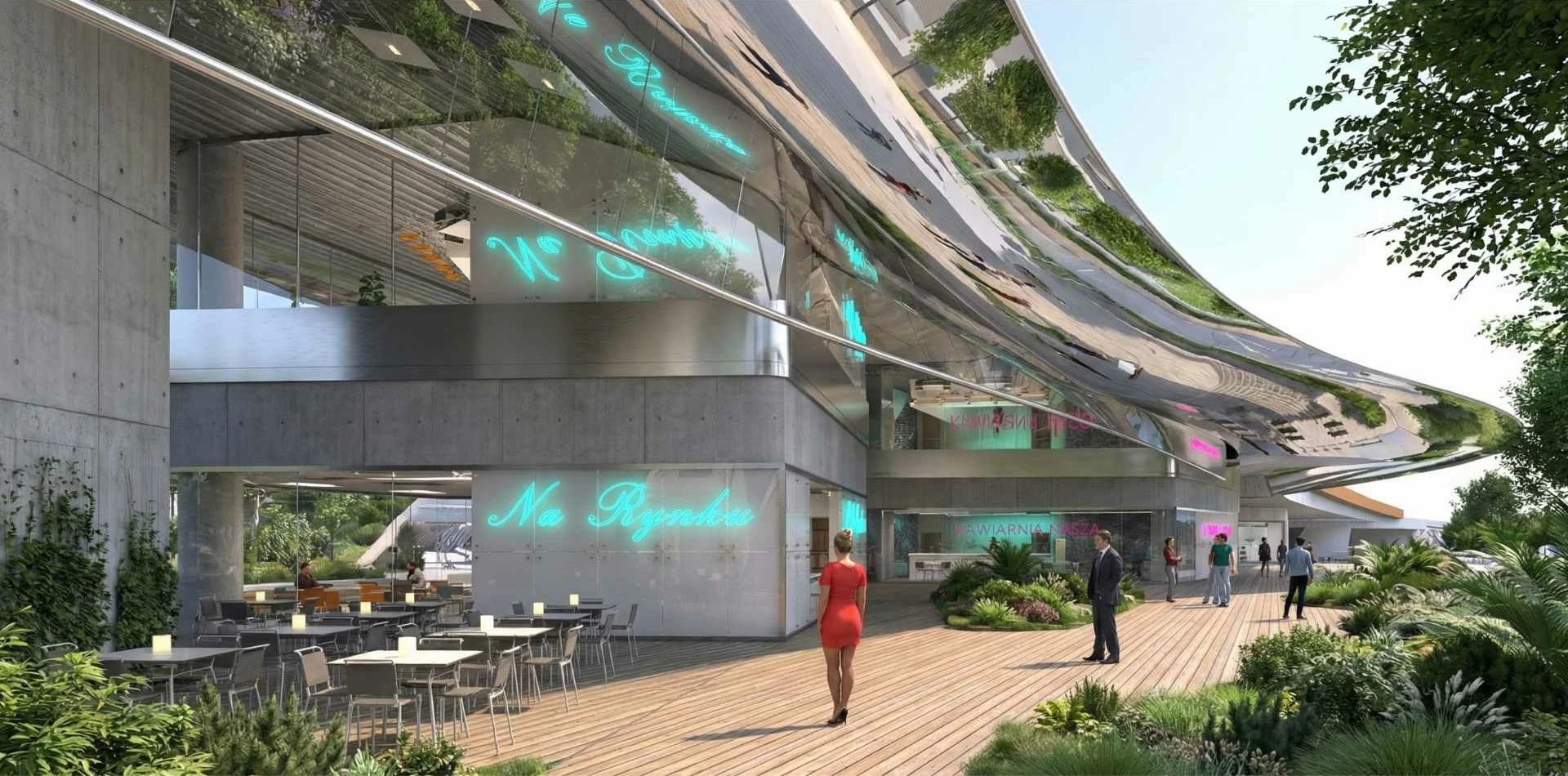
The project proposes four functional buildings together with the surrounding public space, organising the square into distinct zones: two food and beverage units, including one with a public restroom, a commercial building, and an office and service building. The spaces between them are defined by varied paving materials, including concrete and composite decking, while greenery acts as a buffer from vehicular traffic and preserves the existing trees. The buildings are designed as lightweight steel structures with glazed or semi-transparent façades, allowing for flexible interior arrangements. Each building also provides access to the flyover structure for technical inspection. In functional terms, the restaurant and the food venue are located along the main pedestrian routes and include outdoor seating areas. The commercial building, accommodating for example a flower shop and an art gallery, also serves an exhibition function. The office and service building, in turn, contains a passenger service point, tourist information, and an educational space with a flexible layout.