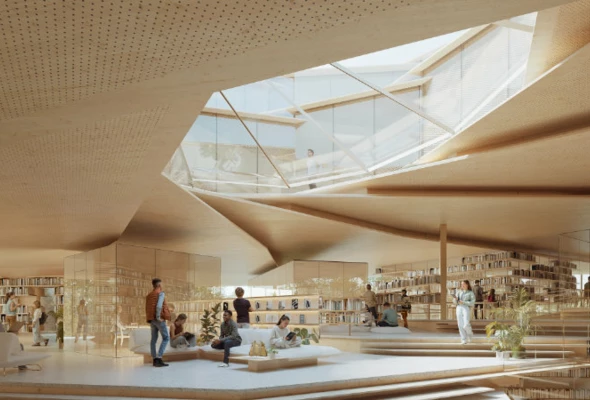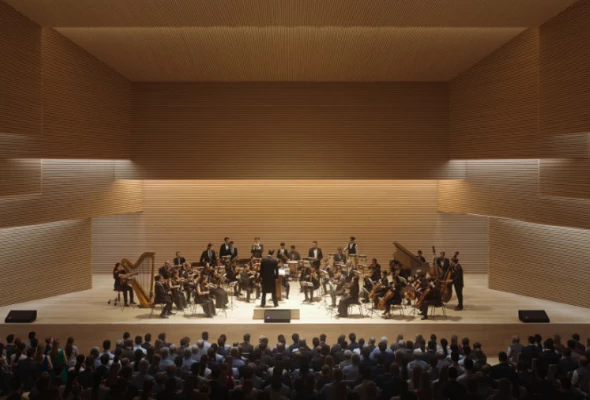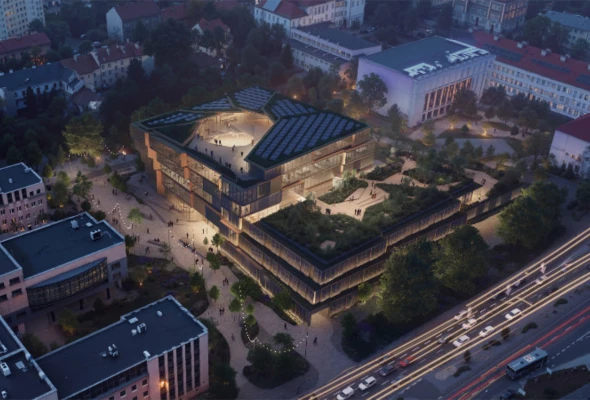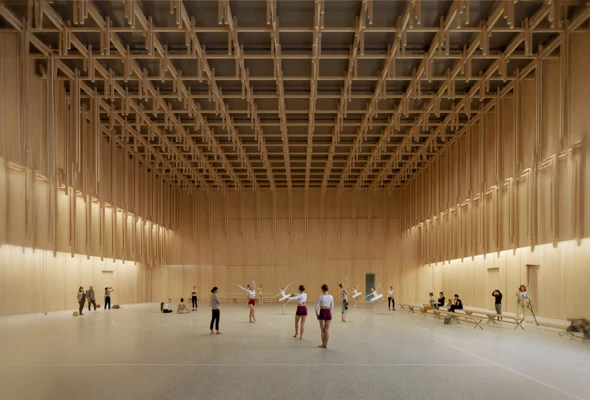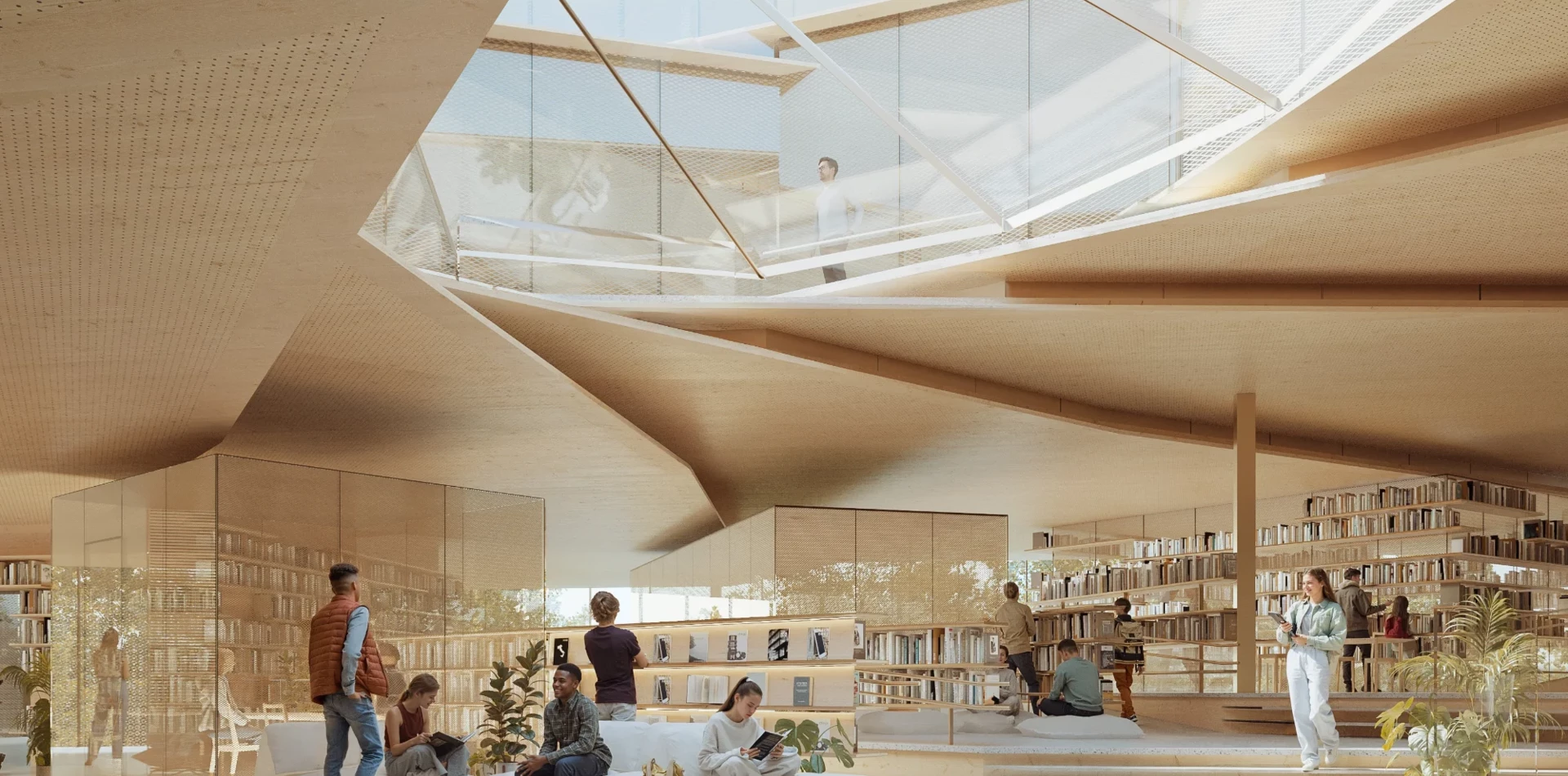
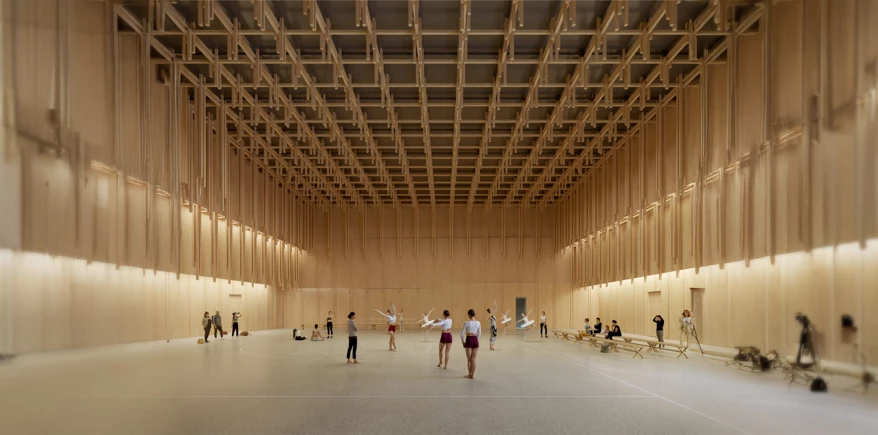
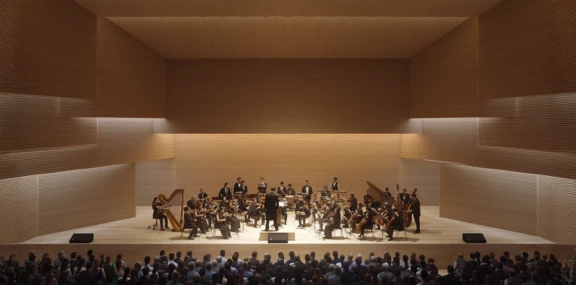
“VORTEX OF THE WORD” is the MAKI International Arena of Culture and Integration, and at the same time a new landmark of Rzeszów. It is a multifunctional cultural facility composed of a wide range of programmatic elements, including a “music hall” — a concert hall for 500 people, a “multifunctional hall” accommodating up to 2,500 users (suitable for trade fairs, sports events, cultural events, or activities such as ballet classes), museum and exhibition spaces, a conference centre for 500 participants, music practice rooms, and a library.
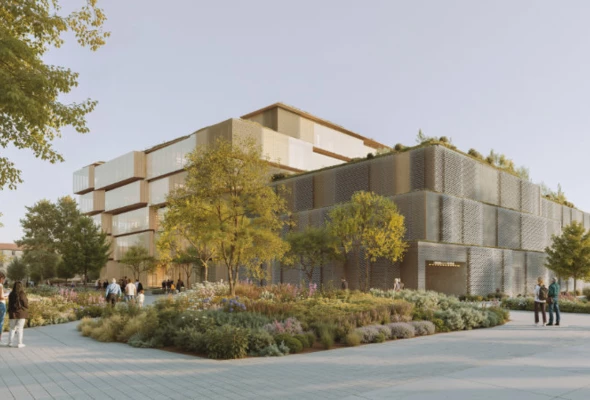
Conceived as a meeting place — a “city living room” — the building, through its spiral form, becomes a universal narrative about knowledge, nature, and encounter. Designed as an “urban piece of furniture,” the project fluidly blurs the boundary between architecture and urban design. Residents can ascend the building via green roofs that wrap around most of its spaces. The structure creates an inclusive hub of activity that stimulates and engages the senses. Thanks to its distinctive “vortex” form, the building becomes a key landmark, connecting generations and transforming this part of the city into a contemporary cultural district.
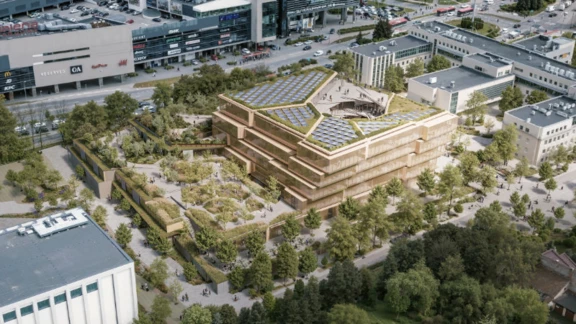
MAKI is a multifunctional cultural facility composed of a wide range of programmatic elements, including a “music hall” — a 500-seat concert hall, and a “multifunctional hall” accommodating up to 2,500 people, suitable for trade fairs, sports events, cultural events, or activities such as ballet classes. The complex also includes museum and exhibition spaces, a conference centre for 500 participants, music rehearsal rooms, and a library.
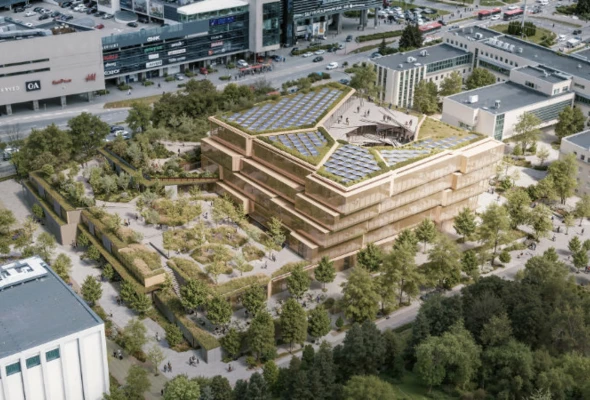
The spiral form of the “VORTEX OF THE WORD” becomes a universal narrative about knowledge, nature, and encounter. The building rises to provide residents with continuous access—24 hours a day, 7 days a week. Conceived as an “urban piece of furniture,” it fluidly blurs the boundary between architecture and urban design. Residents can ascend the building via green roofs that wrap around most of its spaces.
The building’s massing, based on a spiral vortex layout, organizes user movement from the urban level, through the ground-floor lobby and the library interior, up to publicly accessible rooftop terraces—becoming an architectural extension of urban routes and everyday activities. The form gently shapes a spatial sequence that naturally guides users through successive parts of the building, while the surrounding greenery maintains a connection with nature and opens up panoramic views of Rzeszów.
In this way, the building becomes a sculptural interpretation of the library as a place of encounter, while also functioning as a multifunctional cultural centre and a contemporary urban forum that engages users and encourages them to rediscover the space.
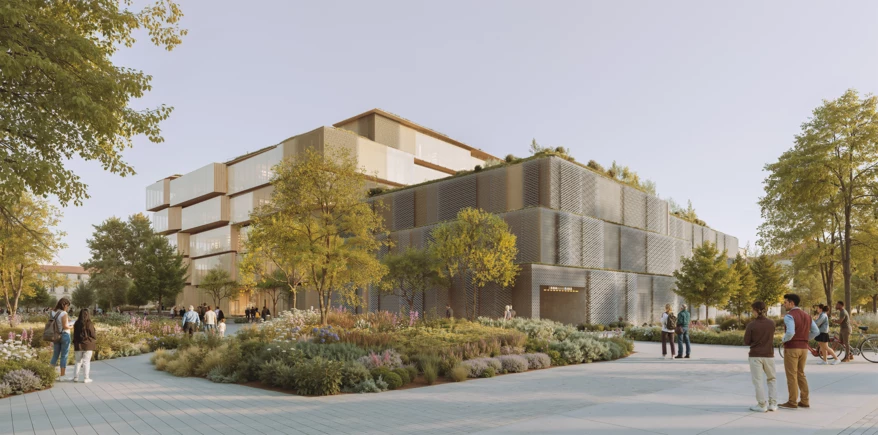
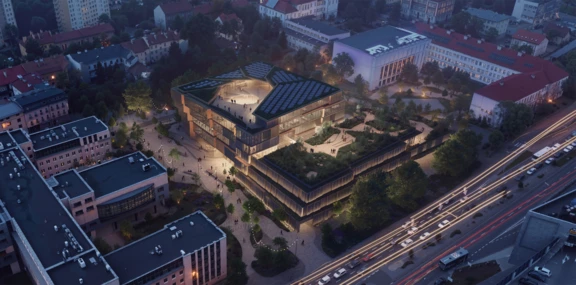
The project is conceived as a strategic landmark that communicates with the historic city centre through a shifted dominant element, establishing a strong visual axis aligned with the Market Square of Rzeszów. To shield users from the noise of the busy Aleja Piłsudskiego, the main entrance has been relocated to the უფრო спокойniejszą, south-eastern part of the site, accessed via a “promenade of quietness.”
This shaded pathway, running alongside the Marshal’s Office of the Podkarpackie Voivodeship, functions as both an acoustic and visual filter—gradually buffering the urban noise and introducing visitors into a more contemplative atmosphere even before entering the building.
A network of urban connections links the library with a gallery, schools, and parks, prioritizing pedestrian and cycling movement and transforming this part of the city into a vibrant cultural district.
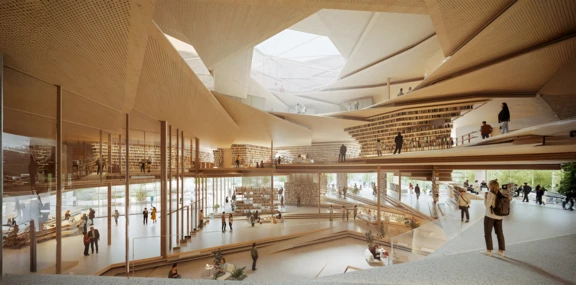
The building has been designed as a multifunctional cultural arena, in which the library function accounts for approximately one-third of the total floor area. The remaining space is dedicated to cultural, social, educational, and conference-related activities, allowing the building to operate as an intensively used centre of public life.
The spatial organization is based on two main components: a library zone and an event zone. The library part is structured around four clearly defined circulation cores, ensuring a high degree of flexibility in layout, modularity, and the possibility of phased development. In the initial phase, the library section can be realized, while the area designated for future program expansion may temporarily function as a publicly accessible garden.
Self-sufficiency and green hydrogen
A hybrid structure based on low-carbon CLT wood and innovative quantum dot glazing. The building stores surplus energy in the form of green hydrogen, becoming an energy-independent landmark of Rzeszów.
International collaboration at the highest level
The project was developed under the direct supervision of Kengo Kuma, in collaboration with the Tokyo-based team at Kengo Kuma & Associates. The design was further shaped by an international, multidisciplinary team comprising architects, structural engineers, landscape architects, acousticians, graphic designers, environmental engineers, and other specialists from around the world.