The Museum as a Time Machine - A Journey Through the Layers of History
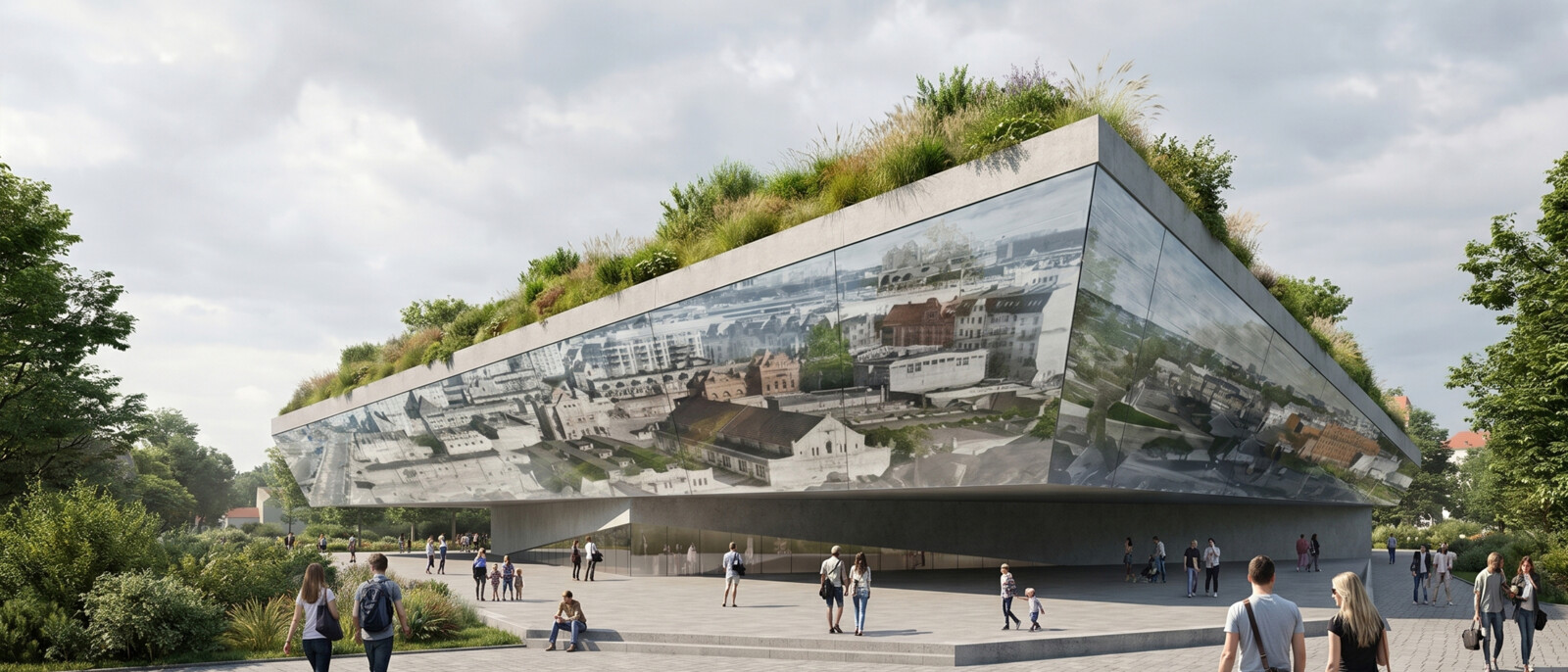
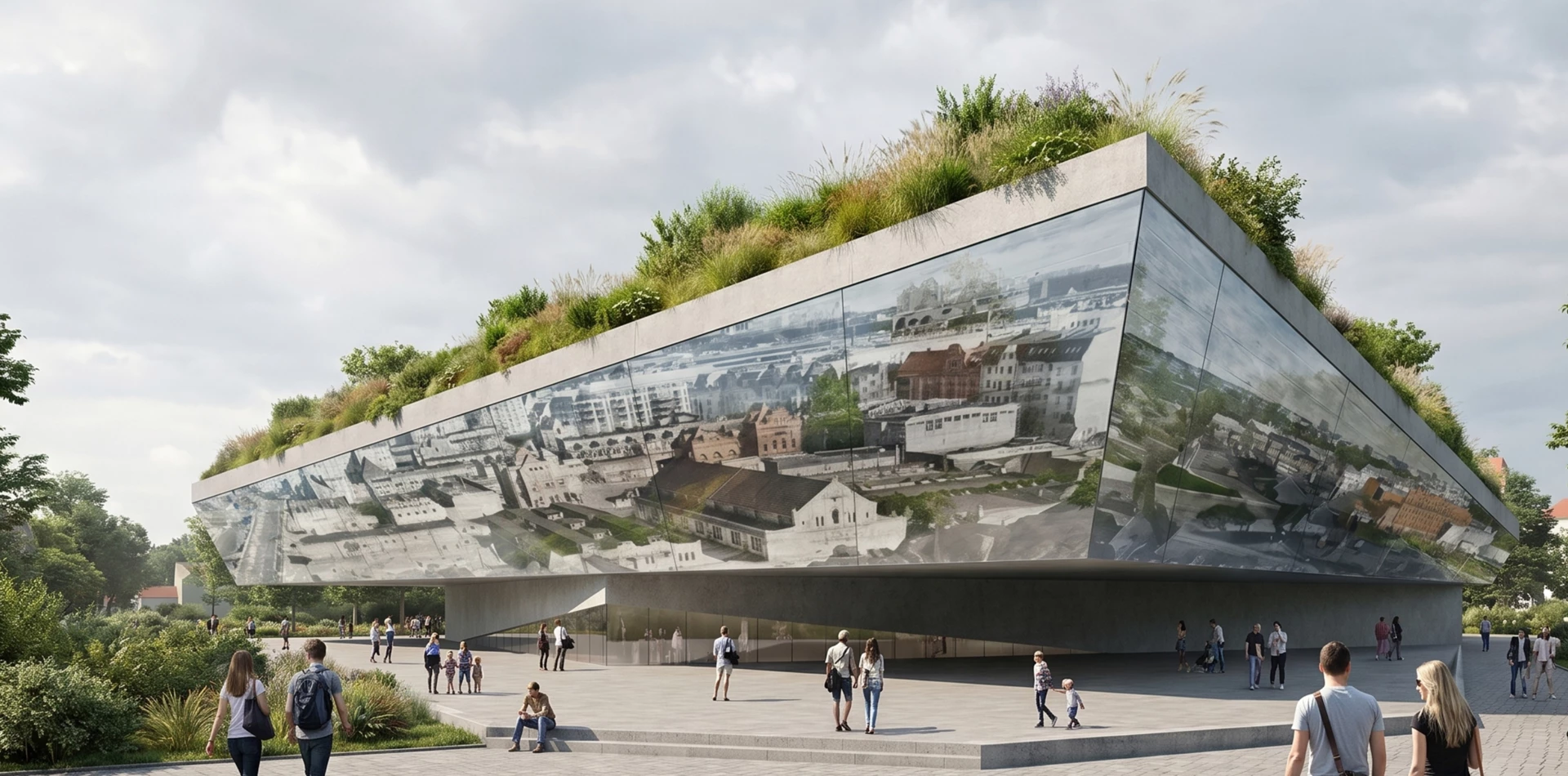
The design of the Museum of the Greater Poland Uprising presents history as a system of interlocking layers that shape the present day. The building serves as a symbolic cross-section of time; its interior conceals the past, while the mirrored facade reflects the city's current reality. The central element is the "time tunnel" - a multi-story hall that guides visitors through successive historical stages, constructing the spatial narrative of the entire facility.
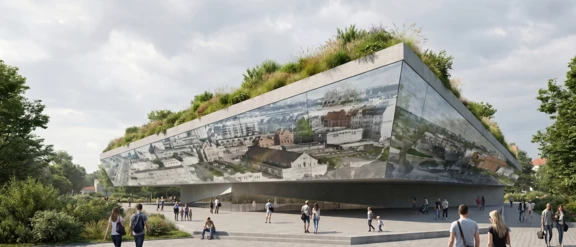
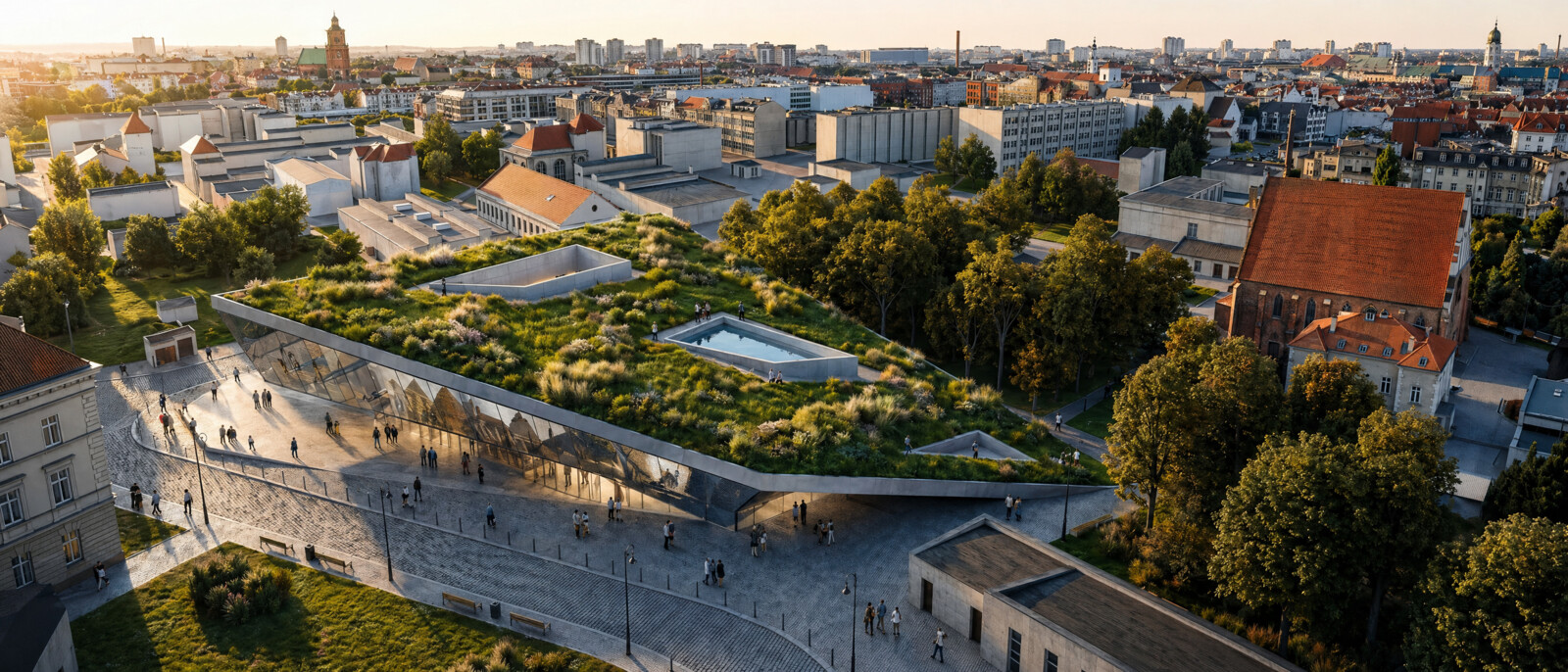
The museum is located in the vicinity of St. Adalbert's Hill, which had a significant impact on its architectural form. The project integrates into the existing landscape, blending architecture with the site's topography through a green roof accessible to visitors. The design was inspired by the idea of the site as a witness to history - a space where successive layers of past events are inscribed.
Supporting functions, such as administration, technical facilities, and workshops, are located on the ground floor, while exhibition and educational spaces develop vertically around the central hall. This layout allows for various tour routes - both quick overviews and in-depth explorations.
The key organizing element of the space is the multi-story hall - the "time tunnel" - which integrates circulation and leads the user through successive layers of history. This journey culminates in a green roof with observation terraces, accessible as a public space and seamlessly connected to the hill.
The design maintains a clear separation between visitor traffic and technical operations, with delivery and service access located on the northern side. Rooms requiring natural light, such as offices and workshops, are situated on the southern side. The entire facility is designed intuitively, ensuring clear wayfinding and user comfort.