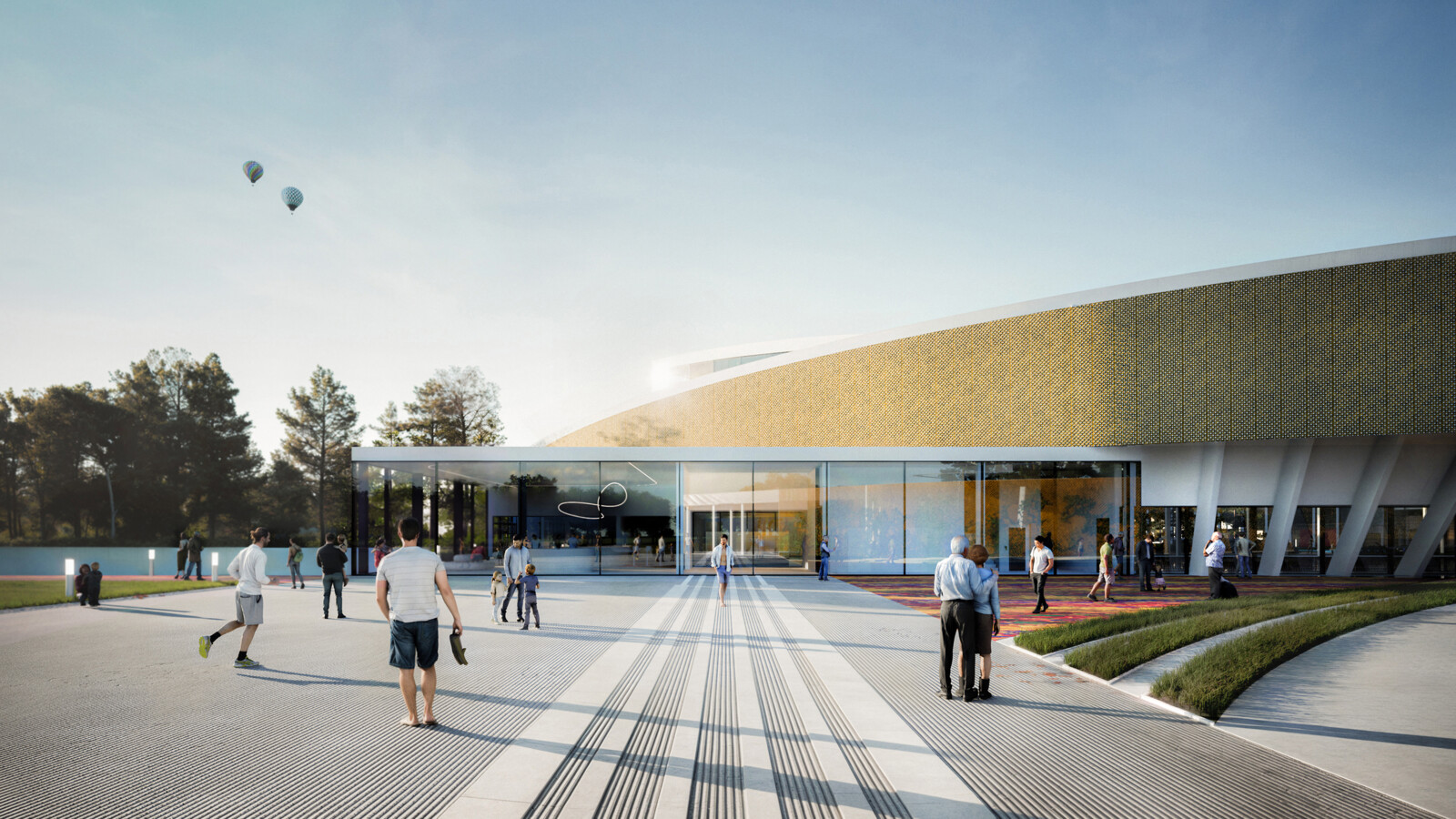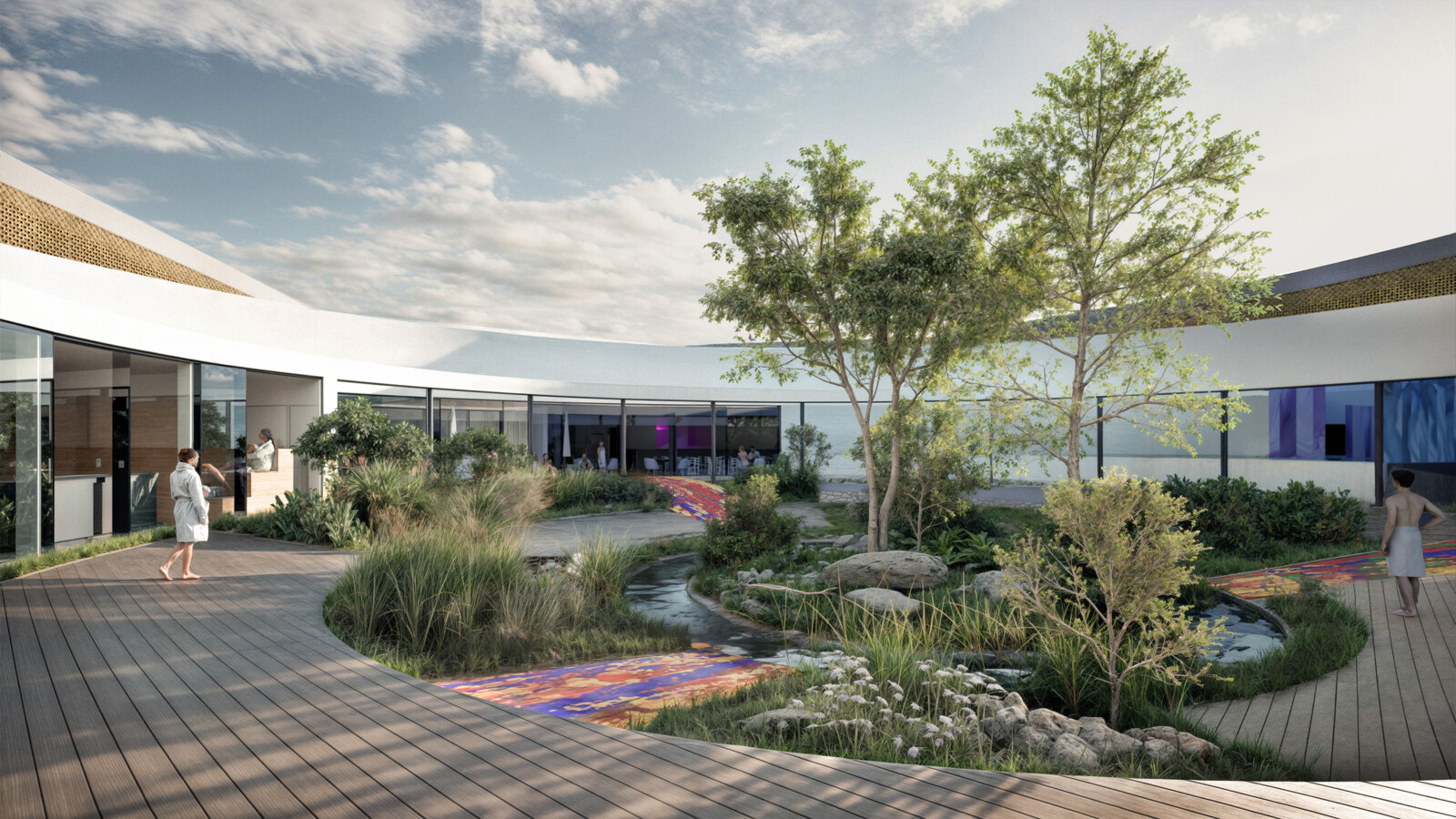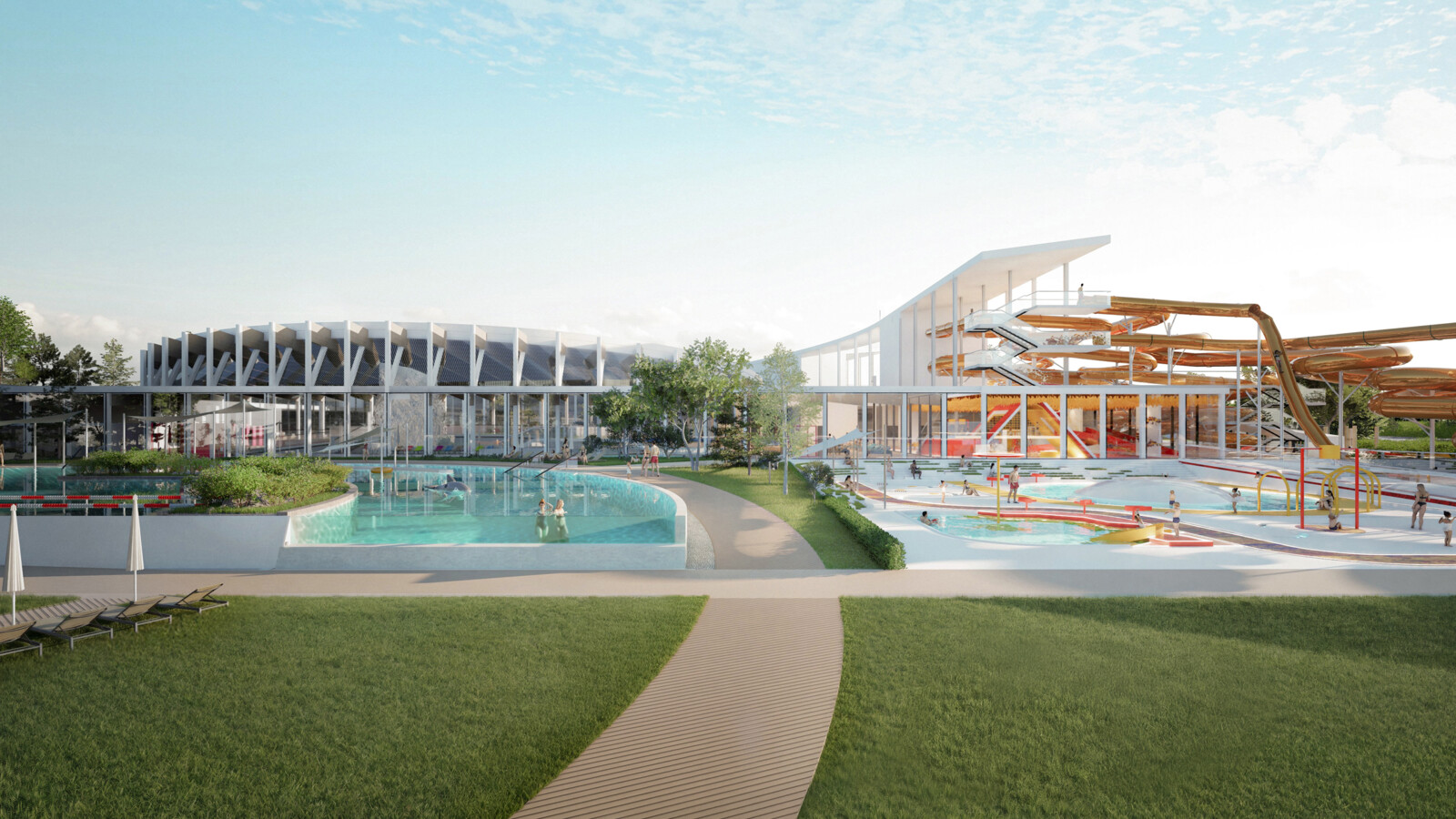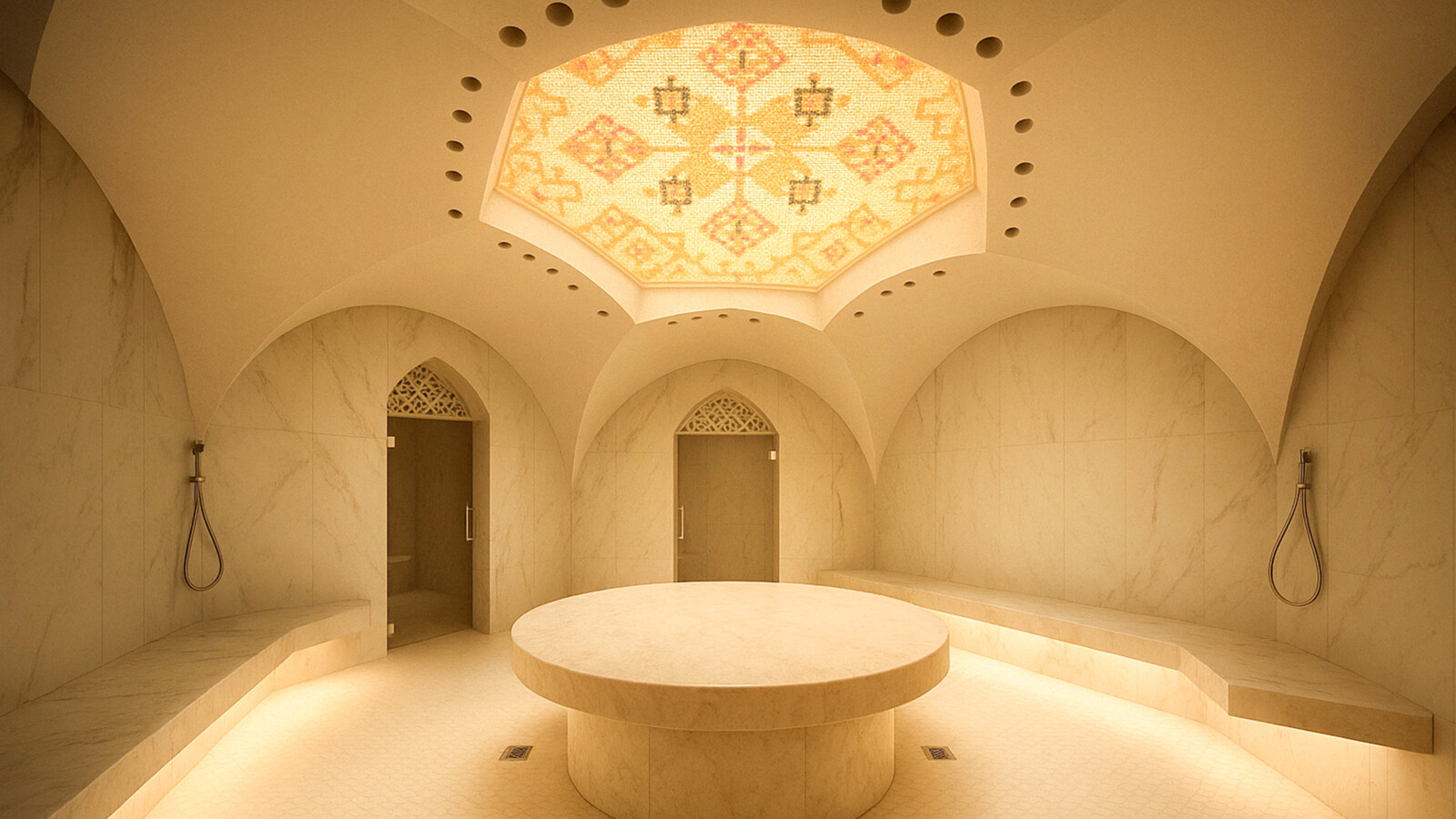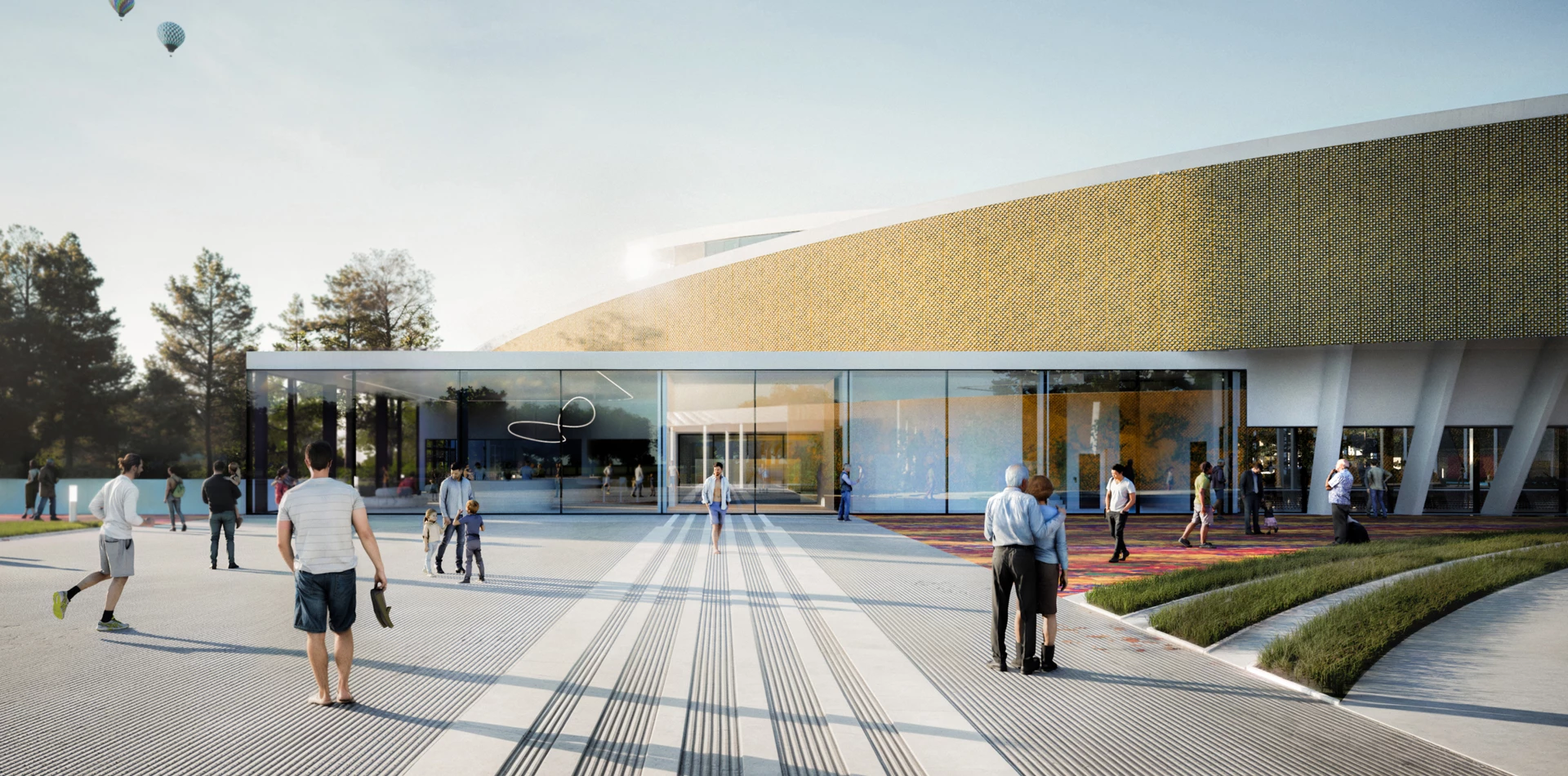
SPLOT is a modern multifunctional facility that combines the idea of Roman baths with the local identity of Białystok, and—through its forest atria—with the landscape of north-eastern Poland. The project is distinguished by the unique concept of “interweaving” — a fluid merging of architecture, water, greenery, and the art of Professor Leon Tarasewicz, creating a living organism that fosters the regeneration of both body and mind.
SPLOT. A New Weave of History
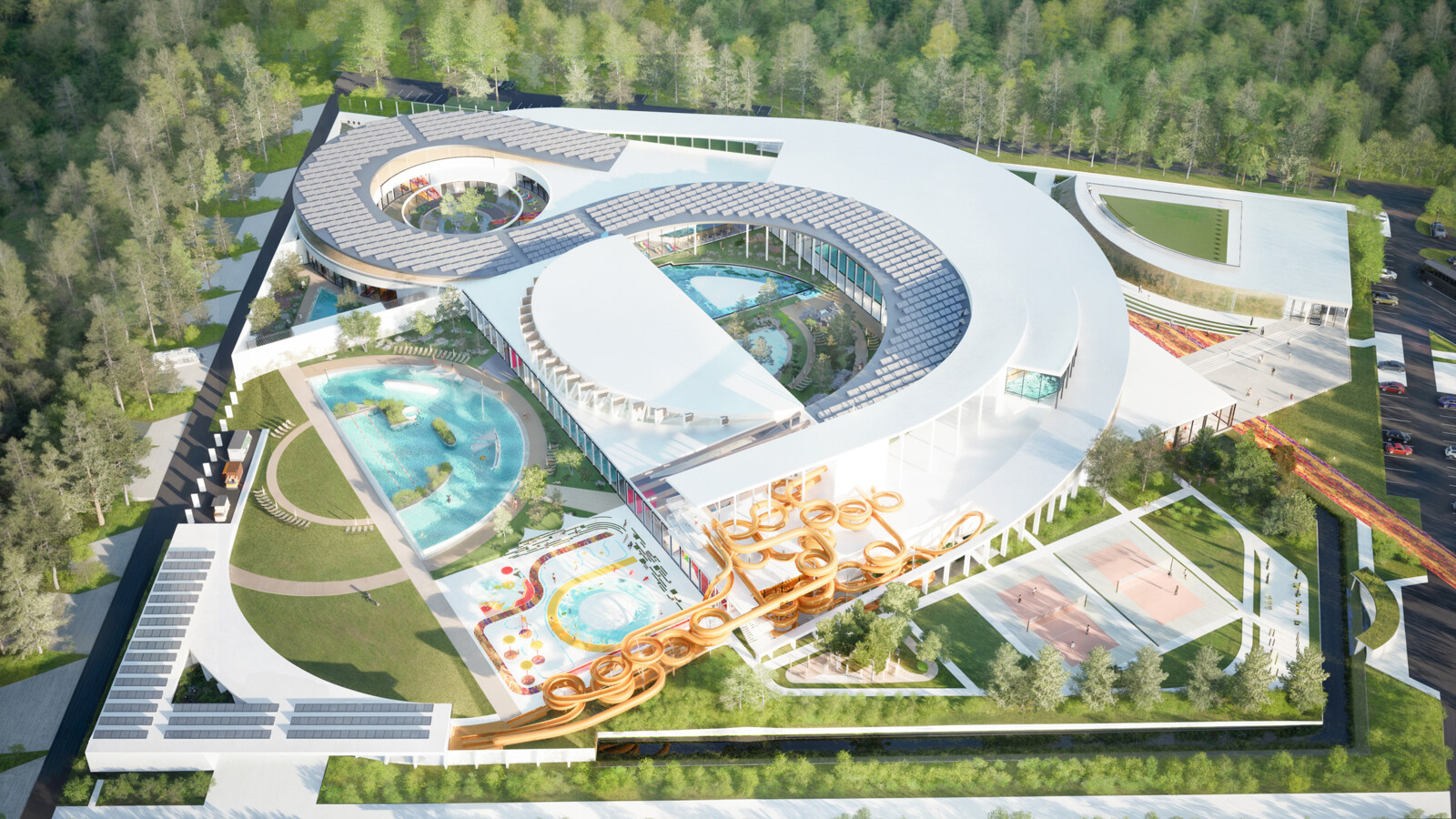
The idea of “interweaving” extends beyond symbolism, becoming the physical compositional principle of the entire building. The design interprets the city’s layered history and its natural richness as a system of interlacing axes, atria, and functions. It is an architecture in which the boundaries between interior and exterior dissolve, creating a harmonious space for the coexistence of people and nature.
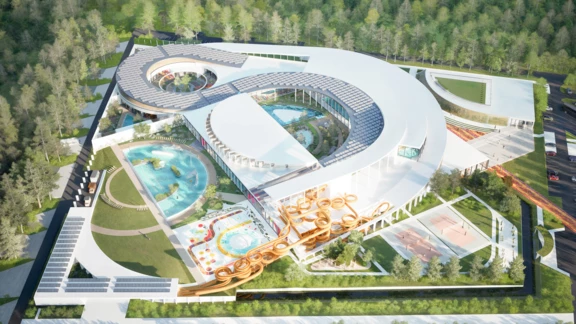
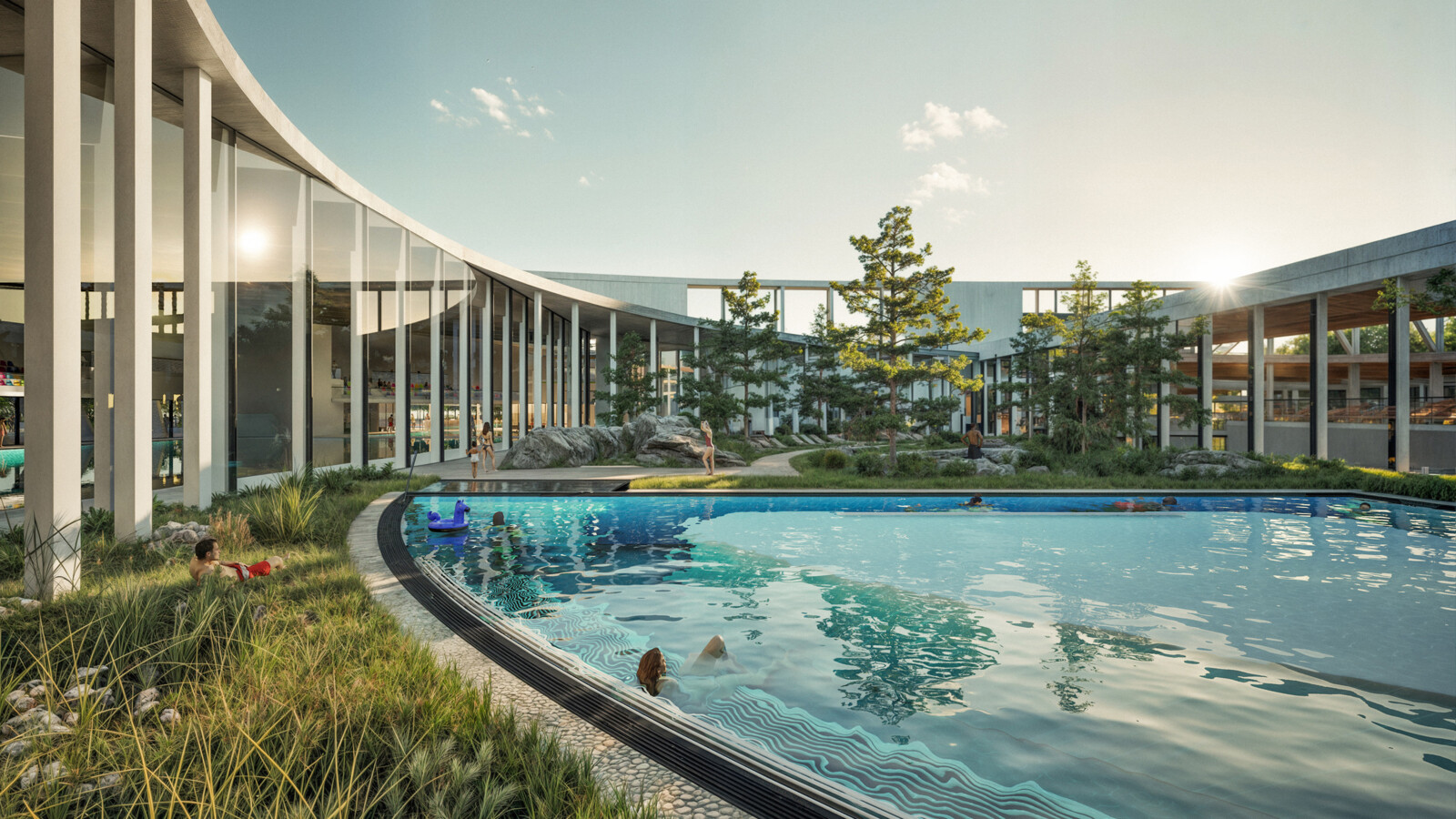
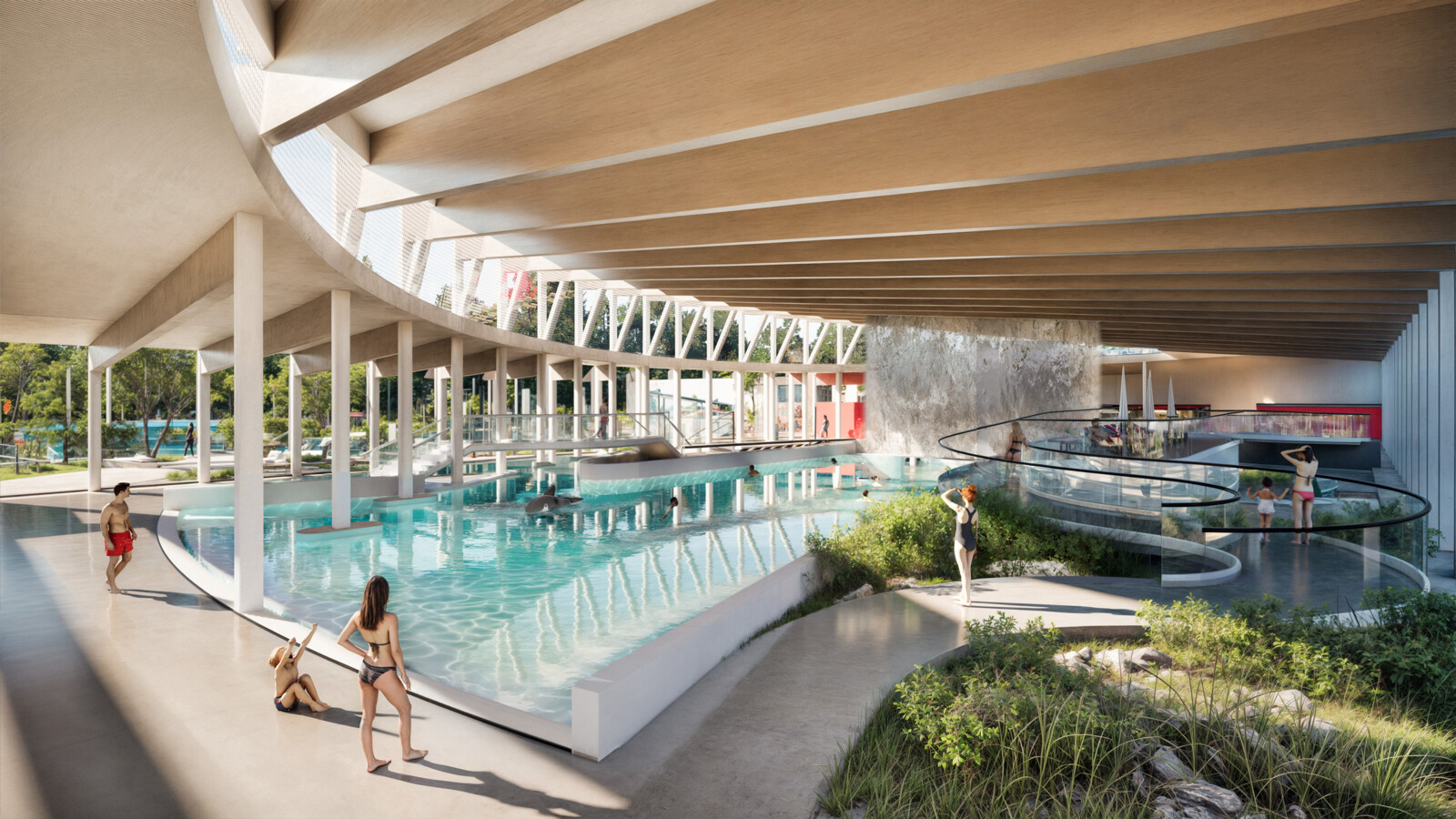
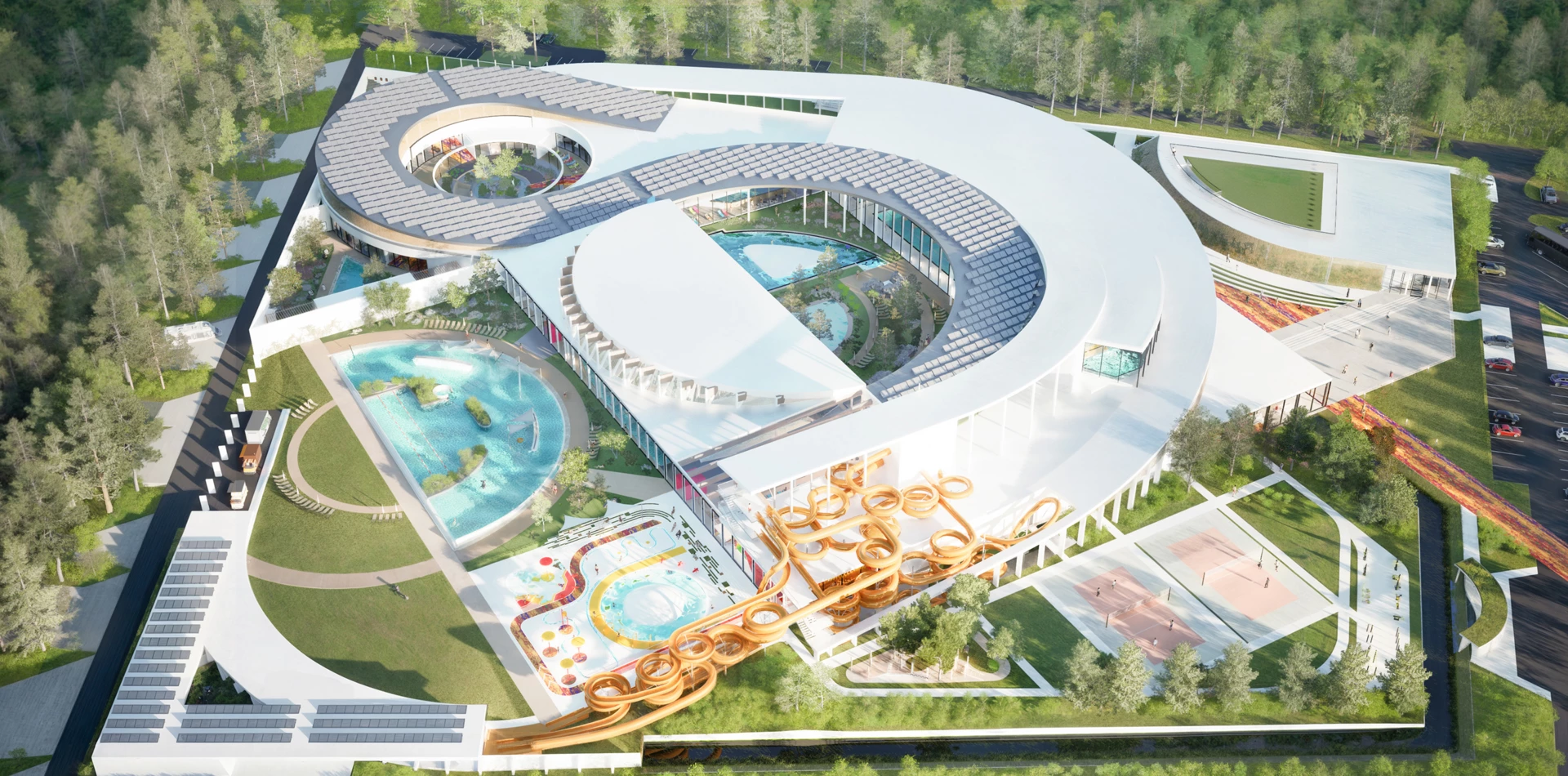
The project draws inspiration from the unique forest and river landscape of north-eastern Poland, as well as from the tradition of Podlasie weaving, to which the name “SPLOT” directly refers. The architecture forms a direct, introverted response to the challenging proximity of a waste treatment facility, requiring both physical and visual separation from its surroundings. Rather than opening itself to an unfavourable context, the design creates a protected enclave — a system of forest atria that function as the “lungs” of the development. Their purpose is to faithfully recreate the microclimate of the Białowieża Forest, offering users clean air, silence, and an intimate connection with nature, entirely shielded from external disturbances.
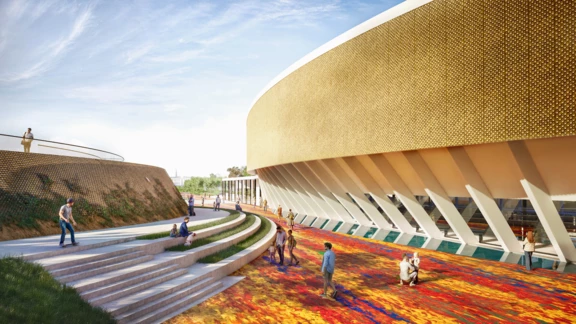
Following the model of the ancient Baths of Caracalla, the SPLOT project is based on an inverted urban layout, in which the building forms an outer frame for a calming interior. The center of gravity is shifted inward, creating a sequence of spaces where water, light, and nature interweave organically. This arrangement draws inspiration from Roman baths, where architecture was not a closed monolith, but a framework for social life, rest, and purification.
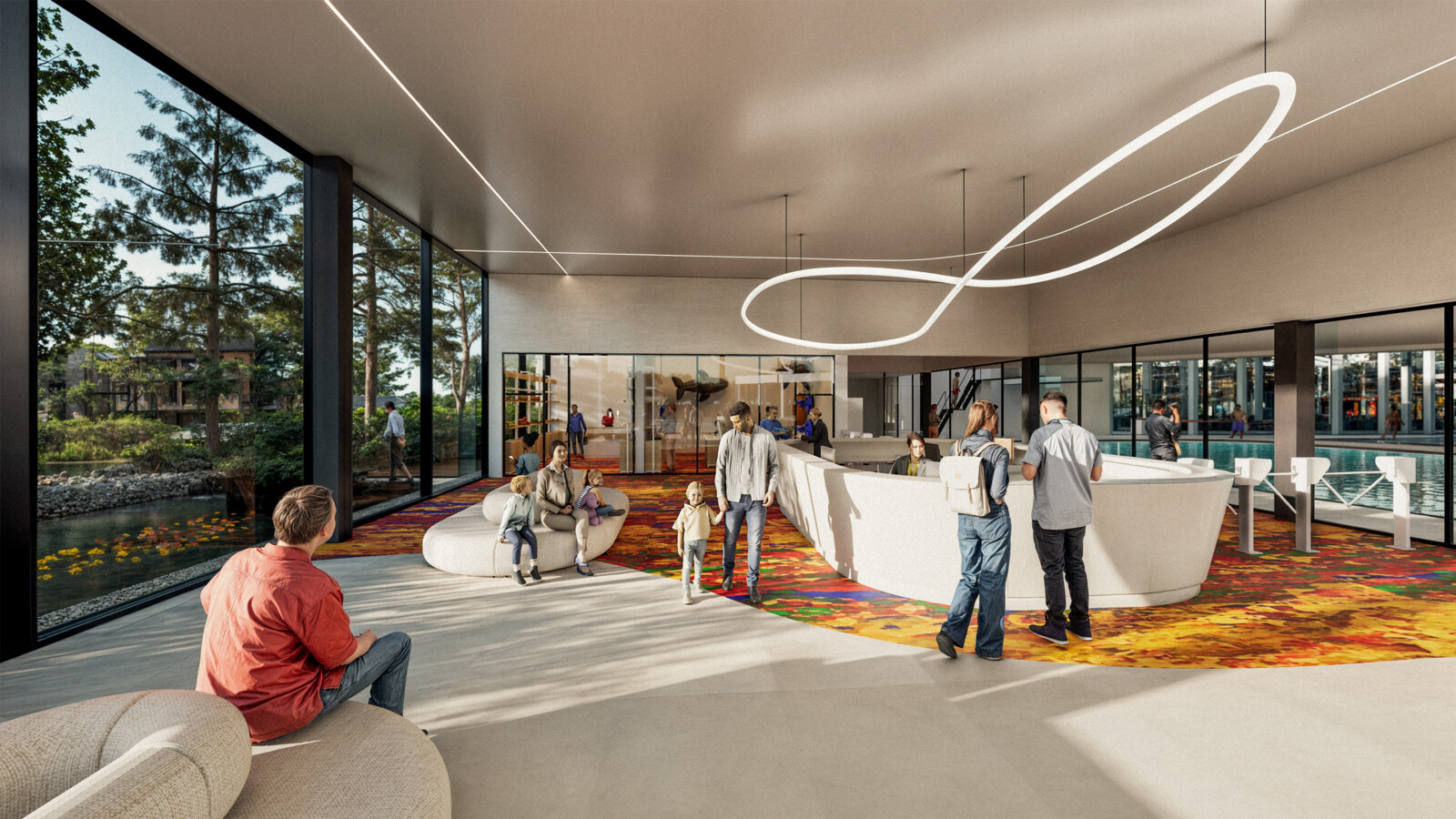
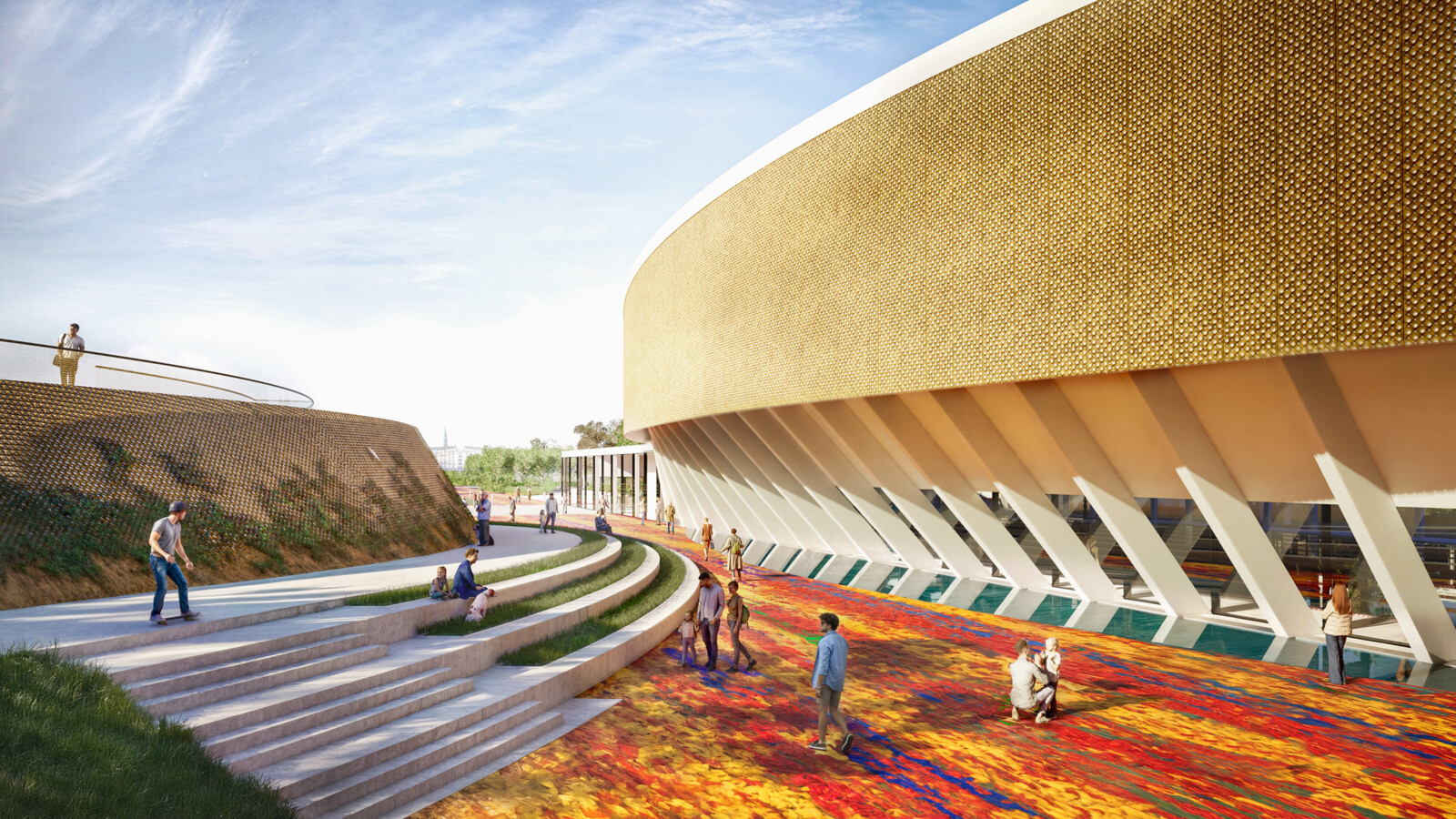
In SPLOT, the site boundaries become a backdrop to an inner world centered on the human being and the sensory experience of space. Our philosophy is the unity of architecture and art — to emphasize the identity of Białystok, we invited Professor Leon Tarasewicz into dialogue. A key design gesture is the “Tarasewicz Carpet” — a publicly accessible passage that extends the city into the site. Like an unfolding thread, it guides users deep into the complex, offering a sequence of discoveries and views in which local art is inseparably interwoven with architecture.
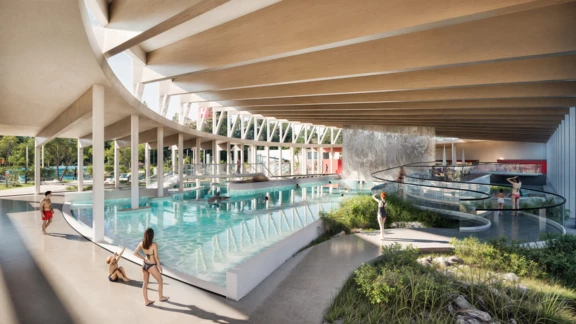
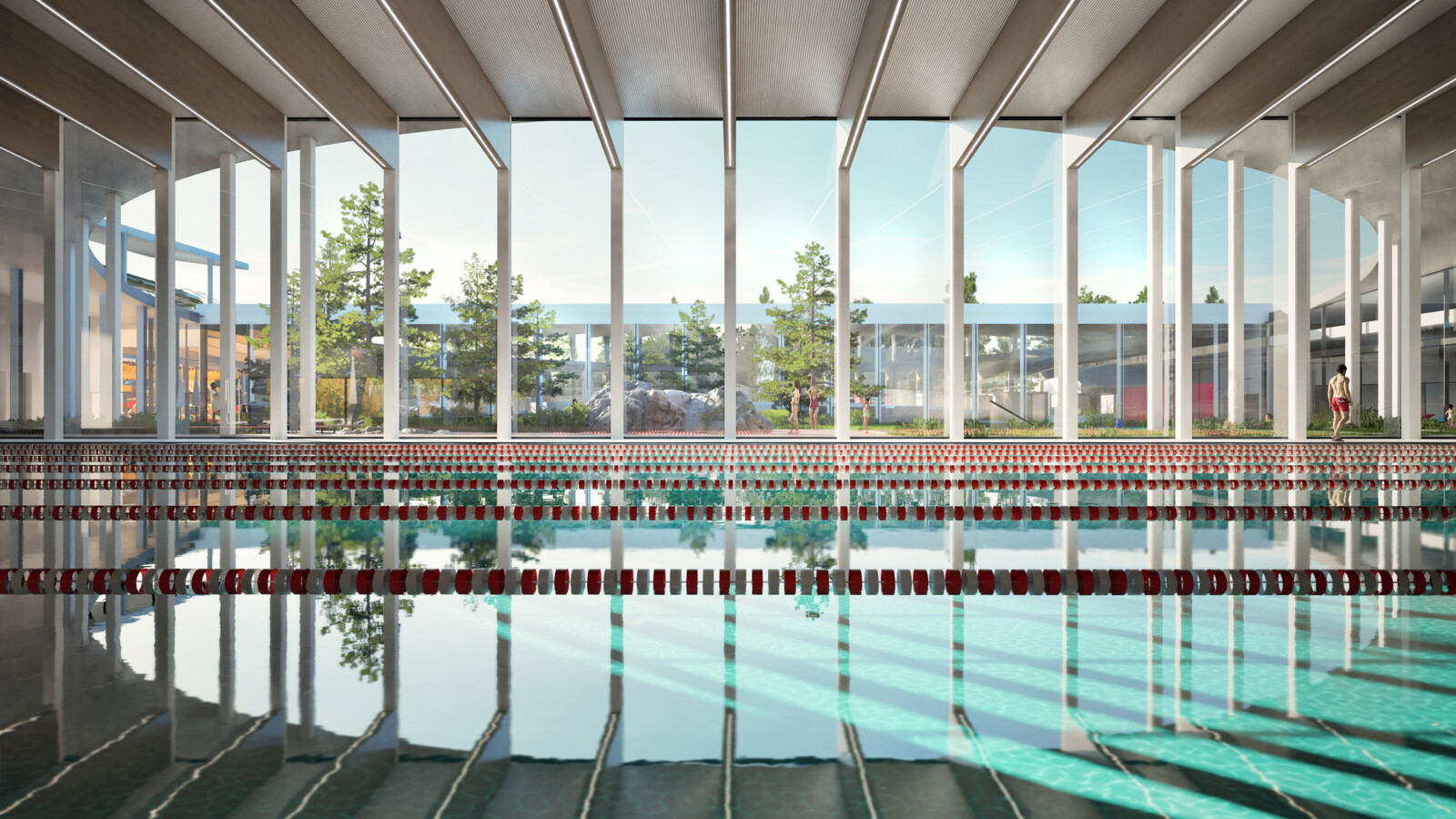
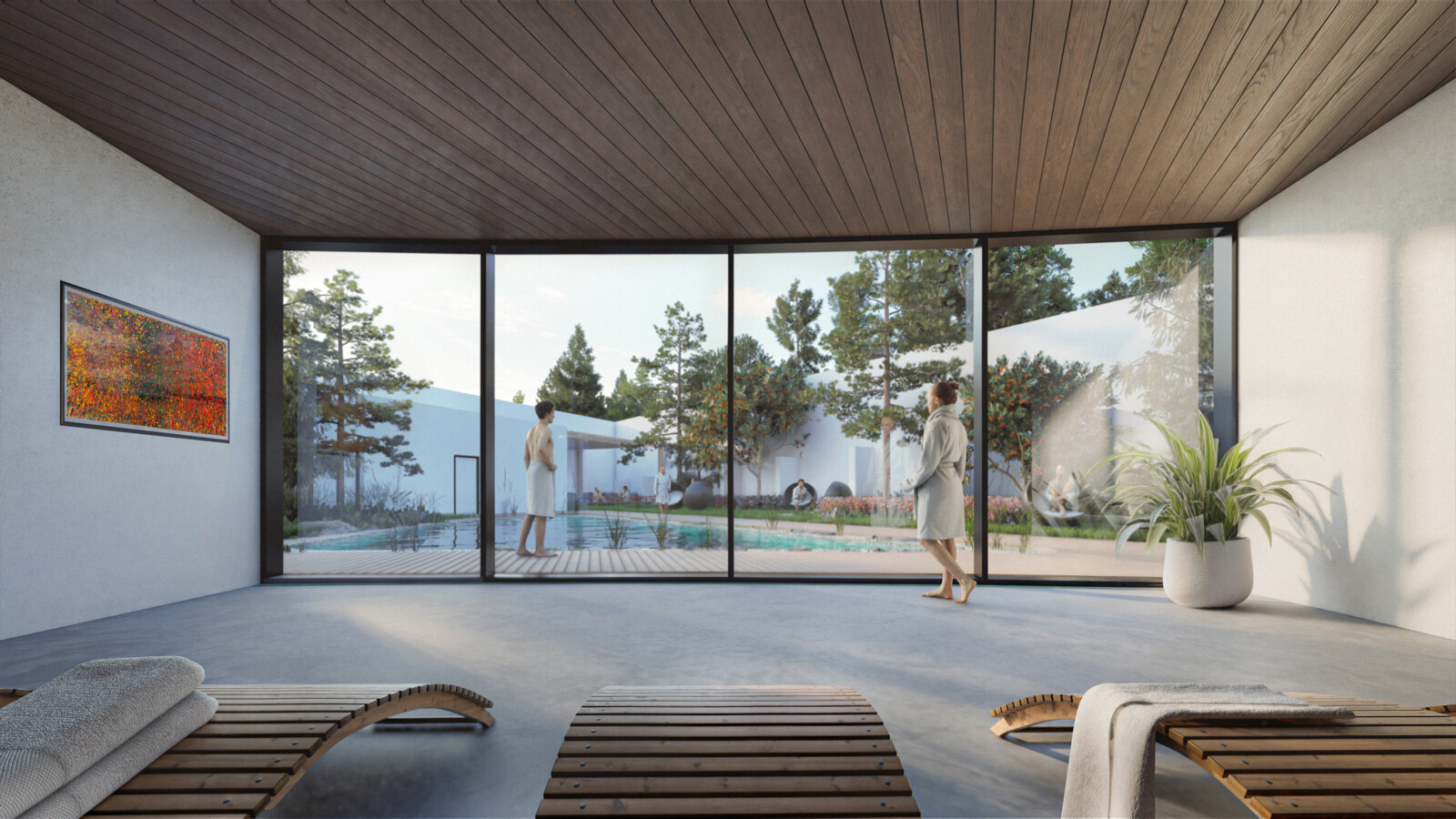
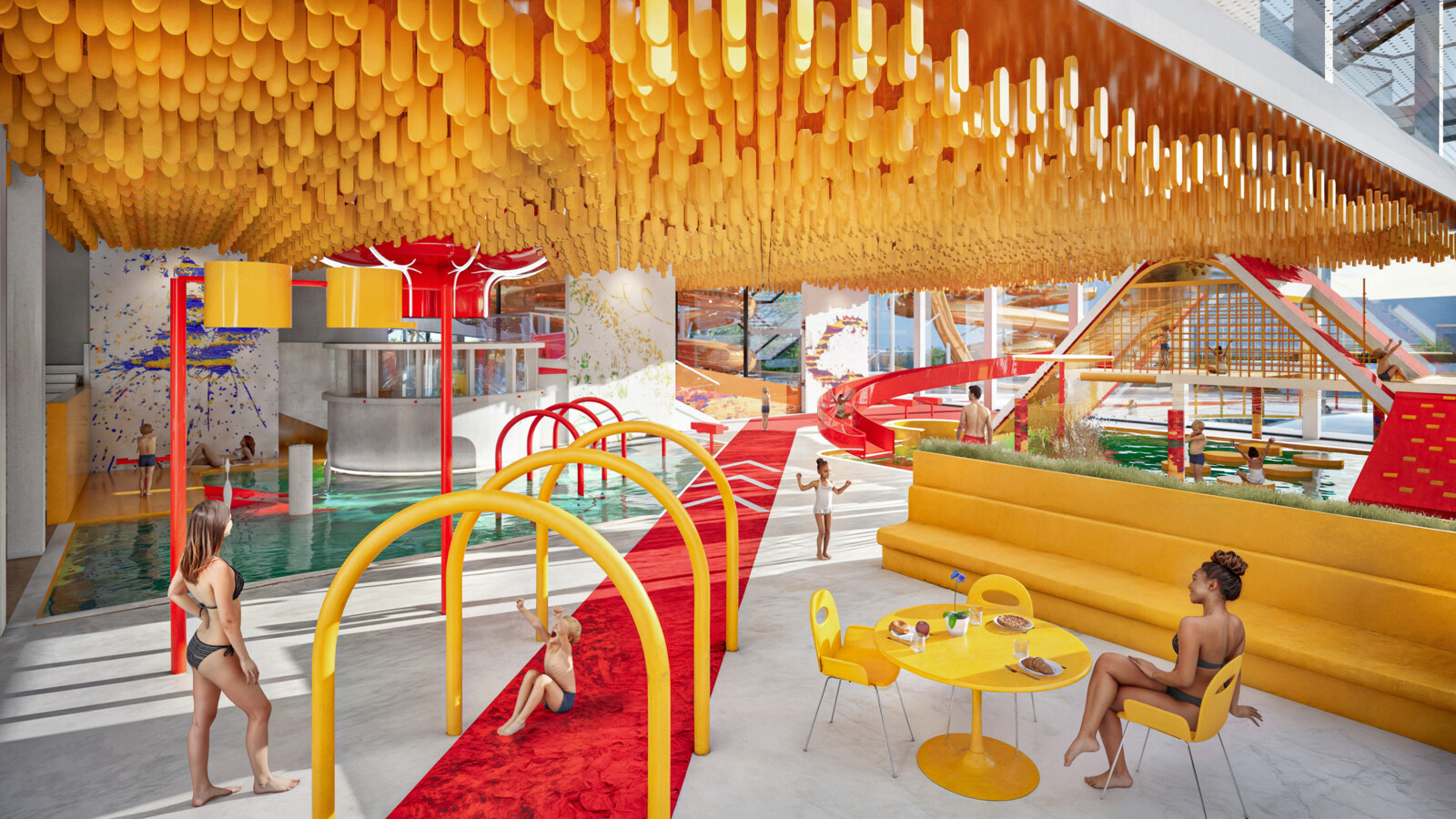
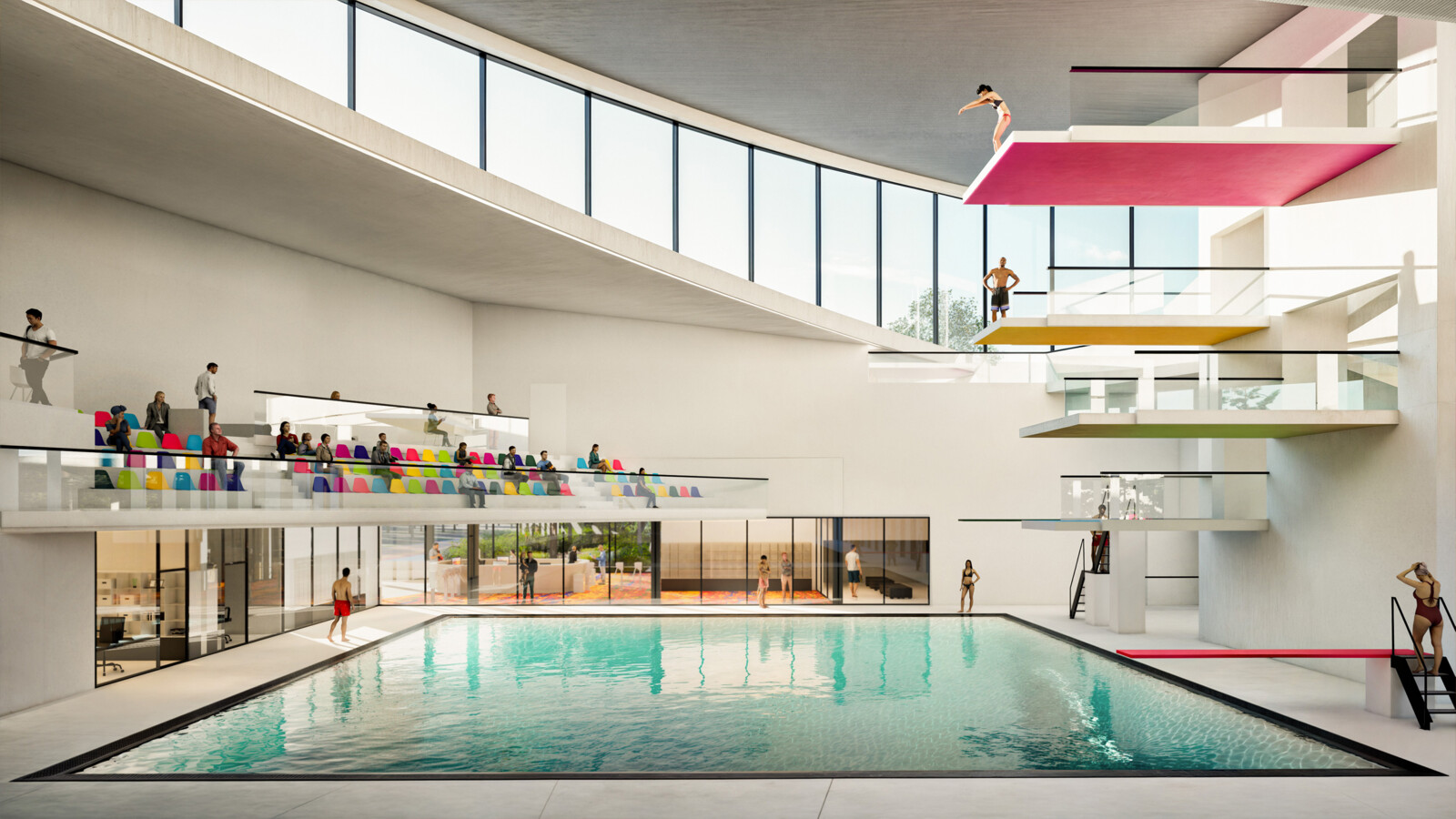
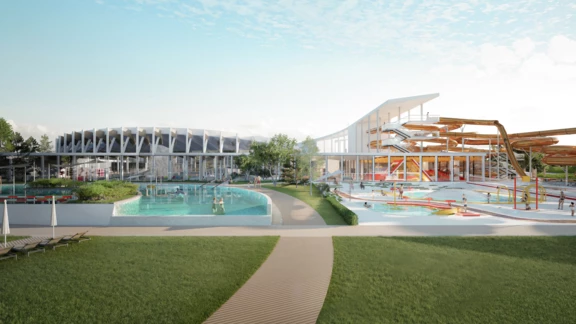
Functionally, the complex is divided into four interpenetrating zones — sports, recreation, sauna, and fitness. Their layout is designed to provide a smooth gradation of experiences: from lively, high-energy spaces to quiet, intimate areas. The aquatic zone is based on a rarely seen principle of continuity: the main recreational pools are interconnected, allowing users to move seamlessly between the wave pool and the river without leaving the water. The functionality of the sports hall has been expanded: the 50-meter Olympic pool is equipped with a retractable glass façade, enabling spatial fusion during events, while the recreation zone is complemented by a business area with a screen and a swim-up bar. The program is further enriched by outdoor pavilions for peat baths, forming a natural extension of the wellness zone.
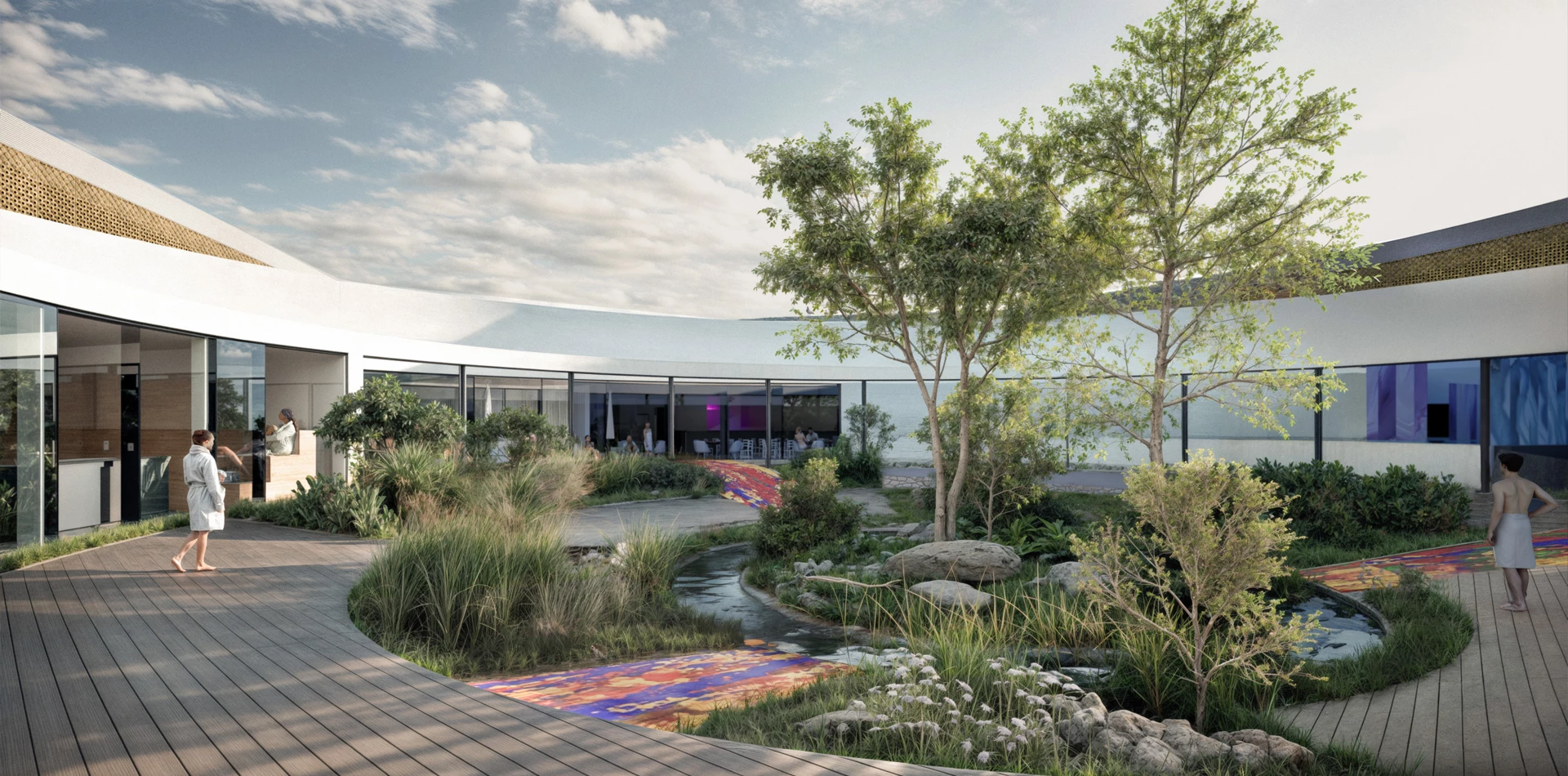
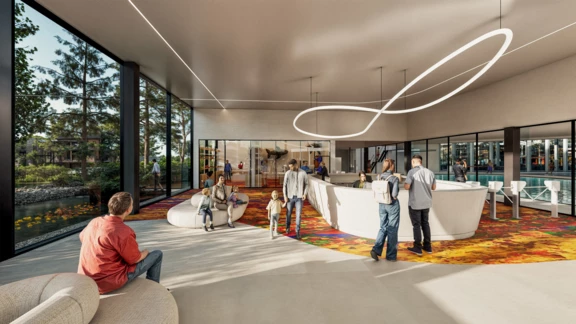
“Tarasewicz’s Carpet”: A direct integration of architecture with high art. The collaboration with Prof. Leon Tarasewicz resulted in the creation of an artistic passage that, like a strand of vivid thread, guides the user through the building, transforming an ordinary transition into a sensory experience.
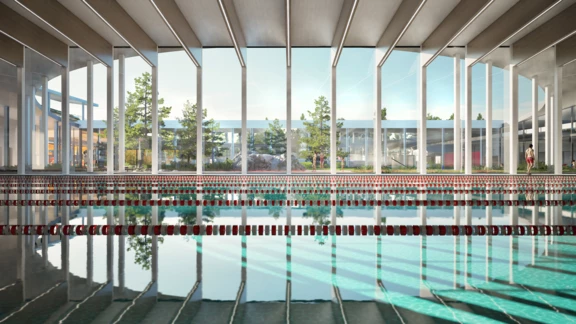
An innovative functional solution in which the main recreational pools are interconnected. This allows users to move seamlessly (e.g., from the wave pool to the “lazy river”) without having to leave the water.
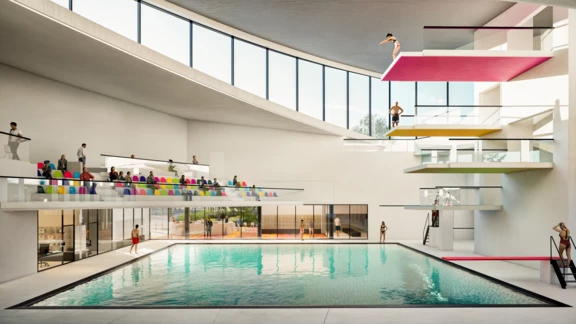
The use of giant ETFE membrane skylights ensures excellent illumination of the poolside areas with soft, natural light, while the retractable façade of the Olympic pool allows the hall to be fully opened to the surrounding outdoor environment during events.