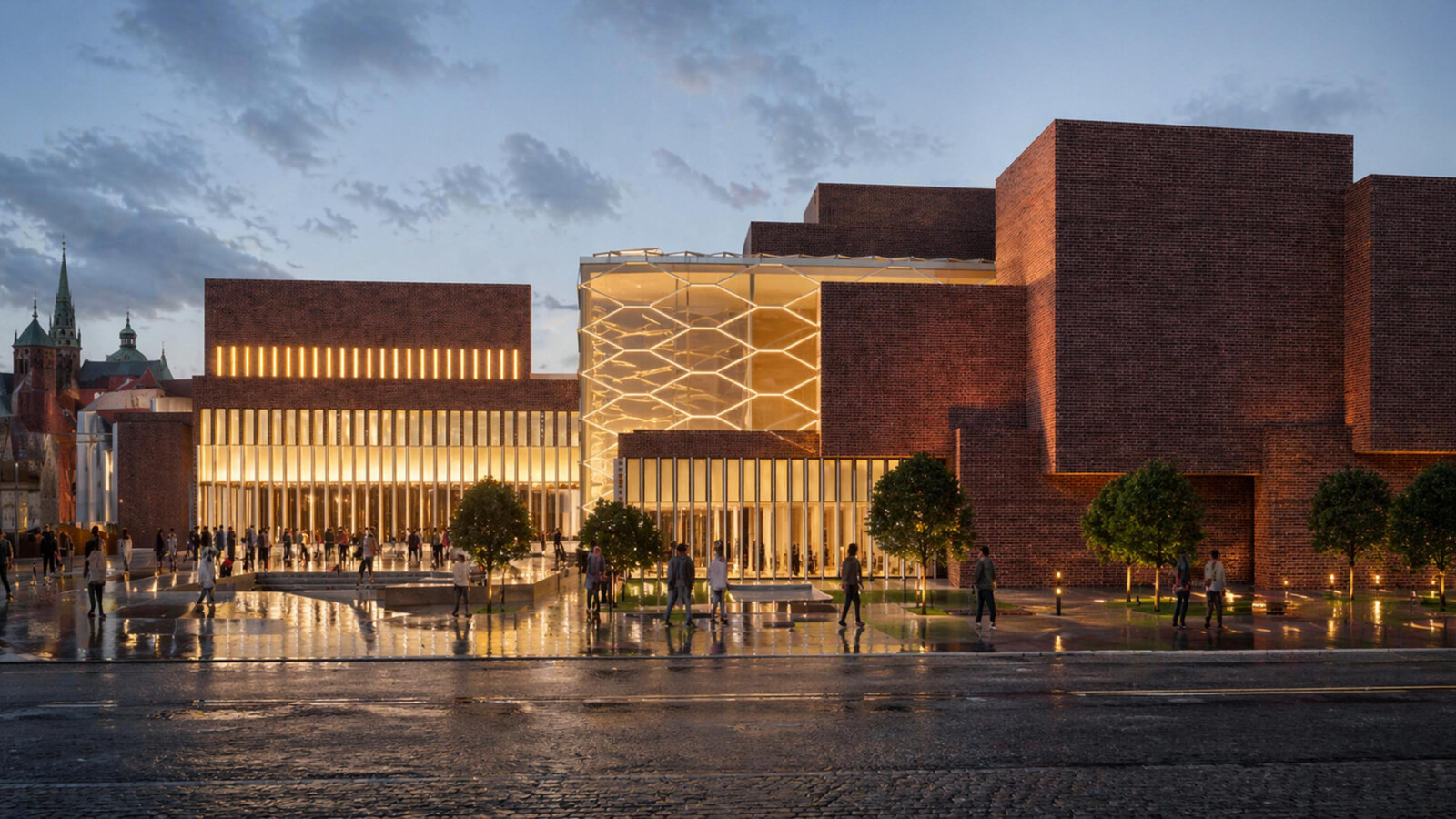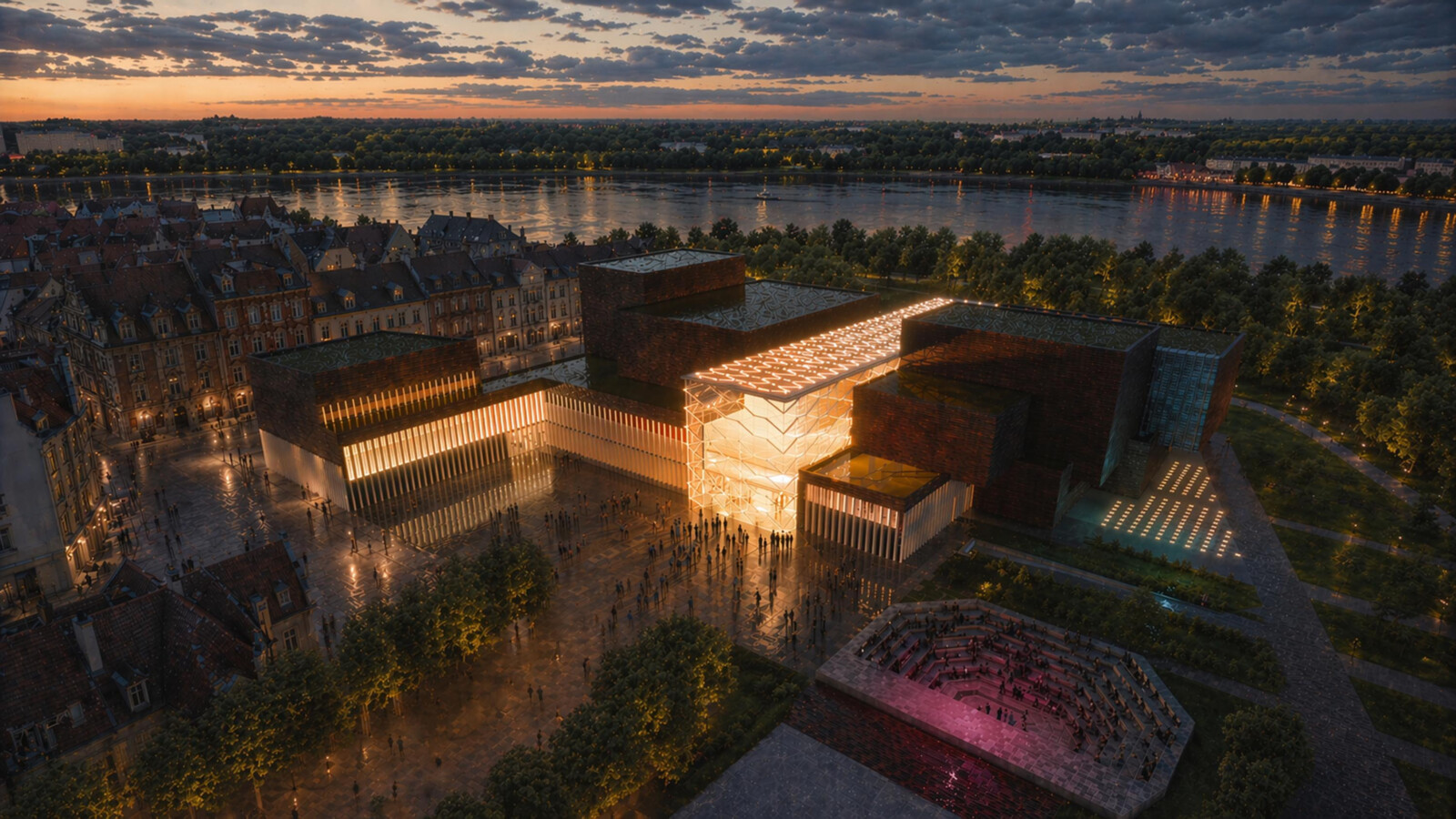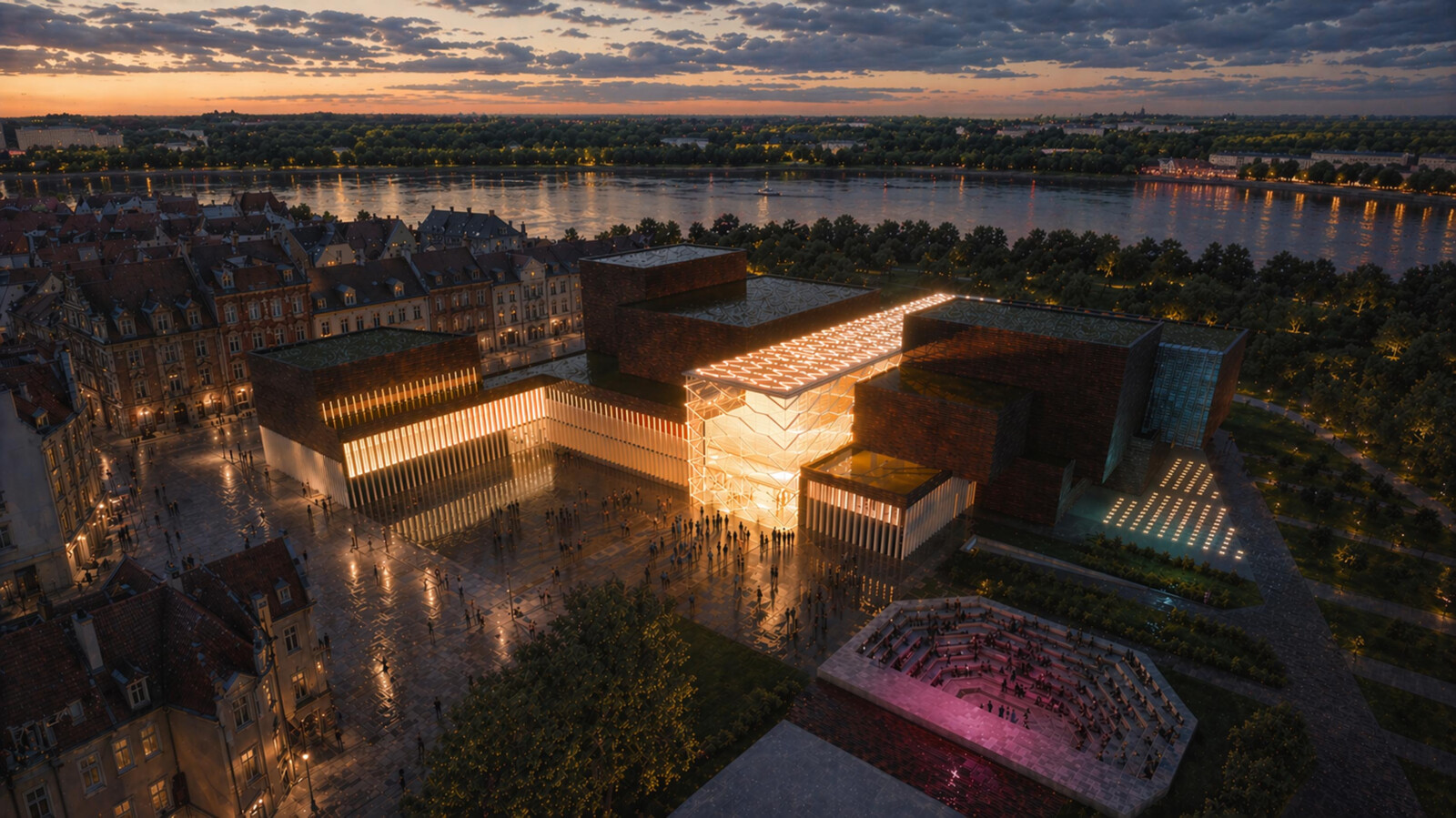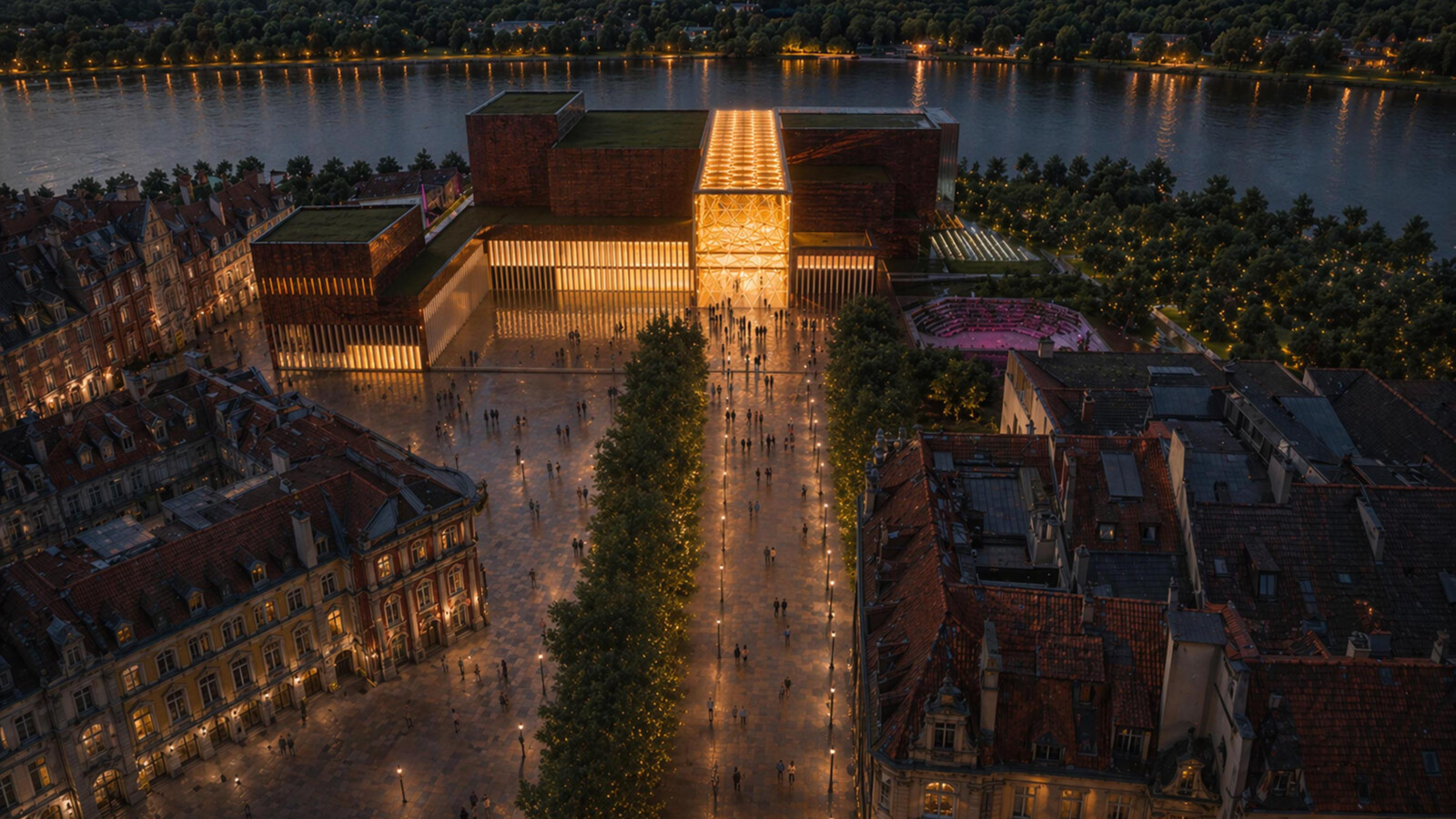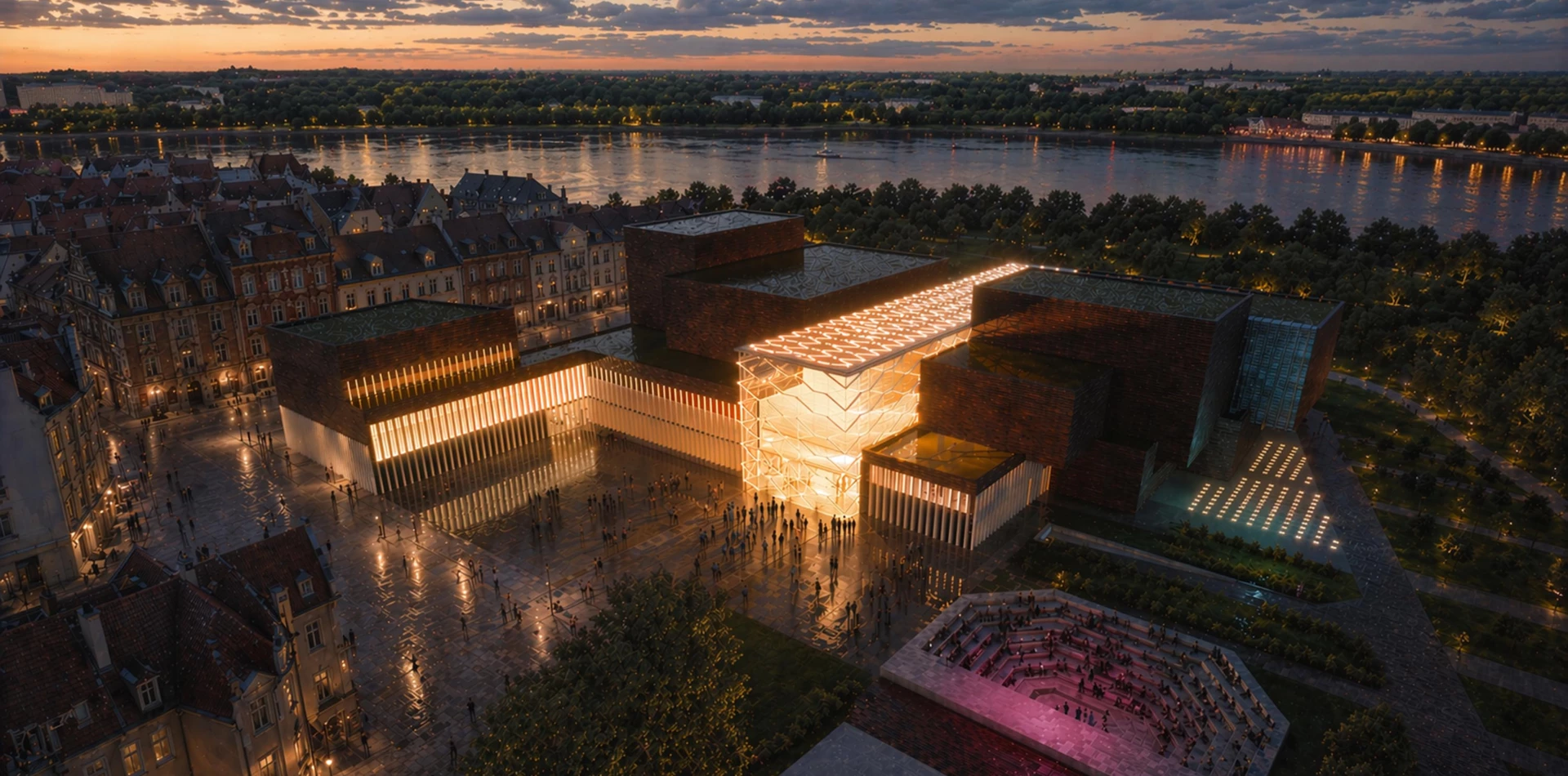
The ECFC project in Toruń is a concept for a multifunctional cultural and festival complex, whose central element is the “PRISM” — a glazed, covered foyer that serves as an extension of the representative public square. The building is conceived as an open, flexible structure.
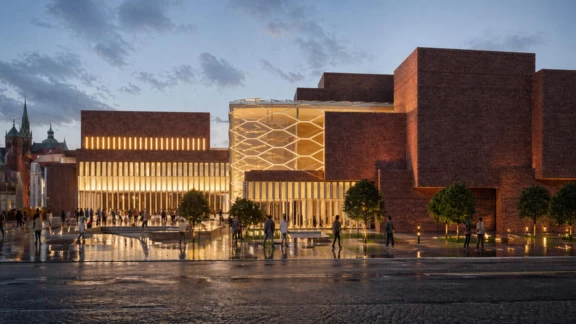
The luminous PRISM connecting the cinematic space with the heart of the city
The main architectural idea is to create an extended space, with its heart being the “PRISM” — a covered foyer in the form of a transparent, glass structure. Filled with the warm glow of neon lights, like in cinematic frames, it cuts through the massive volumes of the building, becoming an inviting portal for visitors.
This solution not only draws passersby inside but also becomes a symbol and a point of orientation, radiating energy during major events and illuminating the city.
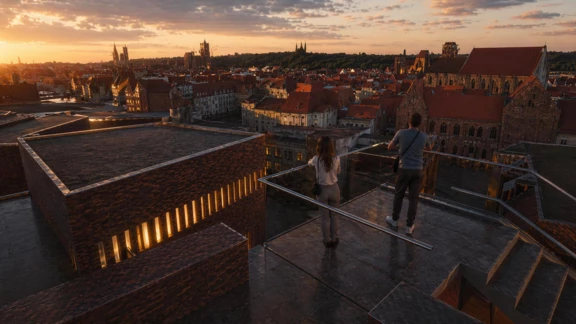
The investment is located in the vicinity of the historic urban fabric of Toruń, green areas, and Aleja Jana Pawła II. The design responds to the issue of overly dense development proposed in the original competition scheme by introducing a more open layout that strengthens the relationship with public space and the city.
The building is conceived as an integrative space—it invites, guides movement, and connects users with the surroundings, while also addressing the needs of the Energa Camerimage by incorporating covered, air-conditioned common areas.
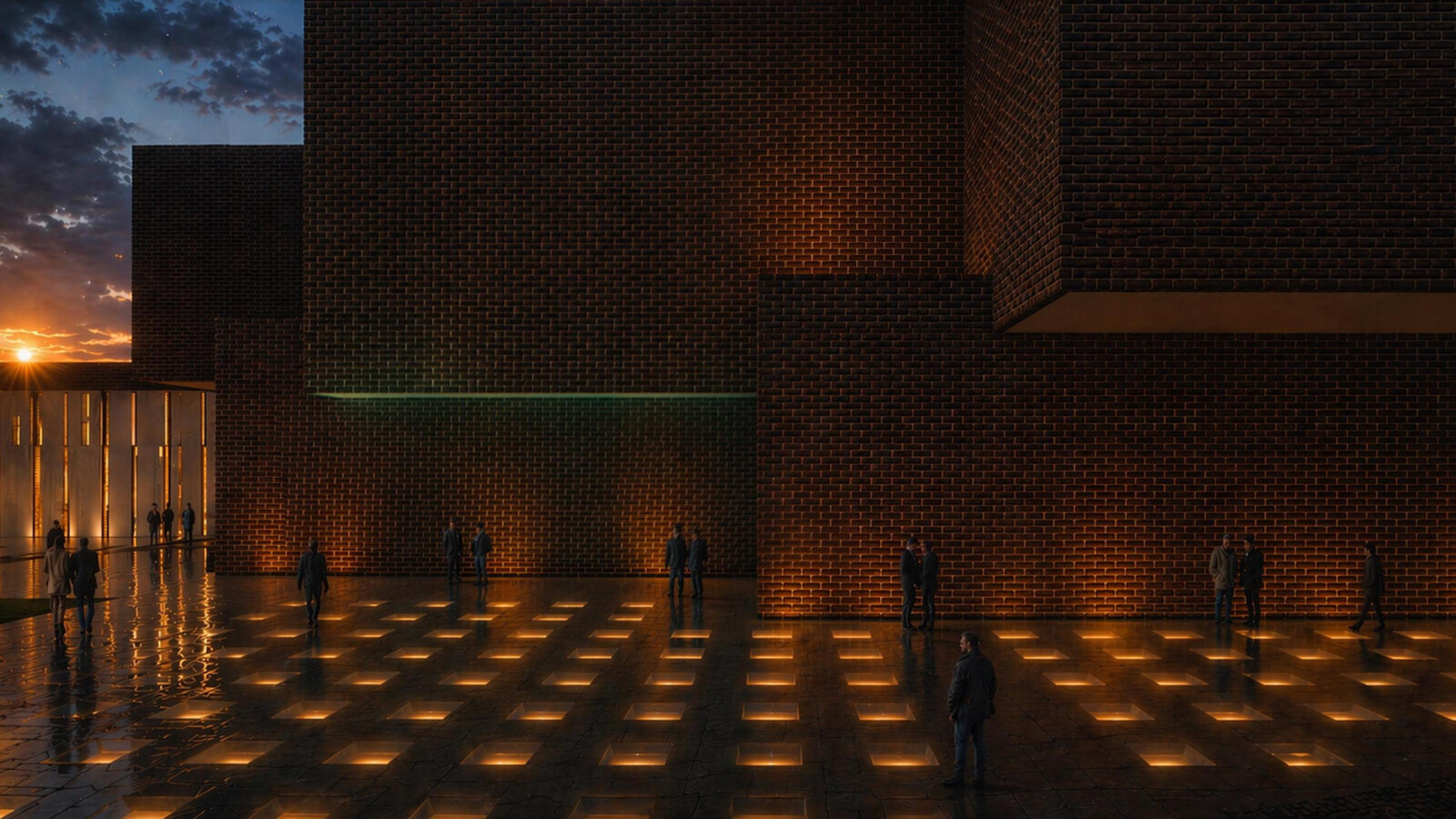
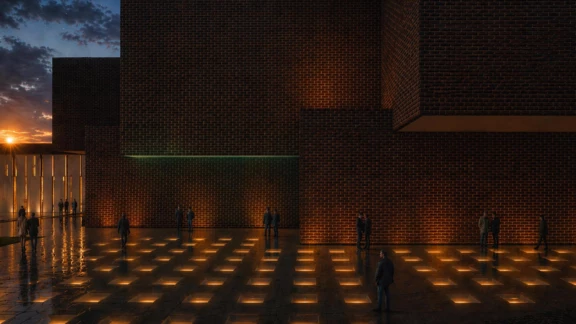
The inspiration draws from the history of Toruń and the Dwór Artusa. The geometric patterns of roof tiles have been abstracted and translated into a contemporary architectural language, visible in the structure of the roof and the façade of the foyer. The brick material, referencing the Old Town, forms a backdrop for the contrasting glass structure of the “PRISM.”
The volumes of the complex engage in a dialogue with the nearby Centrum Kulturalno-Kongresowe Jordanki, creating a coherent urban composition.
The design is based on the idea of an “extended space,” in which the representative public square flows seamlessly into the interior through the covered foyer — the “PRISM.” It serves as a central, collision-free circulation hub from which routes extend to the main zones: the Cinema House, the Festival Center, the Market, and the Educational Center.
This layout enables both the simultaneous operation of multiple events and their integration without the need to leave the building. The spatial arrangement has been optimized by rotating the Festival Center by 90°, improving functional relationships, opening the complex toward green areas, and enhancing the organization of deliveries.
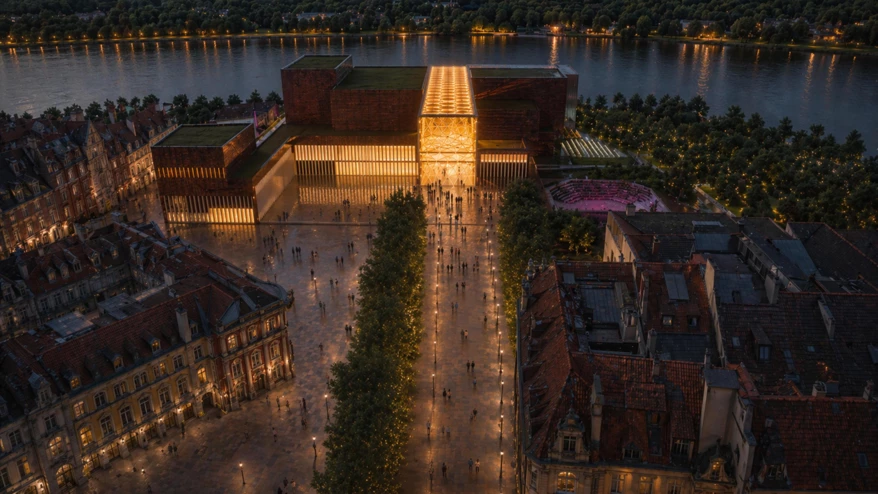
The program has been organized according to levels of accessibility — the most open functions (the foyer, the MARKET) are located on the ground floor, while more specialized spaces such as cinema halls, the Festival Center, the Museum, and the Educational Center are placed on the upper levels.
The central element of the interior is a set of representative stairs leading to the piano nobile of the Festival Center, combined with suspended balconies of the cinema galleries. This composition builds spatial dramaturgy and emphasizes the “cinematic” character of the space.
Altogether, the design creates a clear and flexible system of use, adapted both to large international events and to the building’s everyday functioning.
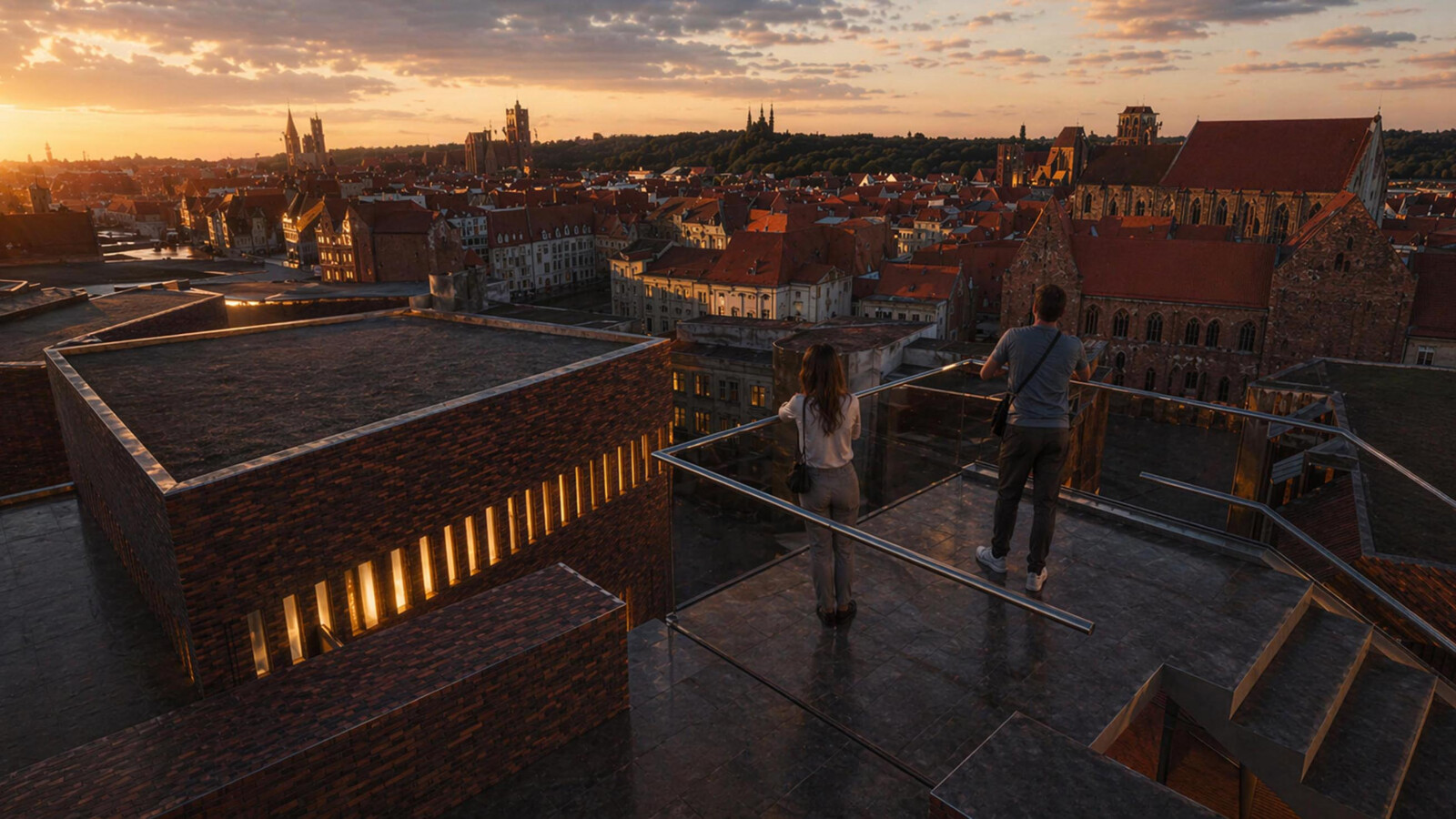
External terrace and viewing stairs: Located on the roof of the Festival Stage tower, with exposed stairs on the दक्षिण façade, they offer unique framed views of the historic Old Town of Toruń.
Flexibility and integration: The use of elongated, slender screens (serving as façade curtains) allows the building to open up to the outside or function as rotating partitions within interiors (e.g., in the Market or the Educational Center).